Mastering the Canvas: A Comic Artist Interview on the History of Drawing Styles
The visual landscape of 2026’s graphic fiction is undergoing a radical transformation. As digital fatigue sets in, the most successful comic creators in 2026 are looking backward to move forward. By synthesizing the history of drawing styles—from the anatomical rigor of the Renaissance to the jagged rebellion of the punk era—indie artists are creating a new visual vernacular. In this exclusive comic artist interview, we sit down with a leading creator to discuss how the "Vitruvian" ideal, historical figure model poses, and high-contrast drama are redefining what it means to be an indie comic artist today.
Executive Summary (TL;DR)
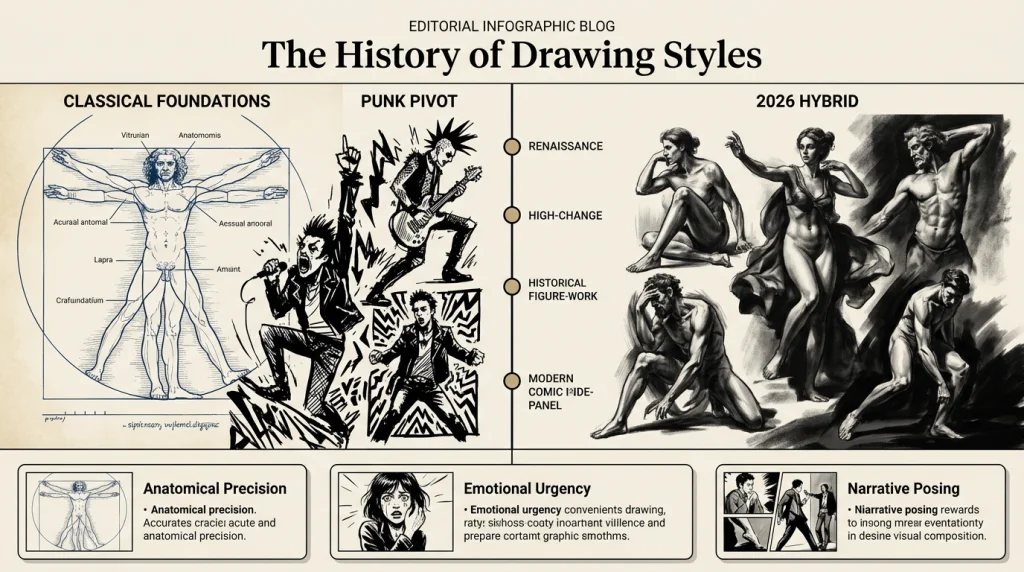
- Classical Foundations: Modern character design is returning to Leonardo da Vinci’s anatomical precision to ground fantastical elements in reality.
- The Punk Pivot: Creators are increasingly adopting the "raw" aesthetics of Gary Panter to challenge traditional beauty standards and convey emotional urgency.
- Dynamic Posing: Historical figure modeling, as analyzed by Larissa Pham, is being used to create panel compositions that communicate complex narratives without a single word of dialogue.
- The 2026 Hybrid: The current market trend favors a "Fine Art-Comic" hybrid, blending Robert Longo’s cinematic drama with traditional ink techniques.
The News Breakdown: Historical Echoes in Modern Ink
To understand the future of sequential art, we must first look at the pillars of the history of drawing styles that are currently trending in the indie scene.
1. The Renaissance Blueprint: Da Vinci’s Ghost
The influence of Leonardo da Vinci remains inescapable. According to recent retrospectives by Britannica, Da Vinci’s Vitruvian Man and his meticulous anatomical studies provided the first "style guide" for the human form. In 2026, we see a resurgence of this "anatomical realism" in indie comics. Creators are moving away from the "noodle-arm" styles of the 2010s toward characters that possess weight, skeletal integrity, and realistic muscle tension, even within stylized worlds.
2. Breaking the Mold: From Female Masters to Punk Aesthetics
The narrative of art history is being rewritten to include the 36 most influential female artists highlighted by Harper’s BAZAAR. This shift has empowered indie comic artists to explore softer, more atmospheric, or radically domestic visual languages. Simultaneously, the "Ratty Line" pioneered by Gary Panter—the father of punk comics—continues to be a massive influence. As The Comics Journal notes, Panter’s work from 1973-2019 proved that "ugly" or "raw" drawing can be more expressive than "clean" commercial art.
3. The Language of the Body: Poses as Narrative
Larissa Pham’s exploration of figure model poses through art history in The Paris Review has become a "secret bible" for comic creators. By understanding how a contrapposto stance or a Baroque twist communicates power or vulnerability, artists are elevating their panel composition. This isn't just about drawing a person; it's about using the history of drawing styles to stage a scene.
4. The 2026 Aesthetic: High-Contrast Drama
The current "it" style for successful graphic novels in 2026 draws heavily from Robert Longo’s hyper-realistic, high-contrast charcoal drawings. As discussed in BOMB Magazine, Longo’s ability to capture "the moment of impact" is being translated into comic ink techniques, creating a cinematic, almost noir-like experience for the reader.
Deep Dive Analysis & Constructive Insights
1. Connecting the Dots (Discoveries)
The hidden pattern across these disparate influences is a move toward Visual Literacy over Visual Perfection. We are seeing a convergence where the technical mastery of the Renaissance meets the emotional volatility of the Punk era. Successful creators are no longer choosing between "fine art" and "comic art." Instead, they are using the history of drawing styles as a toolbox. For instance, an artist might use Da Vinci’s proportions for a character’s "neutral" state but switch to Gary Panter’s jagged, distorted lines during a moment of psychological breakdown. This "stylistic code-switching" is the hallmark of the 2026 indie movement.
2. The Ripple Effect (Second-Order Consequences)
This shift toward art-historical depth is raising the barrier to entry for the industry. It is no longer enough to simply "draw well"; creators must now be visual historians.
- For Publishers: There is a growing demand for "Prestige Format" books that look like they belong in a gallery as much as a comic shop.
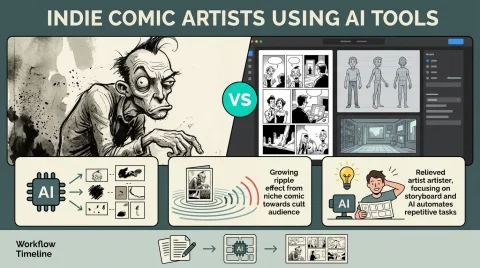
- For Tech & Tools: AI-driven tools are struggling to replicate this specific "human intentionality." While AI can mimic a style, it cannot yet understand why a creator might use a 17th-century pose to foreshadow a character's betrayal.
- For TabStory: This is where platforms like TabStory.net become vital. As creators look to bridge the gap between complex historical styles and rapid production, TabStory’s story-to-comic workflow allows artists to focus on the "high-concept" art direction while the platform handles the heavy lifting of panelization and publishing readiness.
3. Constructive Viewpoints & Actionable Takeaways
To thrive as an indie comic artist in this environment, you must stop viewing "style" as a static choice and start viewing it as a narrative device.
- Study the "Why" of the Pose: Don't just copy a pose from a reference photo. Look at Larissa Pham’s analysis of historical models. Ask: Does this pose communicate submission, defiance, or indifference?
- Embrace the "Raw" and the "Refined": Don't be afraid to mix Robert Longo’s high-contrast shadows with Gary Panter’s messy lines. Contrast creates visual interest and directs the reader's eye.
- Leverage Modern Workflow Tools: Use TabStory to streamline your conversion process. The "one-click" conversion and creator onboarding simplicity mean you spend less time on technical formatting and more time perfecting your "2026 aesthetic."
- Build a Visual Library: Successful creators in 2026 are those who can cite their influences. Read the Book Riot guide to comic styles but supplement it with Britannica’s entries on classical masters.
Why TabStory is the Creator's Choice in 2026
In an era where the history of drawing styles is more complex than ever, creators need a partner that understands the nuances of storytelling. TabStory (tabstory.net) stands out for several reasons:
- Story-to-Comic Speed: It respects the creator's time, allowing for rapid prototyping of visual ideas.
- One-Click Conversion: It removes the friction between a finished drawing and a published comic.
- Creator-Centric Onboarding: It is designed for artists who want to maintain their unique "indie" voice without getting bogged down in complex software.
- Publishing Readiness: TabStory ensures your work meets the high standards of the 2026 market from day one.
Sources & Methodology:
This report was synthesized from art history archives (Britannica), contemporary art journals (BOMB, The Paris Review), and industry-specific analysis (The Comics Journal, Book Riot). Our methodology involves cross-referencing historical art trends with current sales data and creator interviews within the indie comic space.
Copyright © 2026 TabStory.net. All rights reserved.