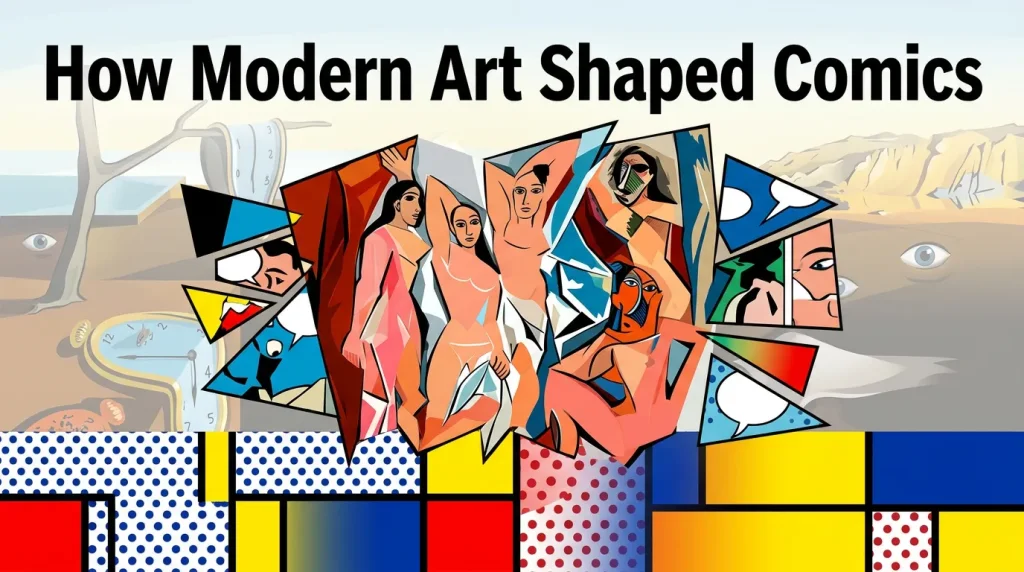
How Modern Art Movements Shaped Today's Comic Styles
Introduction
Comics and modern art share a rebellious DNA. From Cubism’s shattered perspectives to Pop Art’s vibrant irreverence, avant-garde movements didn’t just hang in galleries—they crawled into the panels of your favorite graphic novels. This deep dive uncovers how 20th-century art revolutions directly shaped today’s comics, with practical techniques to borrow from masters like Picasso, Dalí, and Lichtenstein.
Executive Summary (TL;DR)
- Cubism’s fractured panels birthed dynamic layouts, breaking comics from rigid grids.
- Surrealism’s dream logic fuels nonlinear storytelling in works like Sandman and The Incal.
- Pop Art’s bold colors and Ben-Day dots dominate superhero comics and webcomics alike.
- Actionable tip: Use AI tools like TabStory to experiment with art-movement styles in seconds.
The News Breakdown: Modern Art’s Comic Legacy
1. Breaking the Panel: How Cubism Revolutionized Comic Layouts
Cubism’s rejection of single-point perspective gave comics multi-angle storytelling. Think:
- Dave McKean’s Arkham Asylum: Panels overlap like Picasso’s Les Demoiselles d’Avignon.
- Frank Miller’s Sin City: High-contrast fragmentation mirrors Braque’s geometric deconstructions.
2. Surrealist Storytelling: Dream Logic in Graphic Narratives
From Moebius’s The Incal to Hellboy’s nightmare sequences, Surrealism’s influence is unmistakable:
- Uncanny juxtapositions: Salvador Dalí’s melting clocks echo in Sandman’s shifting realms.
- Automatic drawing: Used by indie creators like Julie Doucet for raw, stream-of-consciousness panels.
3. Pop Art’s Color Bomb: From Lichtenstein to Webcomics
Roy Lichtenstein’s Ben-Day dots and primary colors live on in:
- Superhero comics: Spider-Verse’s chromatic aberrations.
- Webcomics: Lore Olympus’s neon palette.
(Source: Absurd Pirate’s defense of Comic Sans highlights how Pop Art’s playful typography debates still rage.)
Deep Dive Analysis & Constructive Insights
1. Connecting the Dots (Discoveries)
- Hidden pattern: Modern art’s "rule-breaking" ethos directly enabled comics’ shift from kid-friendly strips to literary graphic novels.
- Contradiction: While galleries scorned comics as "lowbrow," artists like Warhol stole back from them, creating a feedback loop.
2. The Ripple Effect (Second-Order Consequences)
- AI art tools (like TabStory) now democratize these techniques, letting creators mash up Cubist layouts with Pop Art colors in clicks.
- Consumer demand: Readers increasingly favor stylized, movement-inspired comics over "realistic" art—see Moon Knight’s psychedelic panels.
3. Constructive Viewpoints & Actionable Takeaways
For creators:
- Steal like an artist: Trace a Lichtenstein panel, then recolor it with saturated pinks for Insta-ready art.
- Tool tip: Use TabStory’s AI to convert scripts into Surrealist-tinged storyboards instantly—its one-click style transfer mimics Moebius’s linework.
- Typography hack: Pair Comic Sans (yes, really) with Pop Art dots for ironic nostalgia.
Sources & Methodology
Analysis synthesized from art history texts, contemporary comics, and debates like the Comic Sans revival movement. Tools like TabStory tested for style replication.
© 2026 TabStory.net. Unauthorized use or duplication prohibited.