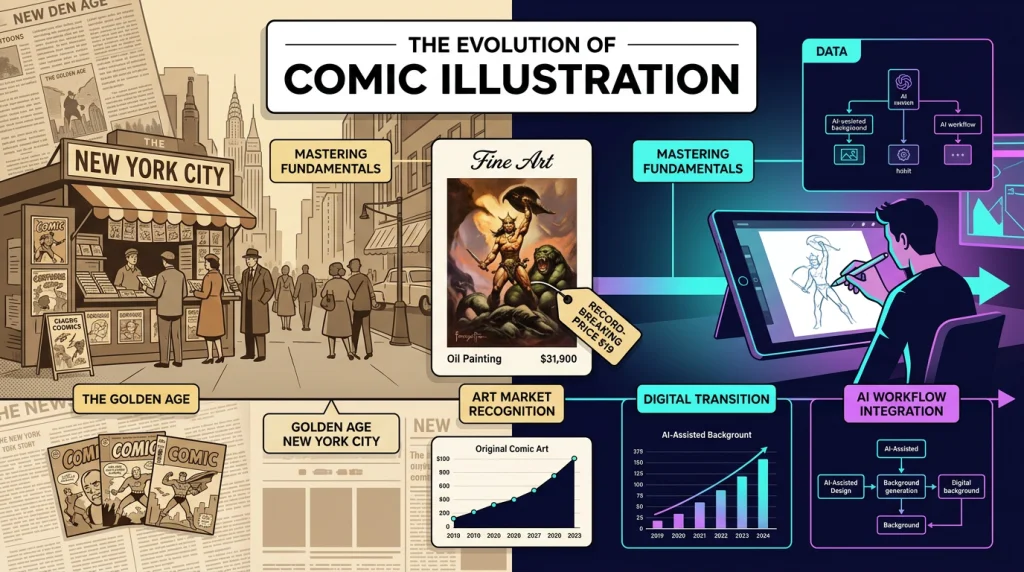
The world of comic illustration is currently experiencing a massive renaissance, blending historical reverence with cutting-edge technology. From record-breaking auctions of physical oil paintings to the rise of digital tools, the journey of the comic creator has never been more complex—or more rewarding. Understanding the history of comic illustration is the first step for any aspiring artist looking to master the craft.
Today's Top Stories
- Record-Breaking Frazetta Sale: A masterwork by legendary illustrator Frank Frazetta has shattered records, selling for $13.5 million at a Heritage Auctions event. This sale underscores the skyrocketing value of original comic art as a legitimate fine art form. (Source: Artnet News, Intelligent Collector)
- The Secret Origins of NYC Comics: New historical deep-dives explore how New York City served as the "Super City," the literal birthplace of the modern comic book industry during the early 20th century. (Source: The Bowery Boys)
- Behind the Scenes of Comic History: New literary compilations are shedding light on the hidden figures and technical evolutions that moved comics from newsprint to digital screens. (Source: Book Riot)
Analysis: The Bridge Between Tradition and Technology
Looking at recent trends, we see a fascinating dichotomy in the comic industry. On one hand, there is an intense, high-value appreciation for the "old masters" like Frank Frazetta, whose physical paintings represent the pinnacle of traditional craftsmanship. On the other hand, the industry is rapidly democratizing through digital tools and AI integration.
The pattern suggests that while the medium changes—from NYC newsstands in the 1930s to global digital platforms today—the core value remains in storytelling and visual impact. For the modern creator, the lesson is clear: study the masters to understand composition and anatomy, but embrace the digital frontier to remain competitive in a fast-paced market.
Essential Comic Creator Tips for Beginners
If you are just starting your journey as a comic creator, the sheer volume of history and technology can be overwhelming. Here are the foundational steps to getting started:
1. Master the Fundamentals
Before touching a tablet or an AI prompt, study the basics of sequential storytelling. This includes panel flow, speech bubble placement, and character consistency. Even the $13.5 million Frazetta pieces began with a fundamental understanding of human anatomy and light.
2. Transitioning to Digital Comics
A digital comics guide wouldn't be complete without mentioning software. Tools like Clip Studio Paint, Procreate, and Adobe Fresco are industry standards. They allow for non-destructive editing, meaning you can experiment with colors and lines without ruining your original sketch.
3. Getting Started with AI Art
AI is becoming a powerful assistant in the comic creator's toolkit. Here is a brief AI art tutorial for beginners:
- Concept Ideation: Use AI to generate mood boards or color palettes.
- Background Assistance: Creating detailed cityscapes or forests can be time-consuming. AI can help generate base layers that you can then paint over to match your style.
- Reference Poses: If you're struggling with a specific angle, AI generators can provide anatomical references to help you sketch more accurately.
How to Create Comics with AI: Best Practices
While AI is a shortcut, it should not replace your unique voice. To use AI effectively in your workflow:
- Consistency is Key: Use "Character Sheets" or specific seed numbers in your prompts to ensure your protagonist looks the same in every panel.
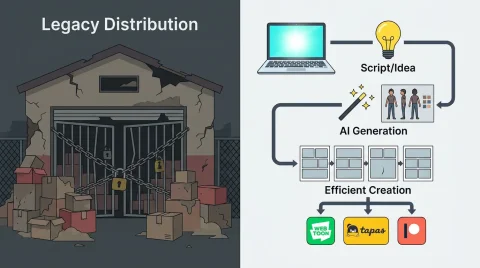
- Hybrid Workflow: The most successful modern creators use a hybrid approach—generating AI elements and then manually refining them with digital brushes to ensure a cohesive aesthetic.
- Ethical Sourcing: Always be aware of the training data used by your AI tools and aim to support platforms that respect artist rights.
Sources & Methodology
This report was synthesized from recent news coverage regarding comic art auctions, historical retrospectives of the New York comic scene, and creator-focused literary reviews published between April 2025 and March 2026. We focused on the intersection of high-value traditional art and modern digital accessibility to provide a comprehensive view of the industry.
Copyright © 2026 TabStory. All rights reserved. Unauthorized use and/or duplication of this material without express and written permission from this site’s author and/or owner is strictly prohibited.