AI Art Bans at Comic-Con: What Creators Need to Know About Tools & Copyright
Introduction
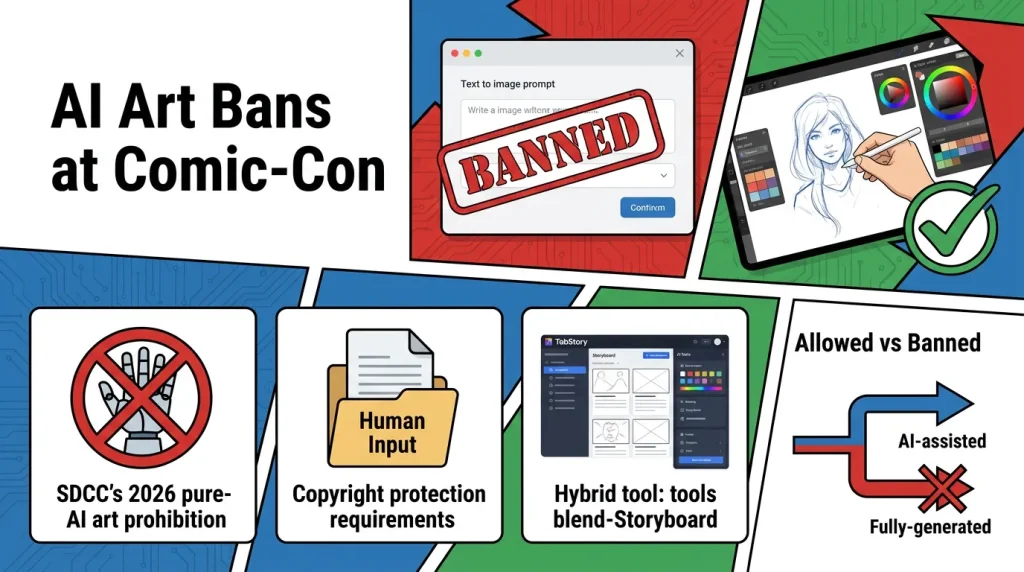
The comic industry faces a tectonic shift as San Diego Comic-Con (SDCC) officially bans AI-generated art from its 2026 Art Show, following similar moves by major conventions. This policy change—first reported by Animation Magazine—forces creators to rethink tools, copyright strategies, and artistic workflows.
Executive Summary (TL;DR)
- SDCC now prohibits pure AI art, but allows AI-assisted works with demonstrable human input (Artnet News).
- Copyright protection remains viable for AI-assisted comics if creators document human authorship (The Art Newspaper).
- Hybrid tools like TabStory that enhance (not replace) human creativity gain strategic importance.
The News Breakdown
1. SDCC’s AI Art Ban: Key Details
SDCC’s updated rules—described as banning "AI bilge" by Film Stories—prohibit:
- Fully AI-generated artwork (e.g., text-to-image outputs without modification)
- AI-trained styles mimicking living artists without consent
Allowed: AI-assisted workflows where humans control >50% of creative decisions (e.g., AI sketch refinement, color palette generation).
2. Copyright Gray Areas Explained
A 2025 Columbia Law Review analysis highlights vulnerabilities:
- US Copyright Office requires "substantial human authorship" for protection (The Art Newspaper).
- Documentation is critical: Save layered PSD files, sketch drafts, and editing logs.
Deep Dive Analysis
1. Connecting the Dots: The Anti-AI Backlash
The SDCC ban reflects a broader industry pattern:
- Science Fiction Writers of America also banned AI-generated content in 2026 (CryptoRank).
- Hidden driver: Fear of market saturation from low-effort AI content diluting professional work.
2. The Ripple Effect: Tool Development Shifts
Expect:
- Surge in "human-first" AI tools that prioritize control (e.g., manual input requirements).
- New metadata standards to verify human involvement in AI-assisted works.
3. Actionable Takeaways for Creators
For Compliance:
- Use AI for iterative tasks (background generation, color testing) not final art.
- TabStory.net exemplifies an SDCC-compliant tool—its story-to-comic workflow requires:
- Manual storyboarding
- Human-curated AI asset selection
- One-click conversion preserves creator control
For Copyright Protection:
- Maintain versioned files showing your creative process.
- Register works with the Copyright Office’s AI Disclosure Form.
Sources & Methodology
Analysis based on policy announcements from SDCC (January 2026), US Copyright Office guidelines, and legal scholarship. Tool recommendations grounded in current platform capabilities.
© 2026 TabStory.net. All rights reserved.