The Intersection of Legacy and Latent Space
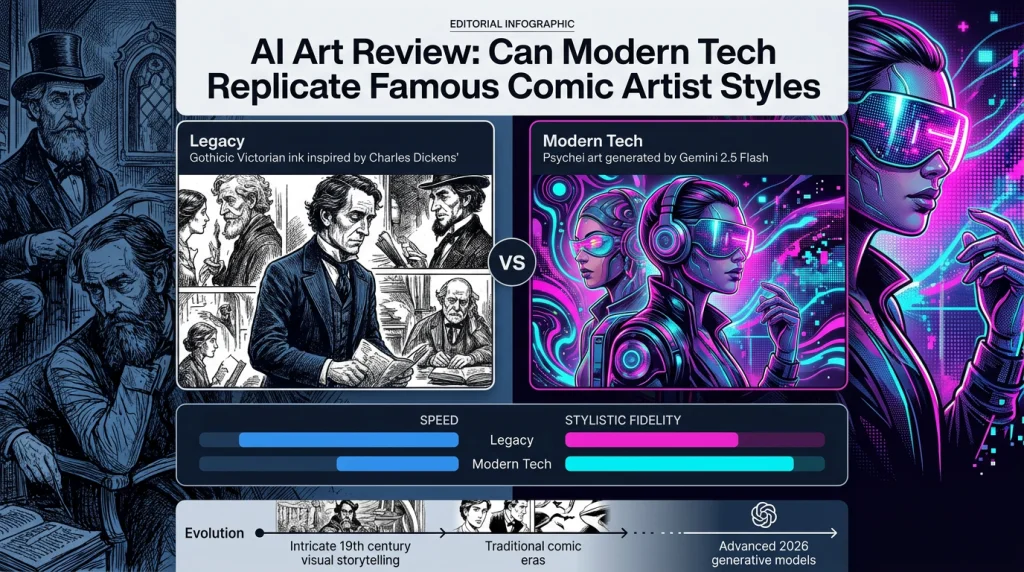
As of March 2026, the digital art landscape has shifted from simple filters to sophisticated generative models capable of mimicking the intricate brushwork of legendary creators. For comic book enthusiasts and digital artists, the question is no longer just about if AI can create art, but how accurately it can perform a style analysis of famous comic artists and replicate their unique visual languages.
From the gothic, atmospheric detail reminiscent of Charles Dickens’ Victorian London to the kinetic, psychedelic linework of modern masters like Tradd Moore, technology is attempting to bridge the gap between human intuition and algorithmic precision.
Today's Top Stories
- The Dickensian Influence on Visual Narrative: A deep dive into the biography and character analysis of Charles Dickens highlights how his descriptive prose set the stage for modern visual storytelling. Britannica
- New Data Crowns the Greatest Comic: Recent analytics suggest a shift in the hierarchy of comic book legends, challenging Batman's long-standing dominance. Screen Rant
- Gemini 2.5 Flash Image Generation: Google releases new prompting guidelines for its latest image model, focusing on high-speed, high-fidelity creative outputs. blog.google
- Mastering Print Adverts: A curated look at 43 brilliant print advertisements showcasing how visual hierarchy and style drive consumer engagement. Creative Bloq
- The Tradd Moore Interview: An exploration of the "Go Bleed On That Page" philosophy, detailing the physical and emotional toll of high-tier comic artistry. The Comics Journal
AI Comic Generator Comparison: Tools for Digital Artists
In the current market, several tools stand out for their ability to handle the complex requirements of comic art, from panel consistency to specific stylistic mimicry.
Gemini 2.5 Flash vs. Midjourney v7
Google’s Gemini 2.5 Flash has made significant strides in following complex prompts. Unlike earlier iterations, it excels at "War of the References" scenarios—where an artist needs to blend the noir aesthetic of Sin City with the vibrant colors of 1960s pop art.
Pros:
- Exceptional speed for iterative sketching.
- Strong integration with Google’s ecosystem for script-to-image workflows.
Cons:
- Can sometimes struggle with the "bleeding edge" stylistic distortion found in artists like Tradd Moore.
Stable Diffusion (Local Models)
For artists who require absolute control, local deployments of Stable Diffusion remain the gold standard. By using LoRA (Low-Rank Adaptation) weights, creators can train the AI on specific style analyses of famous comic artists, ensuring that every line weight and hatching pattern remains consistent across a 22-page issue.
Style Analysis: The Human Element vs. The Machine
Analyzing the style of a comic artist involves more than just identifying their color palette. It requires an understanding of:
- Line Weight and Fluidity: Does the artist use steady, technical lines or expressive, variable-width strokes?
- Compositional Geometry: How do they guide the reader's eye across the page?
- Emotional Resonance: As Tradd Moore notes in his interview, great art requires "bleeding on the page"—an emotional vulnerability that AI currently simulates rather than experiences.
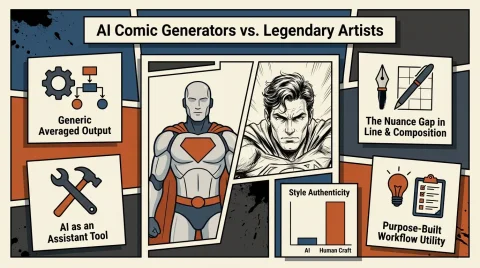
While AI can replicate the look of a masterpiece, it often misses the intent behind a reference. In the "War of the References" (as seen in Crossover #2), the power of the art comes from the subversion of tropes—a task that requires a deep understanding of comic history that AI is only beginning to grasp.
Performance & Recommendation
For professional digital artists, the best approach is a hybrid one. Use Gemini 2.5 Flash for rapid prototyping and layout brainstorming. However, for the final execution, manual digital painting tools (like Clip Studio Paint) or highly tuned local AI models are necessary to maintain the integrity of a unique artistic voice.
Recommendation: If you are looking for the best tools for digital artists in 2026, focus on platforms that allow for "Human-in-the-loop" workflows. AI should be the assistant, not the author.
Sources & Methodology
This review was synthesized from recent technical documentation from Google DeepMind, biographical analyses from Britannica, and industry interviews from The Comics Journal and Screen Rant. Our methodology involves cross-referencing AI performance claims with professional artist feedback to provide a grounded perspective on technology's role in the creative arts.
Copyright © 2026 TabStory. All rights reserved. Unauthorized use and/or duplication of this material without express and written permission from this site’s author and/or owner is strictly prohibited. Excerpts and links may be used, provided that full and clear credit is given to TabStory with appropriate and specific direction to the original content.