Best AI Comic Tools for 2026: Revolutionizing Coloring and Workflow
The comic book and manga industries are currently navigating a transformative "Gutenberg moment." As we move through 2026, the integration of AI comic tools has shifted from a controversial experiment to a fundamental structural change in how visual narratives are produced. From the high-speed demands of the South Korean Webtoon industry to independent creators leveraging AI art generators for complex coloring tasks, the technology is no longer just "generating images"—it is refining professional workflows.
The core of this evolution lies in efficiency. Coloring, historically one of the most time-consuming bottlenecks in comic production, is being revolutionized by specialized AI models capable of maintaining character consistency and style adherence. However, as these tools become more prevalent, the industry is simultaneously grappling with significant ethical hurdles and a shifting labor market.
Executive Summary (TL;DR)
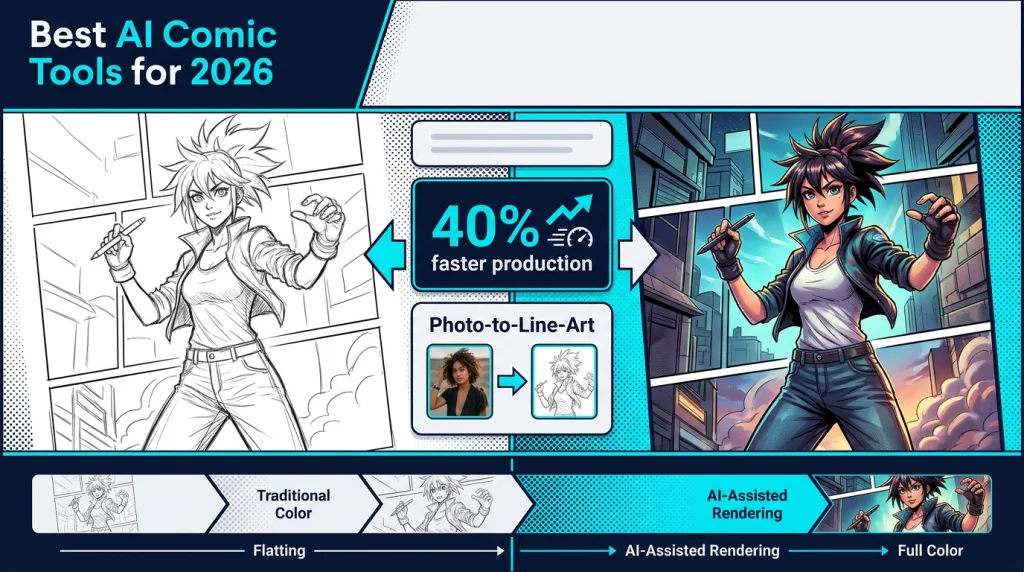
- Production Speed: AI coloring and line-art tools are reducing production cycles by up to 40%, allowing Webtoon and Manga studios to meet aggressive weekly deadlines.
- Market Success: AI-assisted titles are now topping charts, as seen with recent bestsellers on Japan’s largest e-book platforms, proving consumer appetite exists despite ethical debates.
- Specialized Tools: New apps like Splat and advanced features in major AI art generators are moving beyond "prompt-to-image" into functional "photo-to-line-art" and "flat-to-render" workflows.
- The Human Element: Industry leaders are pivoting toward a "Centaur" model—human creativity augmented by AI—to navigate legal and copyright complexities.
The News Breakdown: Today’s Top Stories in AI Comics
1. The Rise of the AI Bestseller
In a landmark moment for digital publishing, an AI-generated manga recently became a top seller on Japan’s largest e-book store. According to Unseen Japan, this success highlights a shift in consumer behavior: while "AI-generated" remains a polarizing label, the end-market is increasingly prioritizing story and visual consistency over traditional production methods. This success is driving more studios to adopt AI manga tools to compete in a saturated market.
2. Webtoons and the "AI Edge"
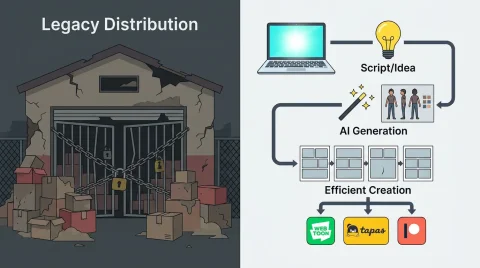
The South Korean Webtoon industry, known for its grueling production schedules, is aggressively pursuing an "AI edge." The Korea Times reports that while the industry seeks to automate coloring and background rendering, it is doing so under a cloud of legal and ethical challenges. The focus is currently on developing proprietary AI models trained on legally cleared datasets to avoid the copyright pitfalls that have plagued early adopters.
3. From Photos to Coloring Pages: The Splat Innovation
Innovation isn't just happening at the high-end studio level. TechCrunch recently highlighted Splat, an app that uses AI to transform personal photos into high-quality coloring pages. While targeted at kids, the underlying technology—extracting clean line art from complex images—is a direct precursor to the AI webtoon creation guides currently being used by indie creators to turn 3D models or photo references into comic-ready assets.
4. The Tool Wars: Testing the Giants
In a head-to-head comparison of the "Big Three" AI image generators, Lifehacker found that while general-purpose tools are improving, they still struggle with the specific requirements of comic creators: character consistency and specific "flat" coloring styles. This gap is being filled by specialized comic creation software plugins that bridge the gap between raw AI generation and professional editorial standards.
5. The Labor Shift in Animation and Comics
The broader impact on the creative workforce remains a point of contention. Cartoon Brew and ICv2 have both analyzed the "Good, the Bad, and the Ugly" of this transition. While AI can handle the "drudge work" of coloring and inking, there is a palpable fear regarding the displacement of entry-level "flatter" and "assistant" roles, which have traditionally served as the training ground for the next generation of master artists.
Deep Dive Analysis & Constructive Insights
1. Connecting the Dots: The Move from "Generative" to "Assistive"
The most significant trend hidden within these reports is the pivot from Generative AI (creating an image from scratch) to Assistive AI (enhancing a human-drawn sketch).
Early AI comic attempts were often criticized for "soulless" art and anatomical errors. However, the current success of AI manga in Japan suggests that creators are now using AI as a sophisticated brush rather than a replacement for the artist. Tools are being used for automated flatting (filling in basic colors) and lighting gradients, which allows the lead artist to spend more time on composition and emotional expression. The "Bad and Ugly" phases of AI are being smoothed out by a "Good" phase where the technology respects the artist's original line work.
2. The Ripple Effect: The Death of the "Assistant" Role?
The second-order consequence of AI comic tools is a fundamental restructuring of the studio hierarchy. Historically, a lead artist would hire assistants to handle backgrounds and coloring. With AI now capable of doing this in seconds, the "entry-level" path into the industry is disappearing.
We are likely to see a "K-shaped" recovery in the creative market:
- Top-tier artists will become more productive and profitable by using AI.
- Mid-level studios will see increased margins.
- Junior artists will struggle to find "grunt work" roles, forcing them to become "Solo-Preneurs" who must master both art and AI orchestration to compete.
3. Constructive Viewpoints & Actionable Takeaways
For professionals and aspiring creators, the "wait and see" approach to AI is no longer viable. To thrive in the 2026 landscape, consider the following strategic moves:
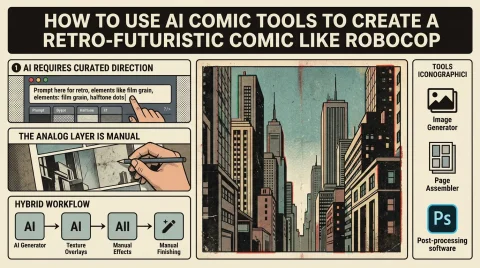
- Adopt "Hybrid Workflows": Don't use AI to generate your whole comic. Use it for the bottlenecks. Use tools like Splat-style line extraction for backgrounds or AI-based coloring plugins to handle the first 80% of the coloring process.
- Focus on Intellectual Property (IP): As the "cost of art" trends toward zero, the "value of the story" trends toward infinity. Focus on character development and unique world-building that AI cannot replicate without human direction.
- Ethical Sourcing is a Competitive Advantage: For professional creators, using AI tools trained on "clean" data (like those being developed in the Korean Webtoon sector) is essential. This protects your work from future copyright litigation and makes your IP more attractive to publishers and streaming platforms.
- Master the "Director" Skillset: The most valuable skill in 2026 isn't just drawing; it's Art Direction. Learning how to prompt, iterate, and "fix" AI outputs to maintain stylistic consistency across 50+ pages is the new standard for comic excellence.
Sources & Methodology
This report was synthesized from industry-leading sources including TechCrunch, The Korea Times, ICv2, and Unseen Japan. Our methodology involves cross-referencing technological releases with market performance data and labor trend reports to provide a holistic view of the AI comic landscape as of March 2026.
Copyright © 2026 TabStory.net. All rights reserved.