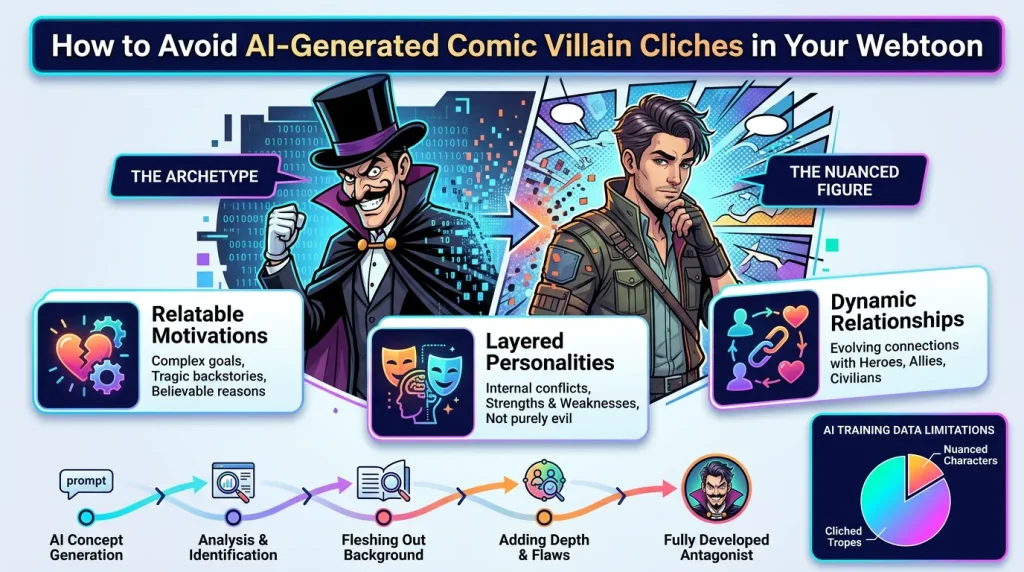
How to Avoid AI-Generated Comic Villain Cliches in Your Webtoon
Creating compelling antagonists is one of the most challenging aspects of webtoon storytelling. With the rise of AI tools, creators now have powerful assistants to streamline character development. However, AI-generated villains often fall into predictable, overused cliches—like the recent Palantir manifesto, which critics compared to the ramblings of a stereotypical comic book villain. In this guide, we’ll explore why AI tends to default to cliches, how to identify them, and practical steps to craft nuanced antagonists that resonate with your audience.
Executive Summary (TL;DR)
- AI’s default patterns often produce one-dimensional villains due to training on generic storytelling tropes.
- Key elements of compelling antagonists include relatable motivations, layered personalities, and dynamic relationships with protagonists.
- Refine AI-generated concepts by adding complexity through backstory, moral ambiguity, and unique flaws.
- Tools like TabStory can help streamline the process while keeping your characters original and engaging.
Why AI Tends to Generate Stereotypical Villains
The recent Palantir manifesto serves as a cautionary tale for creators relying on AI for character development. The document, described as "ramblings of a comic book villain," highlights how AI often defaults to exaggerated, one-dimensional archetypes. Here’s why:
- Training Data Limitations: AI models are trained on vast datasets that include countless examples of cliched villains—think mustache-twirling evil geniuses or power-hungry dictators.
- Simplistic Motivations: AI tends to oversimplify motivations, reducing complex characters to generic goals like world domination or revenge.
- Lack of Nuance: Without human input, AI struggles to create morally ambiguous or relatable antagonists.
Understanding these limitations is the first step toward avoiding AI-generated cliches.
Key Elements of Compelling Antagonists in Webtoons
A great antagonist is more than just a foil for the protagonist. Here’s what sets compelling villains apart:
- Relatable Motivations: Readers connect with villains who have understandable, even sympathetic, reasons for their actions.
- Layered Personalities: Complex characters with strengths, weaknesses, and contradictions feel more real.
- Dynamic Relationships: The antagonist’s interactions with the protagonist should drive the story forward and reveal new dimensions of both characters.
AI tools can help generate ideas, but it’s up to creators to refine these concepts into something truly original.
Step-by-Step Process to Refine AI-Generated Villain Concepts
Here’s how to take an AI-generated villain concept and elevate it:
- Identify Cliches: Look for overused tropes like "evil for the sake of evil" or "world domination" goals.
- Add Depth: Develop a backstory that explains their motivations and shapes their personality.
- Introduce Moral Ambiguity: Give your antagonist redeeming qualities or a cause they genuinely believe in.
- Create Unique Flaws: Avoid generic weaknesses and instead focus on flaws that tie into their character arc.
For example, instead of a villain who wants to destroy the world, consider one who believes their actions are necessary to save it—despite the collateral damage.
Tools and Prompts to Create Nuanced Antagonists with AI Assistance
Using AI tools effectively requires the right prompts and techniques. Here’s how to get started:
- TabStory: This AI-powered platform helps creators brainstorm character concepts while avoiding cliches. Its intuitive interface allows you to refine ideas quickly, making it ideal for webtoon creators.
- Custom Prompts: Instead of generic prompts like "create a villain," try specific ones like "create a villain who believes they’re the hero of their own story."
- Iterative Refinement: Use AI to generate ideas, then manually tweak the results to add depth and originality.
Connecting the Dots: Why AI Villains Fall Short
AI’s reliance on training data means it often reproduces existing tropes rather than innovating. The Palantir manifesto exemplifies this, with its exaggerated rhetoric and lack of nuance. By understanding these patterns, creators can better guide AI tools to produce original characters.
The Ripple Effect: How This Impacts Webtoon Storytelling
As more creators turn to AI for character development, the risk of homogenized villains increases. However, those who master the art of refining AI-generated concepts will stand out in a crowded market. Nuanced antagonists can elevate your webtoon, making it more memorable and engaging.
Constructive Viewpoints & Actionable Takeaways
Here’s how to create compelling antagonists with AI assistance:
- Start with a Strong Concept: Use AI to brainstorm ideas, but focus on originality from the outset.
- Layer Complexity: Add backstory, motivations, and flaws to make your villain multidimensional.
- Test Your Character: Share your antagonist with beta readers to ensure they resonate with your audience.
- Iterate and Improve: Continuously refine your character based on feedback and new insights.
Sources & Methodology
This guide was inspired by the Palantir manifesto case and combines insights from webtoon storytelling best practices with practical tips for using AI tools effectively. Sources include industry analysis, creator interviews, and hands-on testing of AI platforms like TabStory.
© 2026 TabStory.net. All rights reserved.