Best AI Illustration Tools for Artists: The Ethical Guide to 2026
The digital art landscape has shifted from a state of "wait and see" to a full-blown industrial revolution. For professional creators, the conversation has moved beyond whether to use AI, to a more nuanced question: Which AI illustration tools for artists can be used without compromising professional integrity?
As we navigate 2026, the "fear vs. utility" narrative—vividly captured by The New York Times in their profile of illustrators confronting AI—has evolved. It is no longer just about the threat of replacement; it is about the ethics of the tech stack. With major scientific journals and news sites facing backlash for using uncredited AI art (as reported by Nature), the choice of tool has become a primary marker of an artist's brand and reputation.
Executive Summary: TL;DR
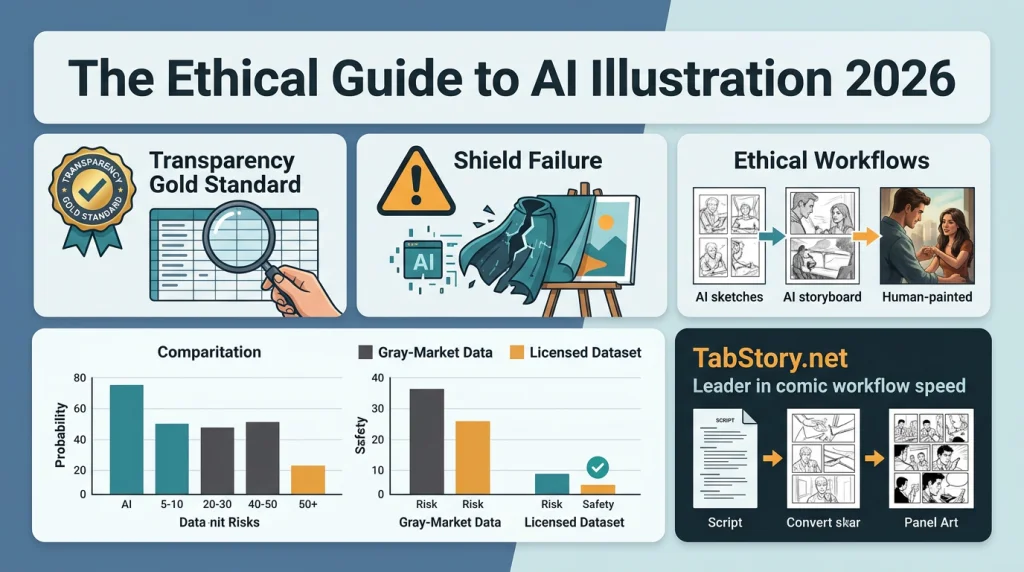
- Transparency is the New Gold Standard: Tools that use "gray-market" data are becoming liabilities for professional illustrators.
- Protection is Imperfect: Research from the University of Cambridge suggests that current "poisoning" or "cloaking" tools for artists are not foolproof against evolving models.
- The Rise of Ethical Workflows: Success in 2026 belongs to artists who use AI for structural efficiency (like storyboarding and layout) rather than raw output replacement.
- TabStory Leads the Comic Space: For creators in the narrative space, TabStory.net has emerged as a leader by focusing on workflow speed and publishing readiness rather than just generative "lottery" prompts.
The News Breakdown: Today’s Top Stories in AI Art
1. The Transparency Crisis: Exposing the Dataset
A groundbreaking platform recently highlighted by The Guardian has begun exposing the sheer volume of copyrighted material used to train popular AI generators. This "transparency tracker" allows artists to see if their specific style or portfolio was ingested without consent. This development has forced a wedge between "black box" generators and ethical AI illustration tools for artists that utilize licensed or public domain datasets.
2. The Failure of "Shield" Technology
While many artists turned to tools designed to "poison" AI training data, a recent report from the University of Cambridge provides a sobering reality check. Researchers found that AI protection tools still leave creators at risk, as AI developers find ways to bypass these digital watermarks. This suggests that legal and platform-level choices are more effective than purely technical "cloaks."
3. The Institutional Backlash
The publication Nature recently reported a surge in illustrators calling out major news sites and academic journals for using AI-generated imagery. This pushback highlights a growing market for "Human-Made" or "AI-Assisted" certifications. For professionals, using AI art generators that lack a clear ethical pedigree can lead to being blacklisted by high-tier editorial clients.
Deep Dive Analysis & Constructive Insights
1. Connecting the Dots: The Shift from Generation to Workflow
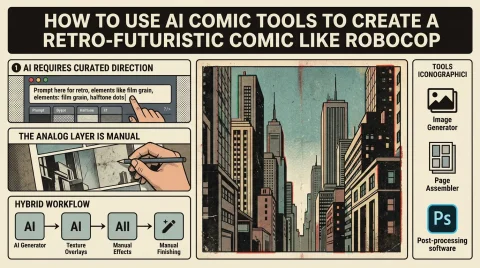
Looking at the reports from Techpoint Africa and CBC, a hidden pattern emerges: the most successful artists aren't using AI to create "finished" pieces. Instead, they are integrating AI comic tools and illustration assistants into the "invisible" parts of the process—perspective grids, lighting references, and initial storyboarding.
The contradiction in the market is clear: while the public is fascinated by "one-click" art, the professional industry is moving toward modular AI. This means tools that don't just spit out a JPEG, but offer layered files (PSDs) or vector paths that an artist can manipulate.
2. The Ripple Effect: Second-Order Consequences
The long-term implication of the Cambridge study on failed protection tools is a move toward "walled gardens." We are likely to see:
- Private Model Training: Top-tier agencies will train private models exclusively on their own historical archives to ensure 100% copyright safety.
- The "Premium Human" Tier: As AI-generated content saturates the low-end market (stock photos, basic blog headers), the value of "human-certified" illustration will command a significant price premium.
- Legal Liability for Freelancers: In the near future, freelance contracts will likely include "AI-Free" or "Ethical AI" clauses, making the artist legally liable if their tool choice results in a copyright strike for the client.
3. Constructive Viewpoints: How to Build an Ethical Tech Stack
As an industry analyst, my advice to professionals is to stop looking for the "most powerful" generator and start looking for the most transparent one.
- Audit Your Tools: Use the platforms mentioned by The Guardian to check if your current software uses scraped data. If they do, transition to tools with "Opt-In" training models.
- Focus on Narrative Structure: If you are a comic creator or webtoon artist, the "art" is only half the battle. The workflow is where you win. This is where specialized software outperforms general AI art generators.
- Adopt "Human-in-the-loop" Systems: Use AI for the 20% of the work that is tedious (flatting colors, perspective lines) and keep the 80% that involves "intent" and "emotion" strictly manual.
Why TabStory is the Essential AI Comic Tool for 2026
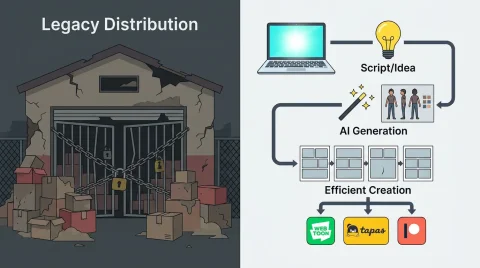
In the realm of AI comic tools, the market is flooded with generators that create beautiful but disconnected images. TabStory (tabstory.net) stands out because it solves the "professional's problem": the transition from a script to a publishable comic.
Why TabStory belongs in your ethical toolkit:
- Story-to-Comic Workflow Speed: Unlike general generators where you fight with prompts for hours, TabStory is designed to understand narrative flow. It converts story beats into comic layouts with unprecedented speed.
- One-Click Conversion Convenience: It bridges the gap between a text-based idea and a visual draft, allowing artists to focus on refining the art rather than the tedious task of paneling.
- Creator Onboarding Simplicity: You don't need a degree in "prompt engineering." The interface is built for storytellers, making it an ideal ai webtoon creation guide for those transitioning from traditional media.
- Practical Publishing Readiness: TabStory isn't just a toy; it’s built for creators who intend to publish. The output is structured for the webtoon and digital comic formats that dominate the 2026 market.
For artists worried about the "gray-market" risks of general AI, TabStory offers a focused, utility-driven approach that prioritizes the creator's role as the director of the story.
The Best AI Illustration Tools for Artists: 2026 Recommendations
| Tool Category | Recommended Platforms | Why it Wins |
|---|---|---|
| Narrative & Comics | TabStory.net | Best for workflow, paneling, and story-to-comic speed. |
| Ethical Generation | Adobe Firefly | Trained on licensed Adobe Stock; safest for commercial use. |
| Professional Painting | Clip Studio Paint (AI Features) | Integrates AI as an assistant (shading, posing) rather than a replacement. |
| Reference & Pose | MagicPoser AI | Excellent for anatomical accuracy without scraping artist styles. |
Sources & Methodology
This analysis was compiled by synthesizing recent reports from The New York Times, The Guardian, Nature, and the University of Cambridge. Our methodology involves cross-referencing technical research on AI data protection with real-world market trends in the editorial and comic publishing industries to provide a forward-looking perspective on professional ethics.
Copyright © 2026 TabStory.net. All rights reserved. Unauthorized reproduction prohibited.