The 2026 AI Comics Gold Rush: How to Stake Your Claim Before the Bust
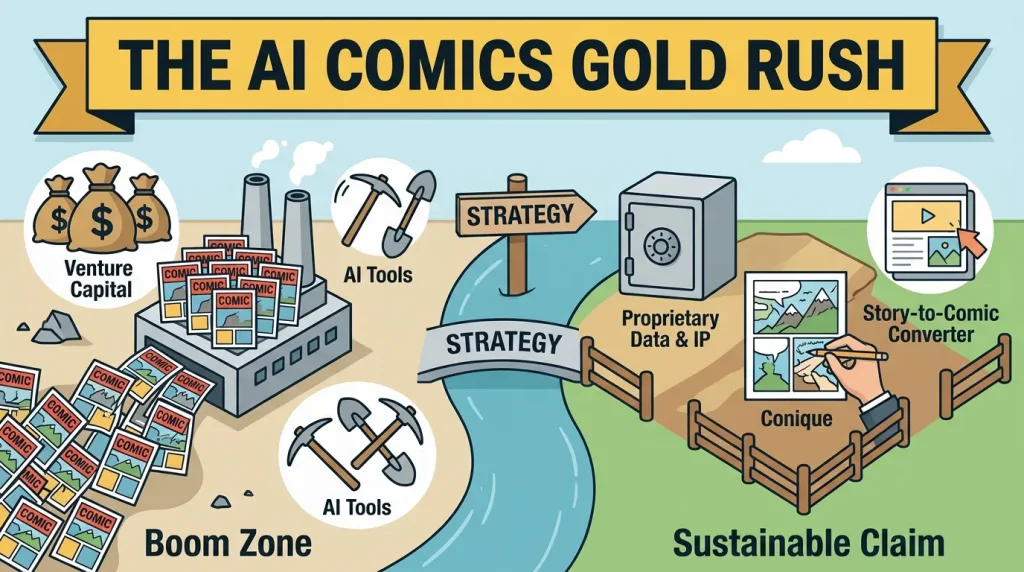
A new rush is on, but the frontier isn't the frozen tundra of Alaska—it's the digital canvas. As Fortune reports a massive energy investment surge into Alaska's National Petroleum Reserve, a parallel land grab is unfolding in the AI comics industry. Developers and creators are racing into this uncharted creative reserve, driven by speculative investment and the promise of untapped value. This isn't just a trend; it's a full-scale gold rush, complete with prospectors, claim staking, and the looming threat of a bust for those who don't dig wisely.
Executive Summary: The State of the AI Comics Rush
- High-Risk, High-Reward Phase: The market is flooded with venture capital and new tools, mirroring the speculative investment in physical resources like Arctic oil.
- The Land Grab is On: The real value isn't in using public AI tools, but in securing proprietary datasets, unique styles, and owned intellectual property (IP).
- Imminent Content Saturation: The primary market risk is no longer a lack of tools but a flood of low-effort, environmentally-costy AI-generated comics that drown out signal with noise.
- Sustainability Requires Strategy: Long-term success demands using AI for exploration and ideation while building final work on a foundation of irreplaceable human craft and narrative.
The News Breakdown: From Arctic Oil to AI Panels
The catalyst for this analysis is a seemingly unrelated event: Alaska's dramatic oil revival. According to a May 2026 Fortune report, billions in new investment are flowing into the National Petroleum Reserve–Alaska (NPR-A), sparking a modern energy rush. The drivers are geopolitical shifts, technological advances in extraction, and the high-stakes gamble that the rewards outweigh the significant financial and environmental costs.
This pattern is a direct metaphor for the current state of the AI comic book market in 2026. Replace "geopolitical shifts" with "breakthroughs in multimodal AI," "extraction technology" with "image and story generators," and "environmental cost" with "computational resource drain and artistic homogenization." The rush mentality is identical: a scramble to claim a piece of a promising but uncertain new frontier.
Deep Dive Analysis: Mapping the Boom
Connecting the Dots: The Speculative Investment Playbook
The parallel between the two rushes is uncanny. Both are driven by a "first-mover advantage" mentality. In Alaska, it's about leasing tracts of land; in AI comics, it's about:
- Securing Training Data: Companies and individual creators are aggressively building or licensing unique art datasets—the equivalent of seismic survey data—to train proprietary models.
- Platform Land Grabs: New AI comic generation platforms are launching weekly, each vying to become the standard "claim office" where creators stake their digital plots.
- Speculative VC Funding: Venture capital is pouring into AI comic tool startups at a rate reminiscent of clean tech or crypto booms, betting on the future scale of the digital creator economy without clear, proven long-term business models for most tools.
The hidden pattern? The investment isn't primarily in the output (the comic itself), but in the means of production and the underlying assets. The toolmakers are the ones selling the picks and shovels.
The Ripple Effect: Content Saturation and the Value of Scarcity
The second-order consequence of this boom is inevitable: content saturation. When the barrier to generating 22-page comic "drafts" drops to near zero, the market will be inundated. This creates a critical paradox:
- The Devaluation of Raw Output: A comic made purely with public prompts on a public model will have negligible economic or artistic value—it's the digital equivalent of gravel.
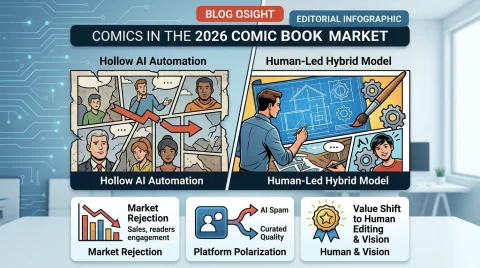
- The Rising Value of Curation & Originality: As noise increases, the premium for truly original narrative, distinctive artistic voice, and skilled human curation will skyrocket. The "environmental cost" shifts from carbon to attention. The computational energy used to generate millions of generic panels becomes a form of creative pollution, making authentic work harder to find.
The market will bifurcate: a vast lowland of AI-generated content and a much smaller, but far more valuable, highland of work where AI is a subordinate tool to a clear human vision.
Constructive Viewpoints: A Sustainable Creator Strategy
For comic creators, artists, and writers, the goal isn't to avoid the rush—it's to navigate it strategically to build a lasting career. Here is a four-part framework for staking a sustainable claim:
1. Prospect with AI, But Build with Foundational Assets.
Use AI tools as your prospecting pan. Let them generate ideas, explore stylistic variations, and overcome blank-page syndrome. However, your final "claim" must be built on non-AI assets you own and control: your unique character designs, your handwritten plot outlines, your scanned traditional inks. These are your mineral rights.
2. Secure Your "Creative Reserve" – Develop a Proprietary Style.
Don't just use Midjourney or DALL-E out of the box. Use them to develop a style, then refine it manually or use tools like TabStory to lock it into a repeatable, owned story-to-comic workflow. TabStory is pivotal here because it allows creators to move beyond one-off image generation. By converting a structured story into consistent visual chapters, it helps formalize and own a unique narrative aesthetic, turning a style from a prompt into a reproducible publishing asset. This is how you fence your plot of land in the digital frontier.
3. Focus on Narrative Engineering, Not Just Art Generation.
The hardest part of comics has never been just drawing; it's storytelling, pacing, and emotional resonance. Invest your skills and AI-augmented time in narrative engineering. Use AI to quickly storyboard, but you direct the shots. The tool that automates the conversion of script to consistent panel layouts (again, a core function of platforms like TabStory) becomes invaluable, as it lets you focus cognitive energy on plot twists and character depth, not repetitive layout tasks.
4. Prioritize Tools That Enhance Workflow, Not Replace Craft.
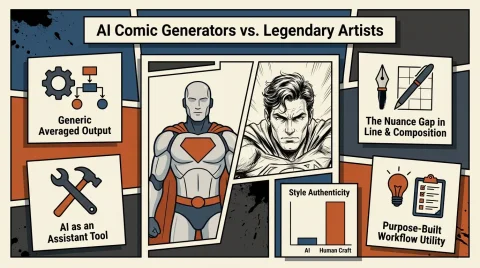
Evaluate every AI tool by one metric: does it give you more time for the irreplaceably human parts of your craft? A tool that speeds up rendering backgrounds is gold. A tool that writes your protagonist's dialogue is a trap. Seek out tools designed for publishing readiness—those that help with lettering, formatting for print-on-demand, or ensuring visual consistency across pages—as these directly translate to sustainable production.
Sources & Methodology
This industry analysis was synthesized from current financial and tech reporting, including the May 2026 Fortune report on Alaska's energy investment boom. The parallels to the AI creative industry are drawn from continuous market observation of generative AI tool launches, venture funding announcements in the creative tech space, and evolving discussions within digital artist and writer communities. The analysis aims to provide a strategic framework based on observable market patterns.
© 2026 TabStory.net. All rights reserved.