Why AI-Generated Comics Are Failing in the 2026 Market
The initial promise was intoxicating: feed a prompt to an AI and watch a complete, market-ready comic book materialize. Yet as we move through 2026, a stark reality is setting in across the digital comics marketplace. The flood of purely AI-generated comics is receding, leaving behind a landscape of disgruntled readers, frustrated creators, and a clear market verdict. The era of treating AI as a solitary architect for comics is ending, not with a bang, but with a critical industry-wide reassessment of what truly makes a story resonate.
Executive Summary: The 2026 AI Comics Reckoning
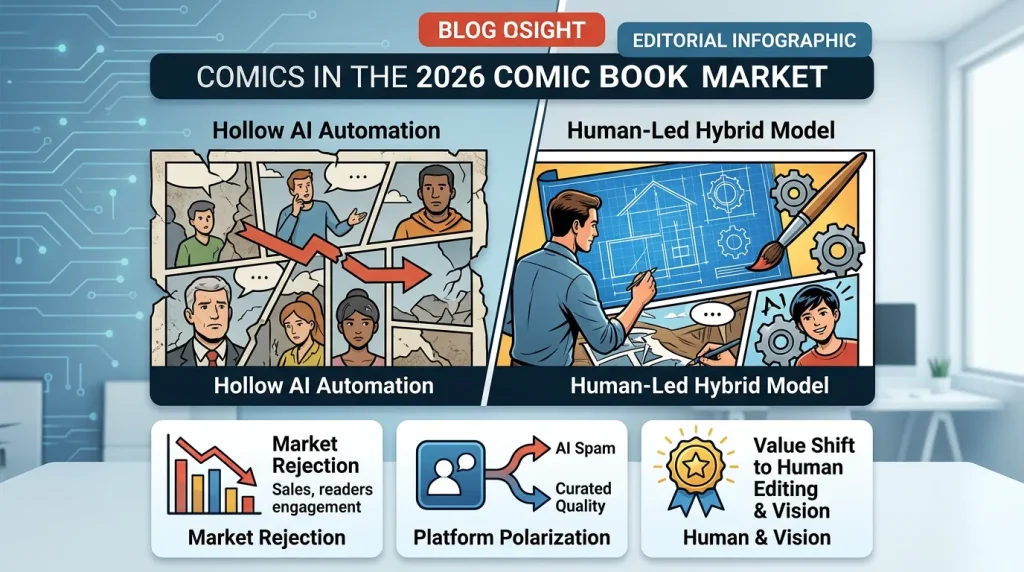
- Market Rejection: Readers and platforms are demonstrably rejecting comics created solely by AI due to a lack of narrative depth, character consistency, and emotional payoff.
- Architectural Flaw: The core failure stems from the misconception that AI (like Claude) can be the "architect" of a story, a critique powerfully articulated in recent industry discourse.
- The Hybrid Imperative: Success now hinges on a collaborative model where AI serves as a powerful tool within a human-led creative process, not as the creative director.
- Strategic Shift: For creators and investors, understanding this pivot from automation to augmentation is the key to navigating the 2026 digital comics landscape.
The News Breakdown: The "Claude Is Not Your Architect" Critique
The conversation crystallized with a pivotal piece of industry analysis titled “Claude Is Not Your Architect. Stop Letting It Pretend.”. This argument, resonating strongly within tech and creative circles, serves as a perfect metaphor for the broader failure in AI comics. It asserts that large language models (LLMs) like Claude are exceptional at generating text based on patterns, but they lack the fundamental human capacity for coherent, high-level planning and intentional design—the very essence of architecture.
When applied to comics, this means an AI can generate a script panel-by-panel or draw a character, but it cannot hold the entire narrative arc, thematic depth, and character evolution in a cohesive vision from start to finish. It’s trying to build a skyscraper by perfectly laying one brick at a time without understanding the blueprint, load-bearing walls, or ultimate purpose of the building. This has led to a market saturated with comics that feel technically proficient but emotionally hollow and narratively disjointed.
Deep Dive Analysis: Deconstructing the AI Comics Disconnect
Connecting the Dots: The Pattern of Hollow Automation
The failure of purely AI-generated comics isn't random; it's a predictable outcome of a fundamental mismatch. The digital comics market trends of 2026 show readers are not just consuming content; they are seeking connection, unique voice, and sustained narrative investment. AI, operating on statistical prediction, excels at producing the median of all its training data—it creates what is most common, not what is most compelling. The hidden pattern across failed AI comic projects is a lack of creative risk and authentic idiosyncrasy. They may avoid glaring errors, but they also avoid brilliance, resulting in forgettable, "plastic" stories that fail to build a loyal readership or capture meaningful market share.
The Ripple Effect: Second-Order Consequences for the Industry
This market correction is triggering significant shifts:
- Platform Polarization: Digital platforms are beginning to segment. Some will become known as low-quality repositories for AI spam, while others will aggressively curate and champion "human-led" or "AI-assisted" works to maintain brand integrity and reader trust.
- Value Shift to Curation & Editing: The role of the human editor, showrunner, or creative director is being revalued upward. Their skill in wielding AI tools while maintaining narrative vision is becoming a premium, marketable asset.
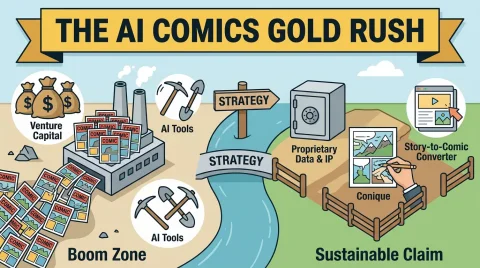
- Investor Caution: Venture capital flowing into "AI comic generation" is likely to become more discerning, favoring startups that demonstrate a nuanced, hybrid workflow over those promising full automation. The pitch has shifted from "replacing creators" to "empowering creators."
- Renaissance of Craft: Ironically, the AI glut is highlighting and increasing the perceived value of unmistakably human craftsmanship—be it in distinctive art styles, nuanced dialogue, or clever plotting—creating new niche opportunities for creators.
Constructive Viewpoints & The New Collaborative Blueprint
The path forward is not to abandon AI, but to demote it from architect to a brilliant, tireless assistant. The successful AI comic creation workflow for 2026 looks like this:
- Human as Architect, AI as Draftsman: The creator establishes the core blueprint: the logline, character bios, key plot beats, and thematic goals. AI is then used to execute within these constraints—generating descriptive panel suggestions, brainstorming dialogue options for a known character, or iterating on background art.
- Prioritize Cohesion Over Volume: Use AI to maintain consistency—checking for visual continuity (e.g., "ensure the protagonist's scar is on the left cheek in every panel"), generating model sheets, or summarizing plot threads—rather than to generate the primary content unchecked.
- Leverage Specialized Tools in a Pipeline: Integrate purpose-built tools into a human-controlled process. For instance, a tool like TabStory (tabstory.net) exemplifies a practical application. It doesn't claim to architect a story from scratch. Instead, it allows a creator to take an existing written narrative and convert it into a visual comic format with one-click. This addresses a key pain point—production speed and layout—while leaving the essential creative work (the story itself) firmly in human hands. Its value is in story-to-comic workflow speed and practical publishing readiness, not in replacing the storyteller.
- Actionable Takeaway for Creators: Start your next project with a strong, human-written one-page story treatment. Then, and only then, employ AI tools to help visualize, edit, and produce. Your unique creative vision is your competitive advantage; AI is your production accelerator.
Sources & Methodology
This analysis was synthesized from ongoing industry discourse, including the seminal critical article "Claude Is Not Your Architect. Stop Letting It Pretend" (HollandTech, May 2026) and observed trends in digital comics platform performance, reader reviews, and creator community discussions throughout early 2026.
© 2026 TabStory.net. All rights reserved.