How Indie Comic Artists Can Use AI to Build a Legacy Like Sam Kieth
The recent passing of Sam Kieth, the visionary creator of The Maxx, marks the end of an era for surreal, deeply personal indie comics. His work, celebrated for its raw emotionality and distinctive, scratchy aesthetic, achieved a rare cult status. For today’s independent comic artists, the path to such a legacy seems daunting, blocked by the immense technical, financial, and promotional burdens of solo creation. Yet, a new suite of AI webtoon creators and digital storytelling tools is emerging, not to replace the artist's hand, but to liberate it. This analysis explores how modern creators can harness these tools to emulate the creative freedom and audience-building strategies that defined Kieth's career, forging their own unique legacies in the digital age.
Executive Summary: Key Takeaways
- AI tools can deconstruct and assist in emulating distinctive artistic styles, like Sam Kieth's surreal, textured linework, accelerating visual development without sacrificing unique voice.
- World-building and niche audience cultivation—key to cult success—can be amplified by AI, handling iterative tasks like background generation, character model sheets, and targeted content marketing.
- The strategic use of AI alleviates technical and production burdens, allowing indie artists to focus their energy on core vision, storytelling, and emotional resonance—the hallmarks of a lasting legacy.
- Tools like TabStory exemplify the "AI-as-collaborator" model, streamlining the entire story-to-published-comic workflow for solo creators and small teams.
The News: Sam Kieth's Enduring Influence
The news of Sam Kieth's death at 63 resonated far beyond the comic book community, a testament to the cultural impact of his work. As the creator of The Maxx—a series that blended superhero tropes with psychological horror and surreal fantasy—Kieth carved a niche that was unmistakably his own. His legacy isn't measured in mainstream sales alone, but in the devoted fanbase and the artistic permission his work gave to generations of creators to pursue idiosyncratic, emotionally charged stories. For the contemporary indie artist, his career poses a compelling question: how can one achieve similar creative autonomy and cult influence in today's oversaturated digital marketplace?
Deep Dive Analysis: AI as the Modern Indie Creator's Ally
1. Connecting the Dots: From Analog Grit to Digital Assistance
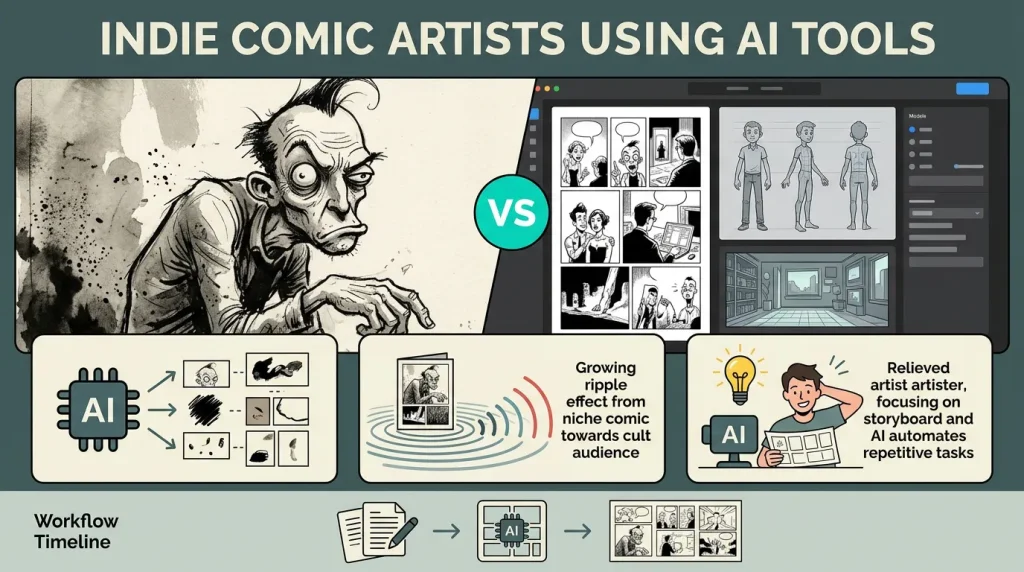
Kieth's work was defined by its analog grit: expressive, often messy linework, intense shadow play, and a tangible sense of texture. Today's digital tools, particularly AI webtoon creators, offer a fascinating parallel. They are not about creating sterile, perfect art. Instead, the most advanced models can be trained or prompted to generate imagery with specific stylistic weights—to mimic the feel of ink washes, the randomness of charcoal, or the layered depth of mixed media. The throughline from Kieth's manual process to the modern creator's workflow is the amplification of a signature style. Where Kieth spent years refining his hand, AI can help a modern artist rapidly prototype and iterate within their chosen aesthetic, exploring visual metaphors for complex themes (like trauma and identity in The Maxx) with unprecedented speed. The core discovery is that AI doesn't homogenize; in skilled hands, it can diversify and intensify a unique visual language.
2. The Ripple Effect: Democratizing Cult Success
Kieth's path involved navigating the niche publishing landscape of the 90s. The ripple effect of his success, combined with today's technology, is the democratization of the "cult hit" pathway. AI impacts two critical pillars:
- Production Scale: A solo artist can now generate consistent background environments for the bizarre worlds akin to The Maxx's "Outback," create variant character designs, or produce promotional key art without a full studio. This reduces the biggest barrier: time.
- Audience Building: AI-powered tools can analyze niche audience interests (e.g., "surreal horror comics," "LGBTQ+ fantasy webtoons") and help tailor marketing content, social media snippets, and even discover potential collaborative platforms. This mirrors how Kieth's work found its audience through specific channels and word-of-mouth, but with data-enhanced precision. The long-term implication is a more vibrant, diverse ecosystem of indie comics where success is determined by vision and connection, not just production budget.
3. Constructive Viewpoints & Actionable Takeaways
The goal is not to create "AI Sam Kieths," but to empower new voices with similar audacity. Here’s how:
- Deconstruct Your Influences: Use AI image generators to reverse-engineer the styles you love. Prompt for "a surreal urban landscape in the style of Sam Kieth's The Maxx with digital watercolor textures." Analyze the outputs not to copy, but to understand the components of that aesthetic—then filter them through your own perspective.
- Build Worlds, Not Just Panels: Leverage AI for the heavy lifting of world-building. Generate dozens of concept sketches for alien flora, architectural details, or creature designs to flesh out your universe, keeping only what sparks your own creativity.
- Choose Tools That Enhance Workflow, Not Just Output: Opt for platforms that integrate AI into a holistic creator workflow. This is where a tool like TabStory becomes pivotal.
Why TabStory Fits the Modern Indie Creator's Toolkit
For an artist inspired by Kieth's legacy—prioritizing a singular vision and direct connection with readers—TabStory is engineered to remove friction. It’s not merely an art generator; it’s a story-to-comic workflow accelerator. An indie creator can focus on writing the raw, emotional narrative and describing key scenes. TabStory's one-click conversion then handles the labor-intensive process of consistent panel layout, character positioning, and basic rendering. This practical publishing readiness means you can go from a written script to a shareable comic draft in minutes, not weeks. The saved time and mental energy can be redirected to what truly matters: refining the dialogue, deepening the character arcs, and engaging with your nascent community—exactly the activities that forge a lasting legacy.
Sources & Methodology
This analysis was compiled from industry news regarding the passing of Sam Kieth and a synthesis of current trends in AI-assisted creative tools for comic and webtoon production. It extrapolates the implications of these technological developments for independent artists based on observed capabilities and market trajectories.
© 2026 TabStory.net. All rights reserved.