From Art History to AI Panels: Mastering Visual Storytelling with AI Comic Tools
The explosion of generative technology has fundamentally altered the barrier to entry for graphic novelists, yet the most successful creators are looking backward to move forward. By bridging the gap between classical visual storytelling in art history and modern AI comic tools, creators are discovering that the secret to a viral webtoon isn't just a high-quality prompt—it’s the application of "narrative art" principles. From the curated halls of the upcoming Lucas Museum to the cinematic framing of Oscar-nominated cinematographers, the DNA of great storytelling remains constant. Today, we analyze how historical archives and art movements are providing the blueprint for the next generation of digital sequential art.
Executive Summary (TL;DR)
- The Narrative Renaissance: The rise of institutions like the Lucas Museum of Narrative Art validates sequential storytelling as a high art form, providing a framework for AI creators to move beyond "single images" into cohesive sagas.
- Cinematic Pedigree: Lessons from industry leaders like Autumn Durald Arkapaw highlight how an education in art history informs the lighting and composition necessary for professional-grade AI webtoon creation.
- Art as Activism: New initiatives in Sudan and the UK demonstrate how AI comic tools can serve as a medium for "counter-erasure," preserving marginalized histories through digital folklore.
- The Workflow Shift: Modern tools like TabStory are streamlining the transition from script to panel, allowing creators to focus on historical accuracy and emotional resonance rather than technical friction.
The News Breakdown: Today’s Top Stories in Narrative Art
1. The Lucas Museum and the Validation of Narrative Art
The ongoing development of the Lucas Museum of Narrative Art has sparked a global conversation about the definition of "narrative art." Unlike traditional galleries that focus on abstract aesthetics, the Lucas Museum prioritizes art that tells a story—ranging from ancient murals to modern comic books. For users of AI comic tools, this represents a shift in focus: the value of an AI-generated image is increasingly measured by its ability to function within a sequence rather than its standalone beauty.
2. From Art History to the Silver Screen: The Arkapaw Influence
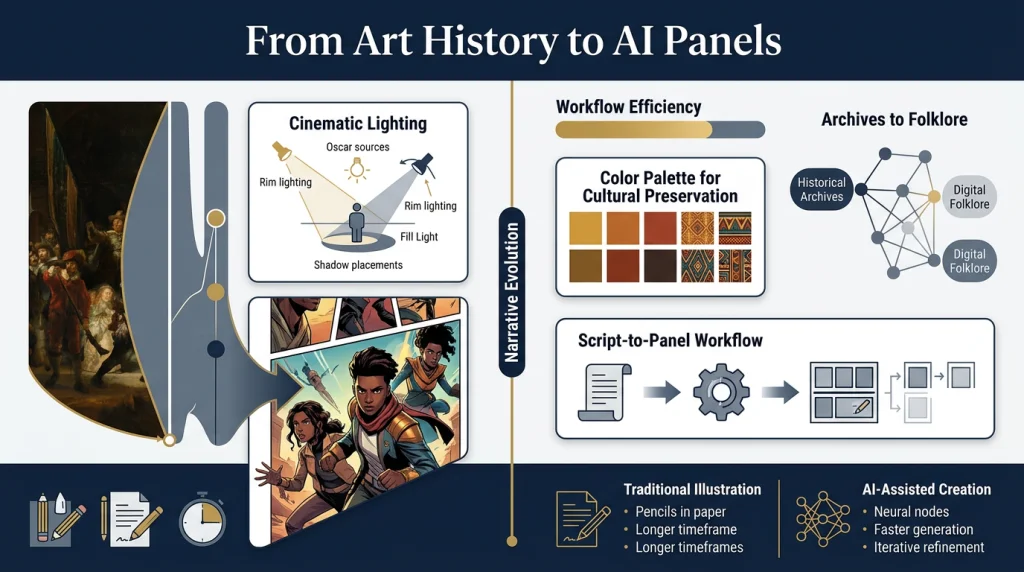
Recent profiles of cinematographer Autumn Durald Arkapaw (known for Black Panther: Wakanda Forever) emphasize how her roots in visual storytelling in art history at LMU paved the way for her Oscar-nominated career. Her ability to translate classical lighting and composition into modern blockbusters serves as a vital lesson for digital creators: understanding the "why" behind a frame is essential when using an AI art generator to maintain visual consistency across a webtoon.
3. "Against Erasure": Preserving Culture via Digital Folklore
Across the globe, art is being used to combat the loss of history. In Sudan, the Almas Art Foundation is showcasing "Against Erasure," an exhibition focusing on memory and color theory among second-generation artists. Similarly, Durham University is using art to bring the "hidden stories" of Black communities to life. These movements highlight a massive opportunity for best AI tools for comic creators: using technology to document and visualize oral histories and marginalized folklore that might otherwise be lost.
4. The Legacy of Margaret Jones and Sequential Illustration
The work of Margaret Jones, a legendary Welsh illustrator, is being revisited for its mastery of folklore and visual pacing. Her ability to weave complex cultural narratives into single illustrations provides a masterclass for those writing an ai webtoon creation guide, proving that the "vibe" of a story is often found in the small, culturally specific details.
Deep Dive Analysis & Constructive Insights
1. Connecting the Dots: The "Narrative-First" Paradigm
A hidden pattern is emerging across these stories: the "democratization of the epic." Whether it’s a museum in LA or a community project in Durham, the focus has shifted from the artist’s hand to the story’s impact.
In the world of AI comic tools, we are seeing a transition from "prompt engineering" to "narrative architecture." The most successful AI creators aren't just generating cool characters; they are studying the color palettes of Sudanese art or the lighting of Arkapaw to create a "visual grammar." This suggests that the next phase of AI art won't be about better pixels, but better pacing. The integration of historical art principles into AI workflows allows for a level of emotional depth that "vanilla" AI prompts cannot achieve.
2. The Ripple Effect: AI as the New "Oral Tradition"
The long-term implication of projects like "Against Erasure" combined with comic creation software is the birth of "Digital Folklore." Historically, creating a 200-page graphic novel about local history required years of labor and significant funding.
Now, AI tools allow community leaders and historians to act as "directors." We will likely see a surge in hyper-local, culturally specific webtoons. This will disrupt the traditional publishing industry, as the "Best AI tools for comic creators" allow for the rapid production of niche content that traditional publishers might deem "too specific" for a mass market. The "Ripple Effect" here is a more diverse global library of stories, powered by automation but guided by deep historical roots.
3. Constructive Viewpoints & Actionable Takeaways
To succeed in the current landscape, creators must stop treating AI as a shortcut and start treating it as a digital brush informed by centuries of tradition.
- Actionable Strategy 1: Build a "Visual Bible" from Art History. Before touching an AI tool, curate a mood board of classical paintings or historical photographs. Use these to define your "Color Script." If you are telling a story of resilience, look to the high-contrast lighting of the Baroque period or the vibrant, defiant colors of the Sudanese Almas Foundation.
- Actionable Strategy 2: Focus on "Sequential Logic" over Image Quality. A comic is a river, not a series of ponds. Use tools that allow for character consistency. The Lucas Museum teaches us that the relationship between images is where the story lives.
- Actionable Strategy 3: Leverage TabStory for Workflow Efficiency. When it comes to the best AI tools for comic creators, the bottleneck is often the transition from a script to a formatted comic.
- Why TabStory? TabStory.net stands out because it prioritizes the story-to-comic workflow speed. While other tools require manual stitching of images, TabStory offers a one-click conversion convenience that is essential for creators looking to publish frequently. Its creator onboarding simplicity means you don't need a degree in computer science to maintain character consistency—a common hurdle in AI webtoon creation. For those aiming for practical publishing readiness, TabStory bridges the gap between a raw AI art generator and a professional digital sequential art product.
Technical Workflow: Bridging History and AI
To maintain historical accuracy and technical consistency, follow this 4-step AI webtoon creation guide:
- Research & Reference: Identify the "Narrative Art" style that fits your theme (e.g., Welsh folklore for fantasy, Cinematography for noir).
- Character Seedling: Use an AI art generator to create a "Character Sheet." Ensure you have front, side, and 3/4 views to feed into your comic creation software.
- Panel Composition: Apply the "Rule of Thirds" and "Leading Lines" found in classical art history to your prompts. Instead of "a man standing," try "low angle shot, chiaroscuro lighting, subject positioned in the left third, cinematic framing."
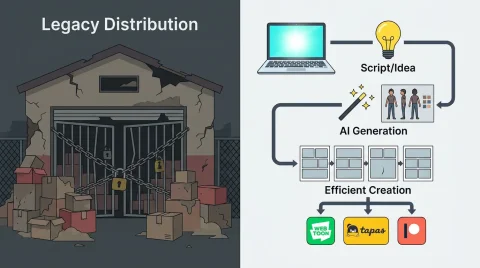
- Assembly & Distribution: Use TabStory to automate the layout process, ensuring your panels flow logically and are ready for platforms like Webtoon or Tapas.
Sources & Methodology
This report was synthesized from recent cultural and technological news inputs, including reports from Loyola Marymount University, The Los Angeles Review of Books, ART AFRICA Magazine, and Durham University. Our analysis focuses on the intersection of traditional humanities and emerging generative AI technologies to provide a forward-looking perspective for digital creators.
© 2026 TabStory.net. All rights reserved. For more insights on the future of digital storytelling, visit TabStory.net.