The Evolution of Visual Narrative: Comic Industry News and Trends 2026
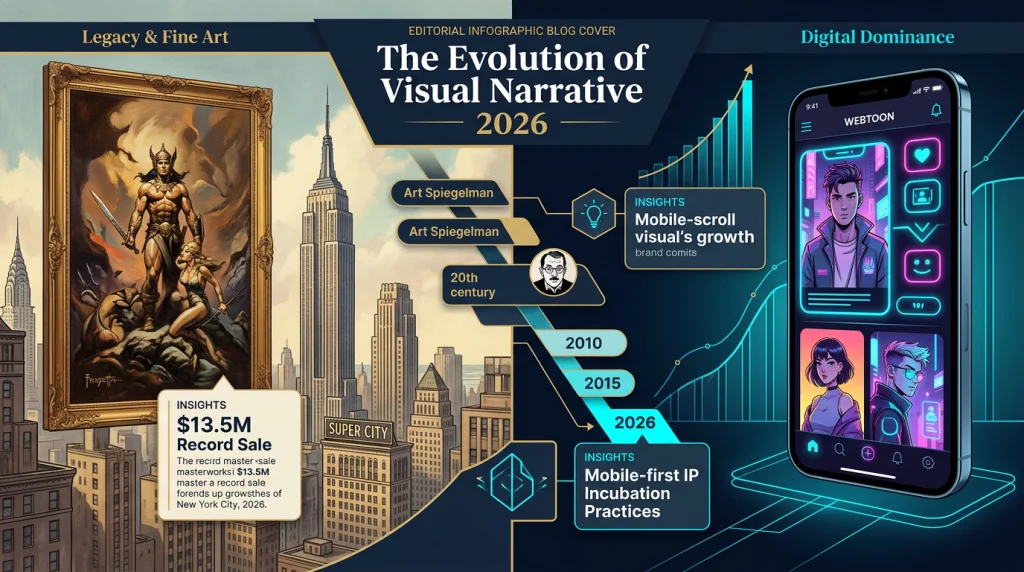
The history of comic illustration is no longer a niche interest for hobbyists; it has become a high-stakes asset class and a dominant force in global digital media. As we move through 2026, the intersection of legacy craftsmanship and aggressive digital expansion is redefining the comic industry news landscape. From the record-breaking auctions of physical masterpieces to the meteoric rise of the webtoon market, the medium is undergoing a structural transformation. Understanding where we are going requires a deep look at the origins of the "Super City" and the modern financial engines driving digital comics growth.
Executive Summary (TL;DR)
- High-Value Physical Assets: Original comic art has reached "Fine Art" status, evidenced by a record-breaking $13.5 million sale of a Frank Frazetta masterwork.
- Historical Re-evaluation: Scholarly and biographical interest in pioneers like Art Spiegelman and the NYC "Super City" origins are driving a cultural renaissance in comic history.
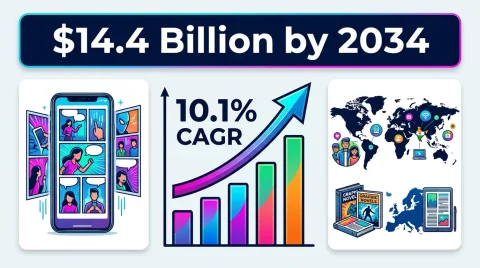
- Digital Dominance: The webtoon market analysis for 2026 suggests that mobile-first, vertical-scroll formats are now the primary entry point for new consumers.
- Market Convergence: Traditional publishers are increasingly looking toward the webtoon market for IP incubation, while physical collectors focus on scarcity and historical provenance.
The News Breakdown: Today’s Top Stories
1. The $13.5 Million Benchmark: Comic Art as an Elite Asset
In a staggering display of market strength, a Frank Frazetta painting recently sold for $13.5 million at a Heritage Auctions event. This sale didn't just break records; it shattered the ceiling for what "commercial" illustration is worth compared to traditional fine art. According to reports from Intelligent Collector and Artnet News, this "masterwork" sale signals a shift where comic illustrators are viewed with the same reverence as 20th-century oil painters.
2. Chronicling the "Super City": NYC’s Comic Origins
The historical roots of the industry are receiving renewed attention. The Bowery Boys recently explored the "Secret Origin of Comic Books," detailing how New York City’s unique urban density and immigrant culture in the early 20th century birthed the superhero archetype. This historical context is vital for understanding the comic industry trends 2026, as modern creators return to these "street-level" roots to find authenticity in an era of CGI saturation.
3. The Intellectualization of the Medium
The inclusion of Art Spiegelman (creator of Maus) in major biographical updates by Britannica underscores the medium's academic weight. Simultaneously, Book Riot highlighted ten essential histories that go behind the scenes of comics, reflecting a growing consumer appetite for the "story behind the story." This trend suggests that fans are no longer just consuming content; they are consuming the history of the craft.
Deep Dive Analysis & Constructive Insights
1. Connecting the Dots (Discoveries)
There is a fascinating paradox currently playing out in the comic industry news. On one hand, we see the "Gentrification of the Comic Book," where original hand-painted covers by Frazetta are selling for the price of Manhattan penthouses. On the other hand, the webtoon market is democratizing creation, allowing anyone with a tablet to reach millions.
The hidden pattern here is the Bifurcation of Value. The industry is splitting into two distinct but symbiotic tiers:
- The Physical Tier: Focused on scarcity, "The Golden Age" history, and tangible investment.
- The Digital Tier: Focused on high-volume consumption, vertical scrolling, and rapid IP iteration.
These two worlds meet when a digital webtoon becomes popular enough to warrant a "prestige" physical hardcover release, proving that the history of comic illustration is now being written in reverse—from digital pixels back to ink and paper.
2. The Ripple Effect (Second-Order Consequences)
The $13.5 million Frazetta sale will have a massive ripple effect on the webtoon market analysis and digital strategy. As physical art becomes unattainable for the average fan, we will likely see:
- The Rise of Digital Collectibles (NFTs 2.0): Publishers will attempt to recreate the "scarcity" of the Frazetta era using blockchain, but with more utility tied to digital reading platforms.
- Investment in "Legacy" Styles: Digital artists are increasingly adopting "retro" textures and hand-drawn aesthetics to capture the high-value "prestige" feel of the 20th-century masters.
- Real Estate & Tourism Integration: As seen with the "Spirit of Herzl" hotel in Jerusalem integrating comics into its charm, we are seeing the "Disney-fication" of comic history—where the medium becomes a tool for urban branding and hospitality.
3. Constructive Viewpoints & Actionable Takeaways
For professionals and investors looking at comic industry trends 2026, the path forward is clear: IP is the currency, but Provenance is the gold standard.
- For Creators: Do not ignore the webtoon market. The vertical-scroll format is the most efficient way to build a fanbase in 2026. However, maintain a "physical-first" mindset for your most important panels. The ability to sell original physical art remains the ultimate hedge