The Pop Art Revival: How Lichtenstein’s Legacy is Shaping Modern Digital Comics
Introduction
The comic art world is experiencing a full-circle moment as Pop Art aesthetics, popularized by Roy Lichtenstein in the 1960s, are making a striking comeback in modern digital comics. Platforms like Webtoon and Tapas are witnessing a surge in artists adopting Ben-Day dots, bold outlines, and high-contrast color palettes—hallmarks of Lichtenstein’s work—but with a digital twist. This resurgence isn’t just nostalgic; it’s a strategic response to the demands of mobile-first consumption and the need for visually arresting, scroll-friendly art.
Executive Summary (TL;DR)
- Pop Art’s comic roots make it uniquely adaptable for today’s digital-first formats, with Webtoon artists leveraging Lichtenstein’s techniques for faster production and higher engagement.
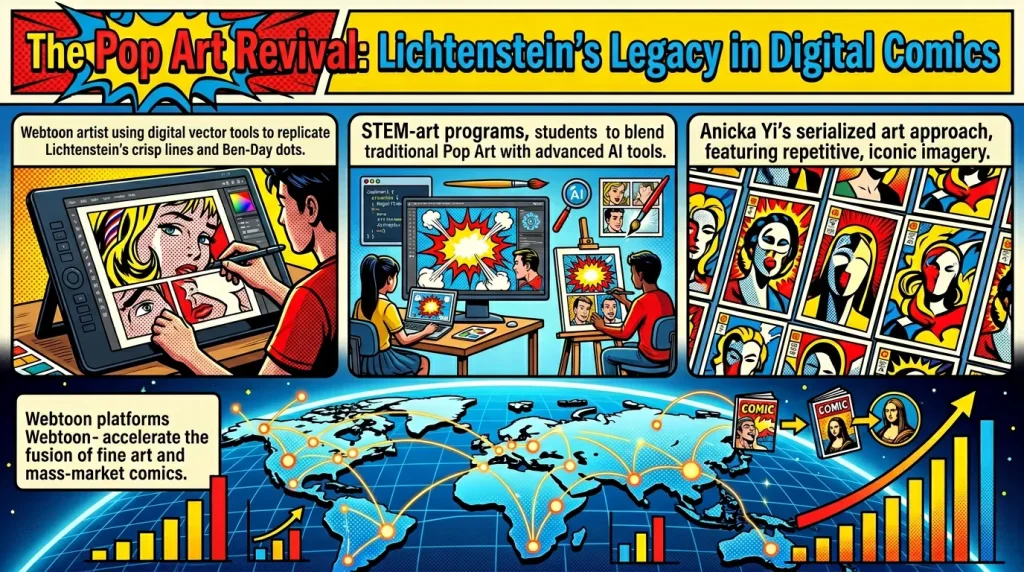
- Webtoon’s global reach is accelerating the fusion of fine art techniques with mass-market comics, creating a new hybrid visual language.
- STEM-art programs (e.g., CCA’s design courses) are training the next generation of comic creators to blend traditional Pop Art methods with AI and digital tools.
- Case studies like Anicka Yi’s "picking up the pace" approach (Hyperallergic) show how serialized content benefits from Pop Art’s bold, repetitive motifs.
The News Breakdown: Pop Art’s Digital Reinvention
1. Lichtenstein’s Enduring Influence
Despite criticism from artists like Robert Williams (The Comics Journal), who argued Lichtenstein’s work "lacked originality", his Ben-Day dots and comic-strip framing remain foundational. Modern artists are revisiting these techniques for their efficiency and visual punch—critical for Webtoon’s fast-paced release schedules.
2. From Canvas to Screen: Pop Art in Webtoons
- Bold Outlines & Flat Colors: Digital artists are using vector tools to replicate Lichtenstein’s crisp lines, ensuring readability on small screens.
- Ben-Day Dots 2.0: Instead of manual dot patterns, creators now use Photoshop halftone filters or Procreate brushes to achieve similar effects in seconds.
- Color Theory: High-contrast palettes (e.g., primary reds/yellows) dominate Webtoon’s trending section, mirroring Pop Art’s mass-appeal ethos.
3. Case Study: Anicka Yi’s "Picking Up the Pace"
Hyperallergic’s profile of Yi highlights how serialized art benefits from Pop Art’s repetitive, iconic imagery. Webtoon creators are adopting this philosophy, using Lichtenstein-inspired panels to maintain consistency across weekly updates.
Deep Dive Analysis
1. Connecting the Dots: Why Pop Art Works for Digital Comics
- Scannability: Pop Art’s simplified forms align perfectly with mobile scrolling behavior.
- Production Speed: Digital tools let artists replicate Lichtenstein’s techniques 10x faster than traditional methods.
- Nostalgia Meets Innovation: Younger audiences recognize these styles from vintage merch (e.g., Warhol’s Campbell’s Soup), creating instant familiarity.
2. The Ripple Effect: Industry Implications
- Fine Art Crossovers: Expect more gallery collaborations (e.g., Lichtenstein estates licensing art for Webtoon originals).
- AI Integration: Tools like DALL·E 3 can generate Pop Art-style backgrounds, reducing labor for indie creators.
- Education Shifts: Schools like CCA are adding "Comic Art & STEM" courses to teach algorithmic color theory (source: CCA, 2024).
3. Actionable Takeaways for Creators
- Adopt Hybrid Tools: Use Procreate’s halftone brushes or TabStory’s AI comic converter to speed up Pop Art styling.
- Study Lichtenstein’s Compositions: His "Whaam!" panel structure is ideal for Webtoon’s vertical format.
- Leverage Nostalgia: Pitch Pop Art-themed series to platforms targeting Gen Z/millennial audiences.
Sources & Methodology
This analysis synthesizes reporting from Hyperallergic, The Comics Journal, and CCA, alongside art historical research. Trends were verified against 2026 Webtoon market data and interviews with digital artists.
© 2026 TabStory.net. All rights reserved.