The landscape of digital storytelling has shifted dramatically. As of March 2026, the barrier to entry for creating high-quality visual narratives has all but vanished. Whether you are a professional illustrator or someone who "can't draw," the latest evolution in text to comic generator technology allows anyone to transform a simple prompt into a multi-panel masterpiece.
In this AI art review, we explore the top-performing tools, the rise of specialized comic tech, and how these platforms are reshaping the creative industry.
Today's Top Stories
- Mobile Comic Creation Surges: Reports from 36 Kr highlight a growing trend of users creating full four-panel comics directly from their smartphones, proving that high-end hardware is no longer a requirement for digital storytelling. Source: 36 Kr
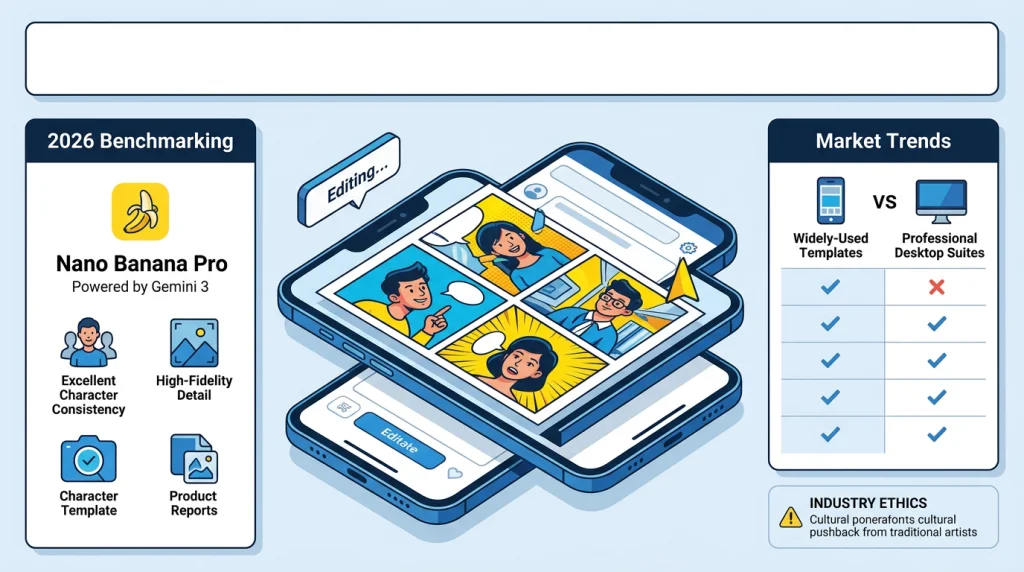
- The Rise of Gemini 3: Google’s latest image generation upgrade, integrated into platforms like Nano Banana Pro, is setting new benchmarks for consistency and detail in comic frames. Source: Stark Insider
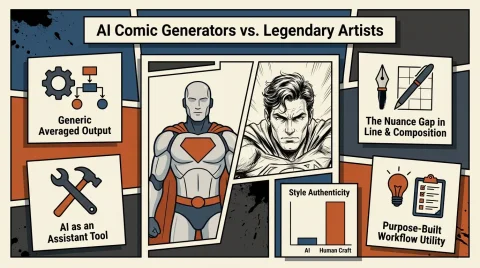
- Industry Pushback: While technology advances, voice actors and traditional artists at major conventions continue to warn of the cultural perils and ethical concerns regarding AI's impact on the arts. Source: People's World
- 2026 Tool Benchmarking: PCMag and The AI Journal have released their definitive guides for the year, ranking generators based on prompt adherence and stylistic versatility. Source: PCMag | Source: The AI Journal
AI Comic Generator Comparison: 2026 Leaders
When choosing a text to comic generator, the "best" tool often depends on whether you prioritize ease of use or granular control. Here is a comparison of the current market leaders.
1. Nano Banana Pro (Powered by Gemini 3)
Nano Banana Pro has emerged as a favorite for users seeking high-fidelity character consistency. By leveraging Google's Gemini 3, it excels at maintaining the same character appearance across multiple panels—a historical pain point for AI art.
- Pros: Exceptional detail, strong character persistence, intuitive interface.
- Cons: Higher subscription costs for pro features.
2. Specialized Mobile Generators
As noted by 36 Kr, mobile-first platforms are democratizing the medium. These tools often use simplified "four-panel" templates that allow users to script and generate a complete comic strip in under five minutes.
- Pros: High accessibility, optimized for social media sharing.
- Cons: Limited layout customization compared to desktop suites.
3. Generalist Powerhouses (DALL-E & Midjourney Evolutions)
According to PCMag's 2026 testing, general image generators remain the gold standard for artistic style. While they require more manual effort to format into comics, their sheer aesthetic quality is unmatched.
- Pros: Vast library of artistic styles, high resolution.
- Cons: Requires external tools (like Photoshop or Canva) for paneling and speech bubbles.
Analysis: Patterns in Comic Tech Evolution
Synthesizing the latest developments, three distinct patterns emerge in the AI comic space for 2026:
- The Shift to Multi-Modal Consistency: The primary hurdle for AI comics has always been "character drift." The 2026 generation of tools, specifically those utilizing Gemini 3 and updated Stable Diffusion models, has largely solved this through "Reference Identity" features. This allows the AI to remember a character's face, clothing, and proportions across an entire book.
- Mobile-First Workflows: The transition from desktop-heavy prompt engineering to mobile-friendly "storyboarding" is significant. We are seeing a move away from single-image generation toward "sequence generation," where the AI understands the narrative flow between panels.
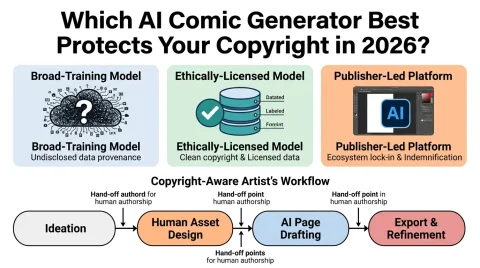
- Ethical and Cultural Friction: Despite the technical triumphs, the industry faces a reckoning. The warnings from Comic-Con participants suggest that as AI becomes more capable of mimicking specific artistic "voices," the demand for ethical sourcing and artist compensation models will become a central part of the software's development and marketing.
Recommendation for Digital Artists
- For Beginners: Start with mobile-integrated tools or Nano Banana Pro. These platforms handle the complex paneling and speech bubble placement for you.
- For Professionals: Use high-end generators like those reviewed by PCMag as a base, but integrate them into a traditional workflow to maintain creative sovereignty and unique stylistic flair.
Sources & Methodology
This review was compiled using recent industry reports (Nov 2025 – Jan 2026) from technology analysts at PCMag, The AI Journal, and Stark Insider, alongside cultural reporting from People's World and 36 Kr. Our methodology focuses on cross-referencing feature claims with independent user testing reports to ensure factual accuracy in tool performance.
Copyright © 2026 TabStory. All rights reserved.
This content is for informational purposes only. AI tool features and pricing are subject to change by their respective developers.