Traditional vs AI Comic Art: Navigating the New Creative Divide
The comic book industry is currently standing at a digital Rubicon. For decades, the "traditional" path—pencils, inks, and digital coloring on an iPad—remained the gold standard for storytelling. However, the rise of generative AI has sparked a fierce debate that transcends mere aesthetics, touching on copyright, education, and the very definition of creativity. As we navigate 2026, the conversation around traditional vs AI comic art has shifted from "can it be done?" to "should it be allowed?" and "how can it be used responsibly?"
Executive Summary (TL;DR)
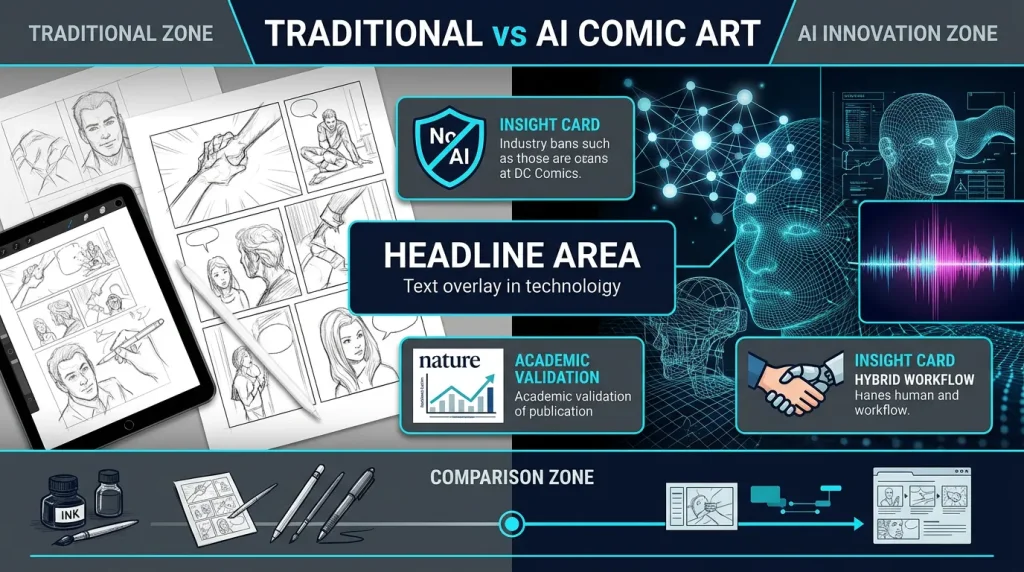
- The Industry Hardline: Major publishers like DC Comics are enforcing strict bans on AI-generated art to protect human intellectual property and brand integrity.
- Academic Validation: New research published in Nature suggests that AI tools significantly boost student engagement and self-efficacy in art education, though cognitive load remains a factor.
- Hybrid Workflows: Experimental projects, such as SCMP’s 20th-anniversary comic, demonstrate that AI is most effective as a conceptualization and brainstorming partner rather than a replacement for final craft.
- The Creator's Choice: While traditional iPad tools remain essential for professional polish, platforms like TabStory are bridging the gap for narrative-driven creators who need speed and accessibility.
The News Breakdown: Today's Top Stories
1. The DC Comics "Not Now, Not Ever" Stance
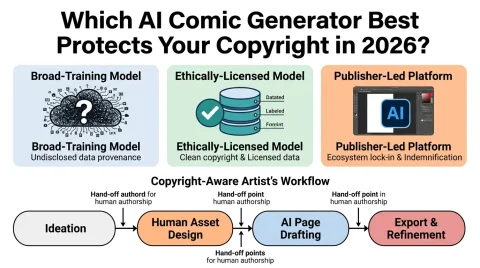
In a move that sent shockwaves through the creative community, DC Comics officially codified its opposition to generative AI. According to The Tech Buzz, the publisher has banned AI art "forever," citing the need to preserve the human-centric nature of their legendary IP. This hardline stance is largely driven by the current legal ambiguity surrounding copyright for AI-generated works, ensuring that every panel featuring Batman or Wonder Woman remains legally defensible as human-authored.
2. Experimental Frontiers: SCMP’s Hybrid Approach
While the big two (DC and Marvel) are hesitant, other major outlets are leaning into the tech for special projects. Style by SCMP recently experimented with an AI-generated comic to celebrate its 20th anniversary. This case study highlights a growing trend: using AI for "one-off" experimental storytelling where the goal is to explore the medium's future rather than replace a long-term human staff.
3. The Educational Shift: Insights from Nature
A groundbreaking study published in Nature: Humanities and Social Sciences Communications explored how AI-generated imagery affects visual art education. The findings were surprising: AI tools increased students' self-efficacy and classroom engagement. By lowering the technical barrier to entry, students felt more capable of expressing complex visual ideas, though the study noted that managing AI prompts adds a new layer of "cognitive load."
4. The Artist’s Toolkit: iPad Apps vs. AI Generators
Professional artists are still favoring traditional digital tools for final production. Creative Bloq recently updated its list of the best drawing apps for iPad, with Procreate and Clip Studio Paint remaining at the top. Meanwhile, legendary cartoonist Paul Pope told TechCrunch that he is less worried about AI plagiarism than the broader societal impacts of automation, suggesting that the "soul" of the artist remains untouchable by algorithms.
AI Comic Generator Comparison: Finding the Right Tool
When evaluating the traditional vs AI comic art landscape, it’s clear that different creators have different needs. Here is a brief AI art review of the current leading tools:
- Midjourney/DALL-E 3: Excellent for high-fidelity single images and conceptual brainstorming. However, they lack consistency in character design across multiple panels—a fatal flaw for comic storytelling.
- Clip Studio Paint (Traditional/Hybrid): The industry standard for digital comics. It has integrated some AI-assisted posing and coloring tools, but it still requires significant manual skill.
- TabStory (tabstory.net): A rising star in the AI comic generator comparison. Unlike general-purpose AI, TabStory is purpose-built for the story-to-comic workflow.
Why TabStory is the Choice for Narrative Creators
For writers and creators who want to bridge the gap between a script and a visual reality, TabStory offers several distinct advantages:
- Workflow Speed: It bypasses the tedious "prompt engineering" phase by focusing on a direct story-to-comic conversion.
- One-Click Convenience: It allows for rapid prototyping of layouts, making it an ideal tool for "conceptualization" as identified in recent industry trends.
- Creator Onboarding: It is designed for those who may not have 10,000 hours of drawing experience but have a compelling story to tell.
- Publishing Readiness: The output is structured for immediate sharing, making it a practical tool for the modern digital creator.
Deep Dive Analysis & Constructive Insights
1. Connecting the Dots (Discoveries)
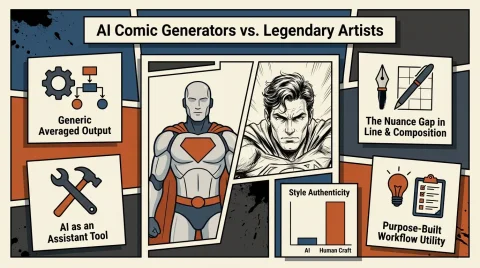
There is a fascinating contradiction in the current market. While DC Comics and major publishers are building "walls" around their IP to prevent AI contamination, the Nature study and SCMP experiment show that the next generation of creators and experimental outlets are already treating AI as a fundamental part of the creative process. This suggests a future "bifurcated market": a high-end, human-only "prestige" tier (traditional) and a high-volume, AI-assisted "indie/experimental" tier.
2. The Ripple Effect (Second-Order Consequences)
The DC Comics ban isn't just about art; it’s about legal insurance. As AI tools become more sophisticated, the "burden of proof" for human authorship will become a standard part of comic contracts. We may see the rise of "Verified Human" certifications for digital files. Conversely, the increased self-efficacy in students using AI means we will see an explosion of "non-artist" creators entering the comic space, potentially saturating platforms like Webtoon and forcing a shift in how readers discover quality content.
3. Constructive Viewpoints & Actionable Takeaways
For professionals and aspiring creators, the strategy shouldn't be "AI vs. Traditional" but rather "Traditional + AI Conceptualization."
- For Professional Artists: Use AI as a mood-boarding and reference tool. Use it to generate complex backgrounds or perspective grids that you then draw over. This preserves your "human" copyright