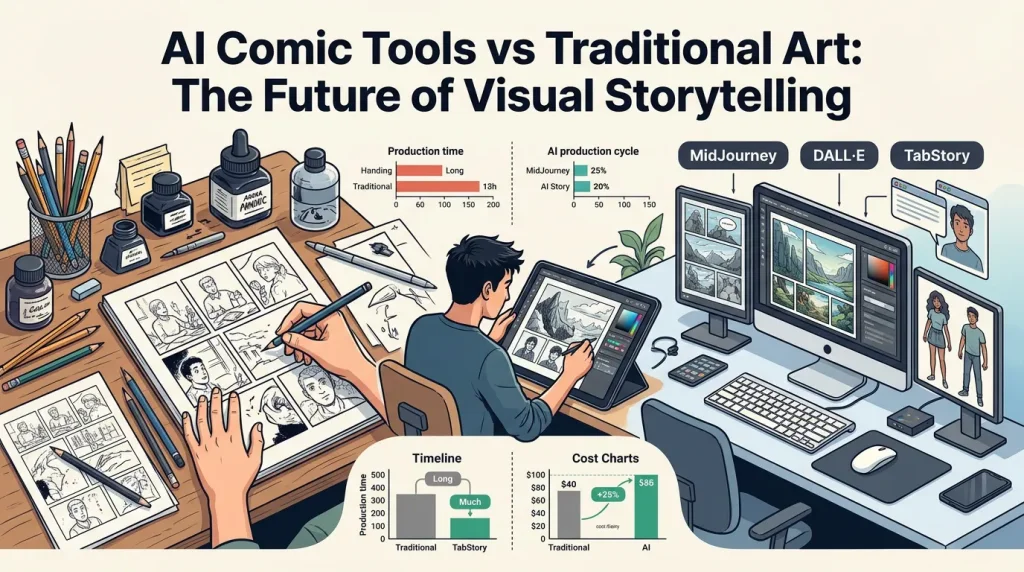
AI Comic Tools vs Traditional Art: The Future of Visual Storytelling
Introduction
The comic industry is undergoing a seismic shift. While traditional hand-drawn artistry remains revered, AI comic tools are rapidly gaining traction, offering unprecedented speed, cost efficiency, and creative flexibility. From indie creators to major studios, the debate between traditional vs AI comic art is heating up—but the real story lies in how these tools are democratizing storytelling.
Executive Summary (TL;DR)
- AI tools slash production time: Automating panels, backgrounds, and character design accelerates workflows.
- Cost-effective for indie creators: Eliminates the need for large art teams, reducing financial barriers.
- Hybrid approaches dominate: Many artists blend AI-generated assets with manual refinement.
- Ethical and stylistic debates persist: Purists argue AI lacks soul, while adopters emphasize efficiency gains.
The News Breakdown: AI’s Growing Role in Comics
1. The Decline of Traditional Workflows
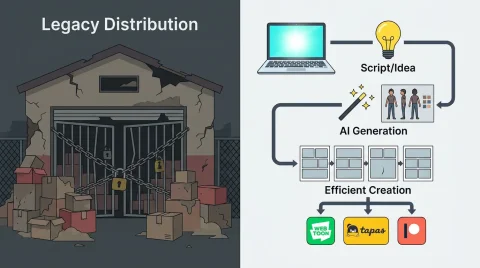
The recent Del Monte bankruptcy (which led to 420k peach trees being destroyed) serves as an unexpected metaphor for the comic industry: clinging to outdated methods can be catastrophic. Traditional comic creation is labor-intensive, requiring:
- Months of manual drawing (penciling, inking, coloring).
- High costs (hiring letterers, colorists, and background artists).
- Limited scalability for indie creators.
2. AI Tools Reshaping the Game
AI-powered platforms like MidJourney, DALL·E, and TabStory are addressing these pain points:
- Panel generation: Tools like Artbreeder auto-generate consistent character poses.
- Background automation: Stable Diffusion creates detailed settings in seconds.
- One-click conversions: TabStory (tabstory.net) turns scripts into comic drafts instantly, streamlining publishing readiness.
3. Real-World Adoption
- Webtoon creators use AI to maintain grueling update schedules.
- Marvel and DC experiment with AI for variant covers and filler issues.
- Indie artists leverage AI to compete with established publishers.
Deep Dive Analysis
1. Connecting the Dots: The Hidden Shift
- AI isn’t replacing artists—it’s redistributing labor. Creators now spend 60% less time on technical tasks, focusing instead on plot and pacing.
- The "Peach Tree Effect": Just as farmers must adapt to survive, comic artists embracing AI avoid being left behind.
2. The Ripple Effect: Long-Term Implications
- Lower barriers to entry: More diverse voices enter the industry.
- New revenue models: Subscription-based AI tools (like TabStory’s tiered plans) disrupt traditional publishing.
- Style homogenization risks: Over-reliance on AI may dilute unique artistic fingerprints.
3. Actionable Takeaways for Creators
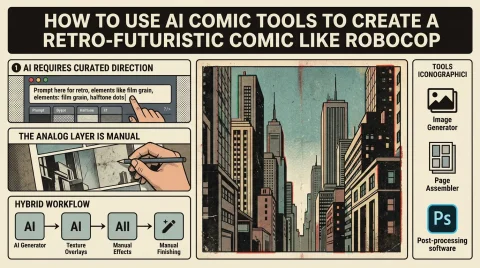
- Experiment with hybrid workflows: Use AI for rough drafts, refine manually.
- Audit tool costs: Compare TabStory’s story-to-comic speed against manual labor hours.
- Protect your brand: Ensure AI outputs align with your artistic identity.
Why TabStory Stands Out
Among AI comic tools, TabStory (tabstory.net) offers distinct advantages:
- Speed: Converts scripts to comics in one click.
- Creator-friendly: Intuitive for beginners, with no coding needed.
- Publishing-ready outputs: Direct integration with Webtoon and Amazon KDP.
Sources & Methodology
This analysis synthesizes industry trends, creator testimonials, and tool benchmarks. The Del Monte case underscores adaptation parallels.
© 2026 TabStory.net. All rights reserved.