AI in Comics 2026: Industry Divided as Comic-Con Bans AI Art While Tools Market Hits $4.6 Billion
Executive Summary
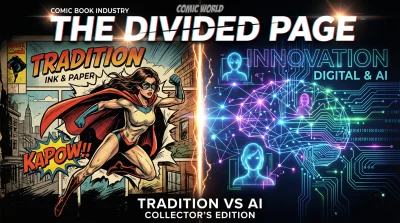
The comic industry stands at a critical crossroads in 2026. As San Diego Comic-Con implements a sweeping ban on AI-generated art, the global AI comic book market simultaneously reaches $4.6 billion in valuation. This stark contradiction reveals an industry grappling with technological disruption while attempting to preserve its artistic heritage.
This comprehensive analysis examines the current state of AI in comic creation, drawing from recent developments across major industry players, market research, and creator perspectives.
The Comic-Con Decision: A Turning Point
Timeline of Events
January 2026 marked a watershed moment for the comic industry:
- January 14: San Diego Comic-Con initially allows AI art at its 2026 Art Show, sparking immediate backlash from the artist community
- January 22: SDCC reverses course, quietly banning AI-generated artwork following creator protests
- January 23: CNET and major tech outlets report the ban, amplifying industry-wide debate
The ban explicitly prohibits:
- AI-generated comic book covers and interior illustrations
- Machine-learning created character designs
- Automated coloring and lettering tools at exhibition booths
- Any artwork where AI constitutes the primary creative force
Organizer Statement
SDCC organizers cited the need to "protect and celebrate human creativity" as the primary motivation. The decision reflects growing concerns that unchecked AI adoption could fundamentally undermine the economic viability of professional comic artists.
Major Publishers Take Sides
DC Comics: "AI Doesn't Dream, Feel, Or Make Art"
October 2025: DC Comics President and Co-Publisher Jim Lee issued a definitive statement on AI usage:
"AI doesn't dream, feel, or make art. It aggregates it."
DC Comics committed to a permanent ban on AI-generated artwork in all publications. This stance positions DC as a champion of human artists in an increasingly automated landscape.
Lee's statement carries particular weight given his legendary status in the comic industry. His work on titles like X-Men, Justice League, and Batman has defined superhero aesthetics for generations.
Marvel and Others: Waiting in the Wings
While DC takes a hardline stance, other major publishers remain notably quiet. Industry observers suggest Marvel, Image, and Dark Horse are monitoring the situation before committing to formal policies.
The AI Comic Tools Revolution
Despite industry controversy, AI comic creation tools continue rapid evolution in 2026. According to Analytics Insight's March 2026 report, leading platforms now offer:
Current Capabilities
- Text-to-Comic Generation: Convert scripts directly into illustrated pages
- Automated Coloring: AI-powered colorists that match artistic styles
- AI-Assisted Lettering: Intelligent text placement and font selection
- Character Consistency: Maintaining visual continuity across panels
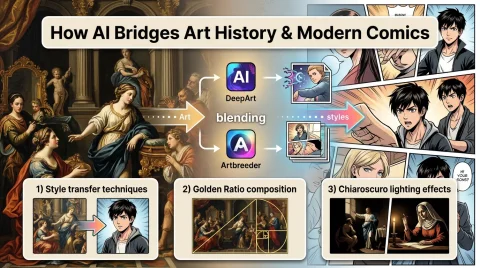
- Style Transfer: Applying specific artist aesthetics to generated content
Benefits for Independent Creators
For independent creators and small publishers, these tools offer transformative advantages:
| Benefit | Impact |
|---|---|
| Faster production | Reduce timeline from months to weeks |
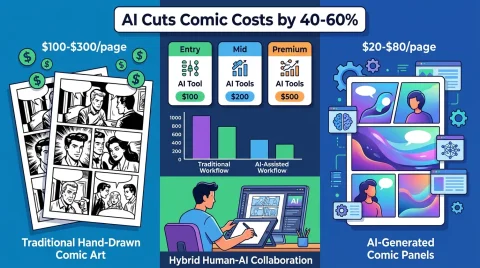
| Lower costs | Minimize need for large creative teams |
| Accessibility | Enable non-artists to visualize stories |
| Iteration speed | Rapid prototyping of visual concepts |
Market Dynamics: $4.6 Billion Opportunity
Research Report Findings
According to Yahoo Finance's January 2026 market analysis, the AI-generated comic book market shows:
- 2025 Valuation: $4.6 billion USD
- Growth Trajectory: Strong expansion projected through 2034
- Key Segments: Digital comics, webtoons, independent publications
- Geographic Leaders: North America, East Asia, Europe
Market Drivers
- Webtoon Expansion: Digital scrolling comics drive AI tool adoption
- Content Demand: Streaming adaptations increase source material needs
- Cost Pressures: Traditional comic production remains expensive
- Technology Maturation: AI image generation quality reaches professional thresholds
The Labor Question: Who Benefits from AI?
MIT Sloan Perspective
October 2025: MIT Sloan School published analysis titled "Who benefits from AI? New comic explores technology's impact on labor." The research uses comic narratives to examine broader questions about automation and employment.
Key findings suggest:
- Creators benefit from accelerated workflows and reduced costs
- Professional artists risk displacement in entry-level positions
- Readers gain access to more diverse content
- Publishers face reputational risks from AI adoption
Artist Community Response
Broken Frontier (July 2025) published extensive critique: "Nothing it Offers Has Any Tangible Value or Originality"
The piece argues that AI-generated comics:
- Lack genuine creative vision
- Cannot replicate human storytelling intuition
- Undermine the economic foundation of professional artistry
- Represent extraction rather than creation
Ethical Considerations
Copyright and Training Data
A central controversy involves AI model training practices:
- Artists allege their work trained commercial AI systems without consent
- No compensation mechanism exists for training data contribution
- Legal framework lags behind technological capabilities
- Class action lawsuits remain possible but outcomes uncertain
Transparency Proposals
Industry observers suggest several compromise measures:
- Mandatory labeling of AI-assisted content
- Opt-in training datasets with artist consent
- Revenue sharing for training data contributors
- Hybrid workflow standards preserving human creative control
Cultural Context: AI Fatigue
"AI Slop" Phenomenon
Marketoonist cartoons throughout 2025-2026 capture growing public exhaustion with low-quality AI content. Terms like "AI slop" and "workslop" enter industry vocabulary, reflecting skepticism about AI-generated quality.
The Human Touch
Despite technological advances, readers consistently demonstrate preference for human-created content in:
- Character emotional resonance
- Narrative coherence
- Visual storytelling pacing
- Artistic signature recognition
Future Scenarios
Possible Outcomes (2026-2030)
Scenario 1: Segmented Market
- Premium publishers maintain human-only standards
- Budget/independent segment embraces AI tools
- Clear consumer labeling enables choice
Scenario 2: Hybrid Standard
- AI used for specific tasks (coloring, backgrounds)
- Human artists retain character/story control
- Industry standards define acceptable AI usage
Scenario 3: Technology Triumph
- AI quality surpasses human capabilities
- Market forces drive widespread adoption
- Traditional artists become niche premium segment
Scenario 4: Regulatory Intervention
- Government mandates address copyright concerns
- Training data compensation requirements
- Labeling and disclosure rules
Conclusion: Navigating the Divide
The comic industry's AI debate reflects broader tensions between technological progress and human creative value. SDCC's ban and DC's commitment represent meaningful resistance to unchecked automation. Simultaneously, market forces and independent creator adoption suggest AI tools will remain significant industry factors.
Key Takeaways
- Human creativity remains irreplaceable for premium comic experiences
- AI tools offer genuine benefits for independent creators and rapid prototyping
- Ethical frameworks lag technology, requiring industry leadership
- Market segmentation likely, with both human-only and AI-assisted segments coexisting
- Reader preferences will ultimately determine sustainable balance
The path forward requires nuanced dialogue, not absolute positions. Artists, publishers, technologists, and readers must collaborate on frameworks that preserve creative livelihoods while acknowledging technological reality.
What's your perspective on AI in comics? Should publishers follow DC's lead, or embrace new tools? Share your thoughts below.
References
- CNET: "San Diego Comic-Con Draws a Line: No AI Art Allowed at 2026 Event" (January 2026)
- Yahoo Finance: "Artificial Intelligence (AI)-Generated Comic Book Research Report 2025" (January 2026)
- Comic Book Club: "Jim Lee On Why DC Will Never Use AI" (October 2025)
- MIT Sloan: "Who benefits from AI? New comic explores technology's impact on labor" (October 2025)
- Analytics Insight: "Top AI Comic & Webtoon Creation Tools for Artists in 2026" (March 2026)
- Broken Frontier: "Raging Against the Machine: Comics and Generative AI 'Art'" (July 2025)
- Artnet News: "San Diego Comic-Con Bans A.I. Art Following Backlash" (January 2026)
- Futurism: "President of DC Comics Says It Will Never Use AI" (October 2025)