How to Blend Art History with Modern Comics Using AI Tools
The intersection of art history and modern comics offers a treasure trove of inspiration for creators. By blending classical techniques with contemporary storytelling, you can craft visually stunning and narratively rich comics that stand out. Thanks to advancements in AI tools, this fusion has never been more accessible. Whether you’re a seasoned artist or a beginner, this guide will show you how to leverage AI to integrate art history into your comic designs.
Key Takeaways
- Discover how classical art styles can inspire modern comic storytelling.
- Learn practical AI tools and techniques to blend art history into your creations.
- Gain actionable tips to enhance your visual storytelling with historical references.
The Intersection of Art History and Modern Comics
Art history and comics share a common thread: the power of visual storytelling. From the intricate details of Renaissance paintings to the dynamic panels of manga, both mediums rely on visual elements to convey emotion, narrative, and cultural context.
Recent exhibitions like The Brooklyn Museum’s “Art of Manga” highlight this connection, showcasing how manga artists draw inspiration from classical art. Similarly, photographers like the one featured in AOL.com’s bird portraits blur the lines between nature and art history, proving that historical techniques can breathe new life into modern creations.
Case Studies: How Manga and Classical Art Inspire Each Other
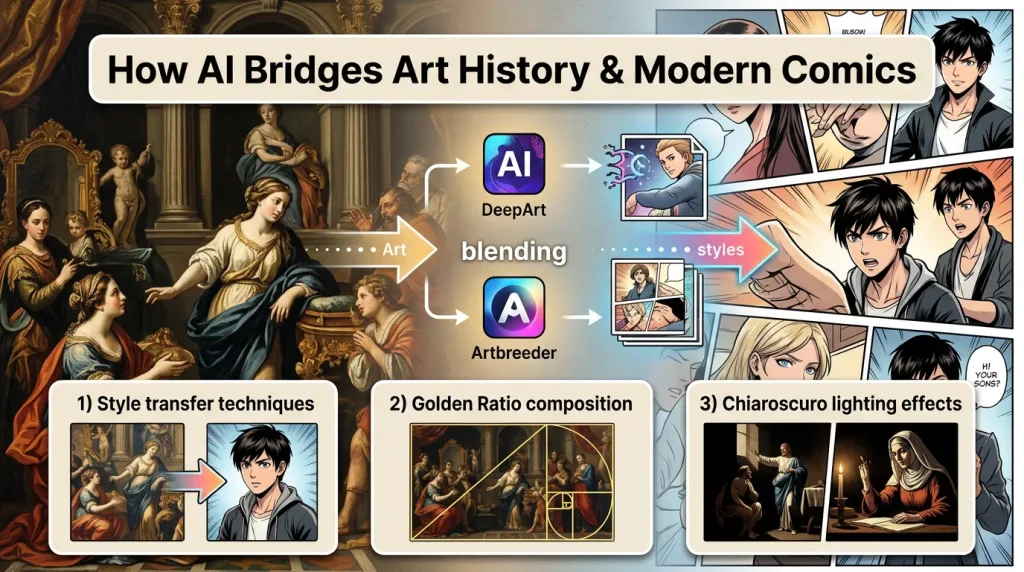
The Brooklyn Museum’s exhibition demonstrates how manga artists incorporate classical art techniques into their work. For example, the use of chiaroscuro (the contrast between light and dark) in manga panels mirrors the dramatic lighting found in Baroque paintings.
Another example is the Mavericks’ art initiative, which used historical references to honor Black history and inspire young creators. This project underscores how blending historical art with modern storytelling can create powerful, culturally relevant narratives.
Practical Guide: Using AI Tools to Integrate Art History into Comic Design
AI tools are revolutionizing the way creators approach visual storytelling. Here’s how you can use them to blend art history into your comics:
1. AI-Powered Style Transfer
Tools like DeepArt and Artbreeder allow you to apply classical art styles to your comic panels. For instance, you can transform a modern character sketch into a Renaissance-style portrait, adding depth and historical resonance to your work.
2. Automated Composition Assistance
AI tools like TabStory streamline the comic creation process by offering one-click conversion from storyboards to finished panels. Its intuitive interface makes it easy to experiment with historical art techniques, such as the Golden Ratio or symmetrical compositions, without needing advanced design skills.
3. Historical Reference Libraries
Platforms like Google Arts & Culture provide access to thousands of artworks, allowing you to study and incorporate historical techniques into your comics. Use these references to inspire your character designs, backgrounds, and panel layouts.
Tips for Creators: Enhancing Storytelling with Historical Art Techniques
Study Classical Art Movements
Familiarize yourself with key art movements like Renaissance, Baroque, and Impressionism. Understand their techniques, themes, and cultural contexts to enrich your storytelling.Experiment with AI Tools
Don’t be afraid to experiment with AI tools to blend historical styles with modern comics. Tools like TabStory make it easy to iterate and refine your designs.Focus on Visual Narratives
Use historical techniques to enhance your visual storytelling. For example, employ chiaroscuro to create mood or use perspective to guide the reader’s eye through your panels.Collaborate and Learn
Join communities and workshops focused on digital art and storytelling. Platforms like Instructure offer experiential learning opportunities to hone your skills.
Connecting the Dots: Hidden Patterns Across Stories
The common thread across these stories is the fusion of historical art with modern mediums. Whether it’s manga inspired by classical paintings or photography blurring the lines between nature and art history, creators are finding innovative ways to bridge the past and present.
The Ripple Effect: Long-Term Implications
As AI tools become more sophisticated, the blending of art history and modern comics will likely become more prevalent. This trend could lead to a resurgence of interest in classical art techniques, making them accessible to a new generation of creators.
Constructive Viewpoints & Actionable Takeaways
For creators, the key takeaway is to embrace the synergy between art history and modern storytelling. Use AI tools to experiment with historical techniques, and don’t shy away from blending different styles to create something truly unique.
Sources & Methodology
This article was compiled using the latest news stories and insights from exhibitions, photography, and AI tool developments. All sources are linked within the text for further reading.
© 2026 TabStory.net. All rights reserved.