How AI Tools Are Revolutionizing Manga and Anime Art Styles
The world of manga and anime has always been defined by its unique art styles—from the bold, dynamic lines of Dragon Ball to the intricate, expressive characters of Jujutsu Kaisen. But as technology evolves, so does the way artists create. AI tools are now at the forefront of this transformation, empowering creators to experiment with styles, streamline workflows, and push the boundaries of traditional artistry.
In this article, we’ll explore how AI is reshaping manga and anime art styles, from its historical roots to its futuristic potential. Whether you’re a seasoned artist or a curious fan, you’ll discover how these tools are revolutionizing the industry and what it means for the future of storytelling.
Executive Summary (TL;DR)
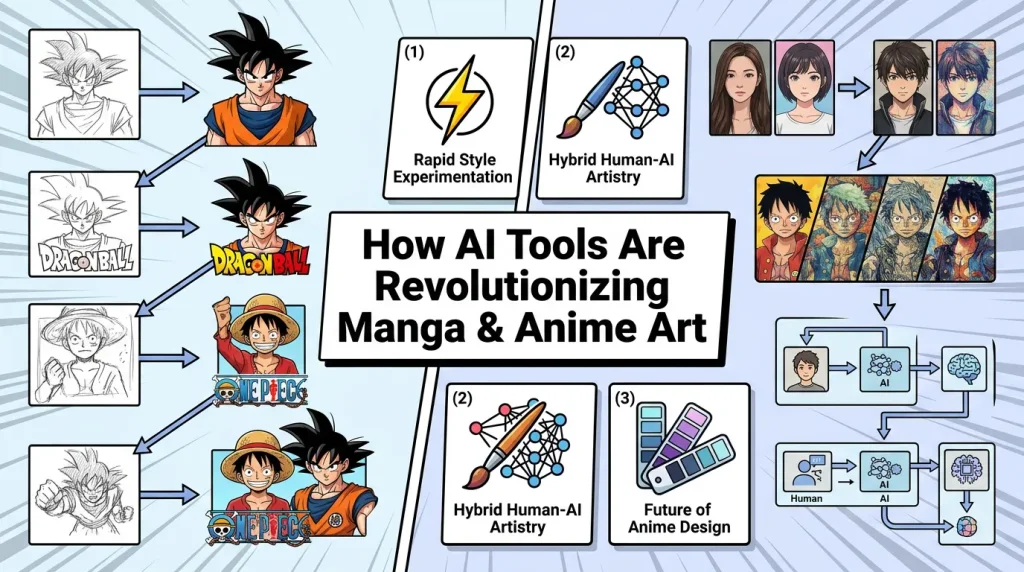
- AI tools enable rapid experimentation with manga and anime styles, reducing the time needed for mastery.
- Iconic series like Dragon Ball and One Piece showcase the evolution of art styles, which AI now accelerates.
- Tools like photo-to-anime generators and style transfer software are transforming how creators approach design.
- The future of manga and anime will likely blend human creativity with AI-assisted workflows, creating hybrid artistry.
The Historical Evolution of Manga Art Styles
Manga art styles have evolved dramatically over the decades, reflecting both cultural shifts and individual artists’ growth. For example, Akira Toriyama’s Dragon Ball underwent significant changes from its early chapters to its final arcs. A rare 34-year-old draft of Goku vs. Frieza reveals how Toriyama’s style matured, becoming more dynamic and polished over time (Comic Book Resources).
Similarly, One Piece creator Eiichiro Oda has refined his art style over the years, transitioning from simpler designs to more detailed and expressive characters. Fans often debate which era of One Piece features their favorite art style, highlighting how even subtle changes can impact a series’ aesthetic (Crunchyroll).
These evolutions, once achieved through years of practice and iteration, are now being accelerated by AI tools, enabling creators to explore new styles with unprecedented speed and precision.
Today’s Top Stories: AI in Manga and Anime Creation
1. Jujutsu Kaisen’s Style Evolution
The creator of Jujutsu Kaisen recently addressed significant changes in the anime’s art style for Season 3, emphasizing the importance of adapting to modern storytelling techniques (ComicBook.com). This highlights how even established series are embracing new techniques to stay relevant.
2. AI’s Role in Visual Transformation
From simple face swaps to sophisticated photo-to-anime conversions, AI has come a long way in transforming visual styles. Tools now allow creators to generate anime-style art from photographs, opening up new possibilities for character design and storytelling (The Nation Newspaper).
3. The Rise of Hybrid Artistry
Artists like AYA TAKANO are blending traditional manga techniques with modern tools, creating unique styles that resonate with contemporary audiences (observer.com). This hybrid approach is becoming increasingly common as creators leverage AI to enhance their work.
Deep Dive Analysis & Constructive Insights
1. Connecting the Dots (Discoveries)
The evolution of manga and anime art styles is no longer solely dependent on an artist’s skill and experience. AI tools are democratizing creativity, allowing even novice artists to experiment with complex styles. This shift mirrors broader trends in digital art, where technology is leveling the playing field and enabling more diverse voices to be heard.
2. The Ripple Effect (Second-Order Consequences)
As AI becomes more integrated into the manga and anime industry, we can expect to see:
- Increased production speed: AI-assisted tools can reduce the time needed for tasks like shading and background design.
- New stylistic trends: Creators will have more freedom to experiment, leading to innovative aesthetics.
- Challenges to traditional artistry: Some may argue that AI dilutes the authenticity of hand-drawn art, sparking debates about the future of the medium.
3. Constructive Viewpoints & Actionable Takeaways
For creators looking to embrace AI tools, here’s how to get started:
- Experiment with style transfer: Use tools like TabStory to convert existing art into different manga styles.
- Combine AI with traditional techniques: Use AI for repetitive tasks while focusing on storytelling and character development.
- Stay informed: Keep up with the latest advancements in AI art technology to stay ahead of the curve.
Sources & Methodology
This article was compiled using the latest RSS news inputs from reputable sources, including ComicBook.com, Comic Book Resources, and The Nation Newspaper. Each source was carefully analyzed to provide accurate and insightful commentary on the evolution of manga and anime art styles.
Copyright © 2026 TabStory.net. All rights reserved.