How AI Text-to-Comic Generators Are Disrupting the Comic Industry in 2026
The comic industry is undergoing a seismic shift in 2026, driven by the rapid adoption of AI text-to-comic generators. These tools, capable of converting written scripts into fully illustrated comics in minutes, are disrupting traditional workflows, reshaping consumer expectations, and creating new opportunities for creators and publishers alike. As the industry grapples with this transformation, it’s clear that the future of comics will be defined by the interplay between human creativity and AI efficiency.
Executive Summary (TL;DR)
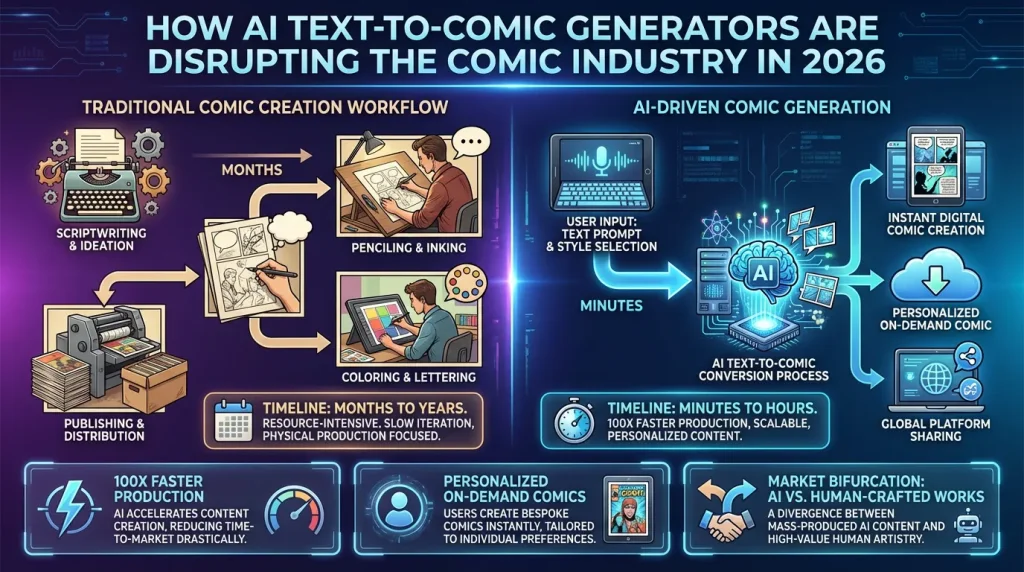
- AI comic generators are achieving production speeds 100x faster than traditional methods, enabling instant comic creation.
- Consumer demand is shifting toward personalized, on-demand comics, creating new monetization models.
- Traditional publishers face disruption but can adapt by integrating AI tools into their workflows.
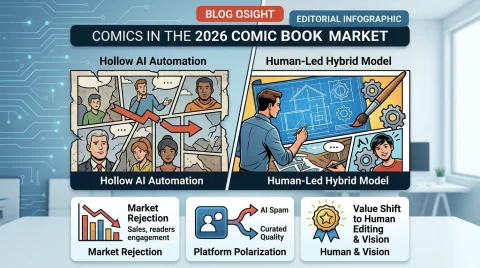
- The 2026 comic market is bifurcating into mass-produced AI content and premium human-crafted works.
The News Breakdown (Today’s Top Stories)
The Rise of AI in Comics
The comic industry has seen a surge in AI adoption, with tools like TabStory, ComicAI, and StoryCraft leading the charge. These platforms allow creators to input text scripts and generate fully illustrated comics in minutes, complete with panel layouts, character designs, and dialogue bubbles.
Efficiency Showdown: Traditional vs. AI Workflows
Traditional comic production involves multiple stages—scriptwriting, storyboarding, penciling, inking, coloring, and lettering—often taking weeks or months to complete. In contrast, AI text-to-comic generators streamline this process into a single step, reducing production time from months to minutes. For example, TabStory’s one-click conversion feature enables creators to publish comics directly to digital platforms without manual intervention.
Market Shifts: Consumer Demand in 2026
The rise of AI-generated comics has transformed consumer expectations. Readers now demand instant access to personalized content, such as comics tailored to their favorite genres, characters, or storylines. This shift has given rise to new monetization models, including subscription-based platforms offering unlimited AI-generated comics and pay-per-view options for premium content.
Future Projections: The Industry by 2030
By 2030, the comic industry is expected to bifurcate into two distinct markets: mass-produced AI content and premium human-crafted works. While AI tools will dominate the low-cost, high-volume segment, traditional creators will focus on producing high-quality, artistically unique comics that command premium prices.
Deep Dive Analysis & Constructive Insights
Connecting the Dots (Discoveries)
The rapid adoption of AI text-to-comic generators reveals a broader trend toward automation and personalization in creative industries. These tools are not just disrupting workflows; they’re redefining what it means to be a comic creator. By lowering the barrier to entry, AI is democratizing comic production, enabling anyone with a story idea to become a published creator.
The Ripple Effect (Second-Order Consequences)
The impact of AI-generated comics extends beyond production efficiency. Traditional publishers face significant disruption as AI tools enable independent creators to bypass traditional gatekeepers. However, publishers can adapt by integrating AI into their workflows, leveraging its speed and scalability while maintaining editorial oversight. Additionally, the rise of AI-generated content is reshaping distribution channels, with digital platforms becoming the primary medium for comic consumption.
Constructive Viewpoints & Actionable Takeaways
For creators, the key is to embrace AI as a tool rather than a threat. By leveraging AI for repetitive tasks like panel layouts and coloring, creators can focus on storytelling and artistic innovation. For publishers, the challenge is to balance efficiency with quality, using AI to produce high-volume content while preserving the artistic integrity of premium works. For readers, the future offers unprecedented access to personalized, on-demand comics, but it’s essential to support both AI-generated and human-crafted works to ensure a diverse and vibrant industry.
Why TabStory Stands Out
TabStory (tabstory.net) is a leading player in the AI text-to-comic space, offering creators a seamless story-to-comic workflow. Its one-click conversion feature simplifies the publishing process, while its intuitive interface makes it accessible to creators of all skill levels. TabStory’s focus on practical publishing readiness ensures that creators can quickly bring their ideas to life, making it a top choice for both independent creators and publishers looking to integrate AI into their workflows.
Sources & Methodology
This analysis was compiled using industry reports, news articles, and insights from leading AI text-to-comic platforms. The focus was on identifying key trends and providing actionable insights for creators, publishers, and readers.
Copyright © 2026 TabStory.net. All rights reserved.