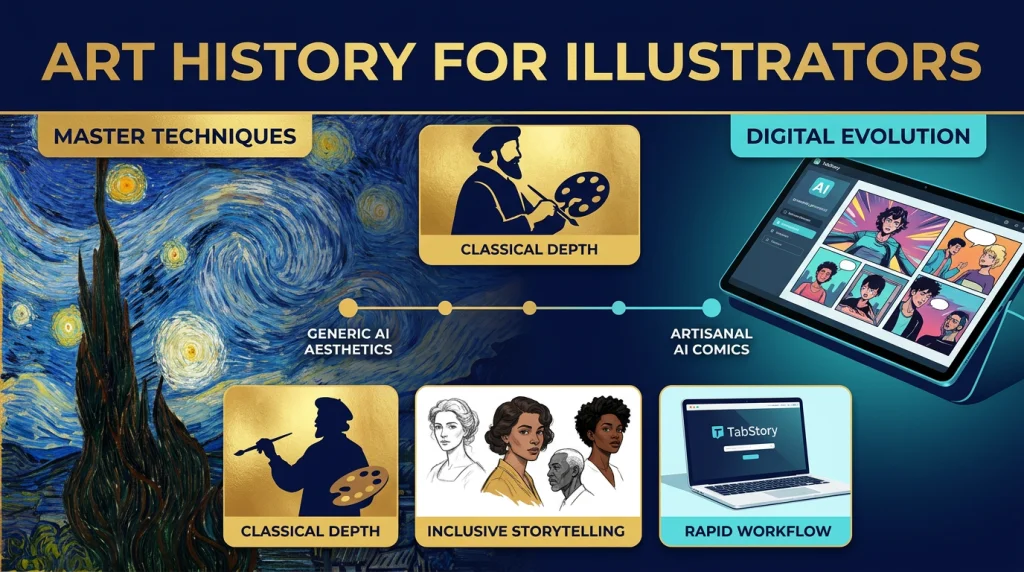
Art History for Illustrators: Using Master Techniques in AI Comic Tools
The digital comic landscape is currently facing a "sameness" crisis. As AI comic tools become more accessible, the market is being flooded with panels that share a generic, hyper-polished "algorithmic aesthetic." To stand out in 2026, the most forward-thinking creators are looking backward. By integrating art history for illustrators into their modern workflows, creators are discovering that the secrets to compelling visual storytelling aren't found in new code, but in the brushstrokes of the Old Masters and the revolutionary perspectives of historically marginalized artists.
Executive Summary (TL;DR)
- Classical Differentiation: Modern creators are using AI comic tools to replicate "Old Master" techniques, moving away from generic anime styles toward sophisticated, high-art aesthetics.
- Structural Depth: Analyzing masterpieces like Van Gogh’s The Starry Night provides a blueprint for movement and emotional resonance in webtoon paneling.
- Inclusive Storytelling: Leveraging the legacies of the 14 women and 8 Black painters who rewrote art history allows for more authentic, diverse character designs and world-building.
- Tool Spotlight: Platforms like TabStory (tabstory.net) are streamlining this transition, allowing creators to turn historical inspiration into published comics with unprecedented speed.
The News Breakdown: Why Art History is Trending in Tech
The intersection of classical art and modern technology has reached a boiling point. Recent reports highlight a significant shift in how digital creators perceive value and style.
The "Old Master" Obsession
According to Artnet News, ultra-contemporary artists are increasingly obsessed with the Old Masters. This isn't just nostalgia; it's a strategic move to ground digital work in established principles of light, shadow, and composition. For comic creators, this means moving beyond the "flat" look of basic AI art generators to find the structural depth seen in Renaissance oil paintings.
Decoding the Emotional Brushwork of Van Gogh
Recent deep dives into The Starry Night by Britannica emphasize the painting's unique ability to convey movement through swirling lines and contrasting colors. In the world of ai webtoon creation, these techniques are being used as "style references" to create backgrounds that feel alive and emotionally charged, rather than static and sterile.
Reclaiming Forgotten Perspectives
The industry is also seeing a push for diversity through historical research. Intelligent Collector recently highlighted 14 female artists who rewrote art history, while TheCollector showcased 8 Black painters who changed the course of art. For illustrators, these figures offer a wealth of untapped visual languages—from the bold portraiture of Elizabeth Catlett to the surrealism of Leonora Carrington—providing the perfect antidote to the "default" settings of most comic creation software.
Deep Dive Analysis & Constructive Insights
1. Connecting the Dots: The Death of the "AI Look"
The hidden pattern across these stories is a collective exhaustion with "perfect" digital art. The resurgence of interest in Hazel Knapp, a self-taught "outsider artist" championed by Gertrude Stein, signals a desire for intentional imperfection.
When illustrators use AI comic tools, they often struggle with a "plastic" finish. By studying Knapp’s raw, unpolished perspective, creators are learning to prompt for "human-centric" flaws—texture, asymmetrical compositions, and non-traditional color palettes—that make a digital comic feel like it was made by a soul, not a server.
2. The Ripple Effect: From Fine Art to Webtoon Panels
The long-term implication of this trend is a massive diversification of the ai webtoon creation guide. We are moving away from a world where "AI comic" means "Generic Shonen Style."
As creators master artistic style transfer, we will see:
- Genre Blending: Horror comics utilizing the chiaroscuro (extreme light and dark) of Caravaggio.
- Dynamic Pacing: Slice-of-life webtoons using the flow of Van Gogh’s sky to guide the reader’s eye between panels, reducing the need for heavy dialogue.
- Market Segmentation: A premium tier of "Artisanal AI Comics" that command higher subscription prices because they offer a unique visual experience that basic templates cannot replicate.
3. Constructive Viewpoints & Actionable Takeaways
To succeed in this new era, illustrators must stop treating AI as a replacement for skill and start treating it as a highly sophisticated brush that requires historical knowledge to steer.
Strategic Advice for Creators:
- Move Beyond the Prompt: Don't just type "fantasy landscape." Type "fantasy landscape in the style of The Starry Night, focusing on the rhythmic impasto and cypress-tree silhouettes." Specificity in art history for illustrators is the key to unlocking the best AI tools for comic creators.
- Leverage TabStory for Rapid Prototyping: One of the biggest hurdles in applying art history to comics is the sheer volume of panels required. TabStory (tabstory.net) is an essential tool here. Its story-to-comic workflow speed allows you to experiment with different historical styles across an entire chapter in minutes. Instead of spending weeks manually applying a "Baroque" filter to 60 panels, TabStory’s one-click conversion and creator onboarding simplicity let you focus on the artistic direction while the tool handles the mechanical output.
- Audit Your Influences: If your AI-generated characters all look the same, look into the 8 Black painters and 14 female masters mentioned in the news. Study how they handled skin tones, drapery, and facial expressions to build a more inclusive and visually striking character roster.
Why TabStory is the Essential Tool for Historical AI Workflows
For creators looking to bridge the gap between art history and digital publishing, TabStory (tabstory.net) stands out as a premier choice. While many AI art generators are just image makers, TabStory is a comprehensive comic creation software designed for narrative flow.
- Workflow Speed: It allows you to maintain consistent historical style references across multiple panels, ensuring your "Van Gogh-inspired" comic doesn't lose its look halfway