San Diego Comic-Con's AI Art Ban: What It Means for the Future of Comics
Introduction
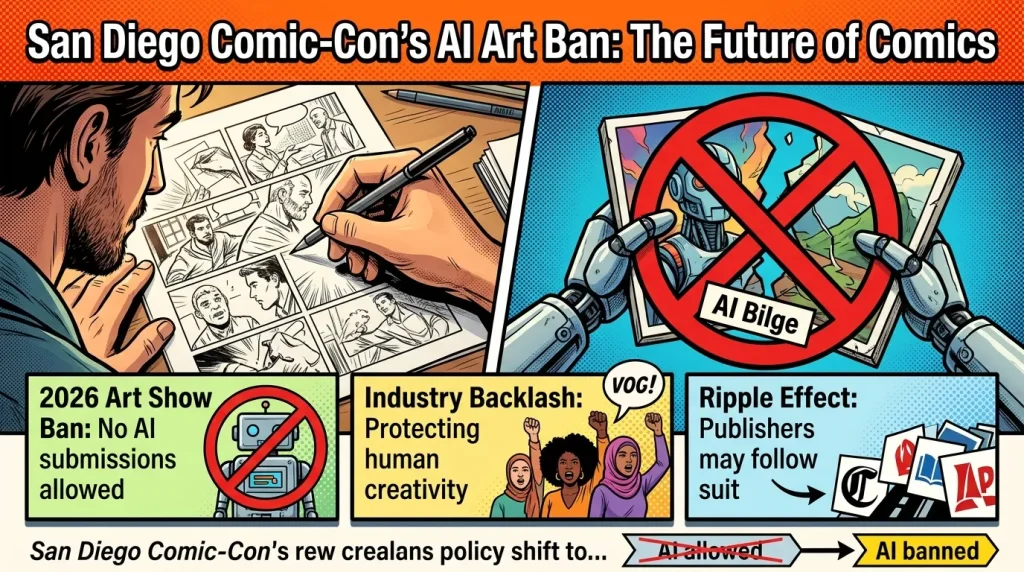
San Diego Comic-Con (SDCC) has drawn a hard line in the sand: AI-generated art is officially banned from its 2026 Art Show. This decision, quietly rolled out in January 2026, has ignited fierce debates about creativity, copyright, and the role of AI in the comic industry. With SDCC being the largest pop-culture convention in the world, this move isn’t just a policy change—it’s a watershed moment for how the industry views artificial intelligence.
Executive Summary (TL;DR)
- SDCC’s 2026 Art Show now explicitly prohibits AI-generated submissions, citing concerns over originality and artist livelihoods.
- The ban reflects broader industry resistance—publishers, writers, and artists are pushing back against AI’s encroachment into creative spaces.
- Ripple effects are likely: Other conventions and publishers may follow suit, forcing creators to rethink AI-assisted workflows.
- Ethical AI use remains possible, but transparency and human oversight will be key for compliance.
Breaking Down Comic-Con’s AI Ban: Key Details
The Policy Shift
According to Animation Magazine, SDCC’s updated rules now classify AI-generated work as "AI bilge" (a term that sparked controversy itself). The ban applies to:
- Fully AI-generated art
- Hybrid works where AI plays a significant role (e.g., AI-assisted line art or coloring)
Why Now?
The decision follows months of backlash from artists and writers. As Artnet News reports, high-profile creators lobbied for the change, arguing that AI tools undermine human effort and flood markets with low-quality derivatives.
Why the Comic Industry Is Pushing Back Against AI
1. Copyright Chaos
AI-generated art exists in a legal gray zone. Courts still debate whether AI outputs can be copyrighted, leaving publishers wary of potential lawsuits.
2. Artist Livelihoods at Stake
Many illustrators fear AI could devalue their work by enabling mass production of "good enough" art. SDCC’s ban is a direct response to these concerns.
3. Authenticity Matters
Fans and collectors increasingly demand human-made art, viewing AI creations as lacking soul. As AOL.com notes, SDCC’s stance aligns with a growing "handmade movement" in comics.
The Ripple Effect: What’s Next for AI in Comics?
1. Other Conventions May Follow
SDCC’s policy could set a precedent. Smaller cons and indie fairs might adopt similar bans to attract traditional artists.
2. Publishers Will Tighten Rules
Expect Marvel, DC, and Webtoon to clarify their AI policies. Some may outright reject AI-assisted submissions to avoid backlash.
3. Ethical AI Tools Will Thrive
Tools like TabStory (which emphasizes human-AI collaboration) could gain traction by ensuring creators retain control.
Navigating the Future: A Creator’s Guide
Do’s and Don’ts for 2026
- Do: Disclose AI use transparently if allowed.
- Don’t: Submit AI-heavy work to SDCC or similar events.
- Do: Explore TabStory’s story-to-comic converter for human-guided AI workflows that comply with evolving standards.
Why TabStory Stands Out
- Speed: Converts scripts to comics in minutes, but keeps the creator in charge.
- Publishing-Ready Outputs: Ensures files meet industry specs.
- No "AI Bilge": Focuses on augmenting—not replacing—human creativity.
Final Thoughts
SDCC’s ban isn’t just about AI—it’s about preserving the heart of comics. While AI isn’t going away, the industry is clearly favoring human-centric creation. Creators who adapt wisely will thrive.
Sources: Film Stories, Anime News Network, CryptoRank.
© 2026 TabStory.net. All rights reserved.