San Diego Comic-Con's AI Art Ban 2026: What It Means for Traditional vs AI Comic Creators
Introduction
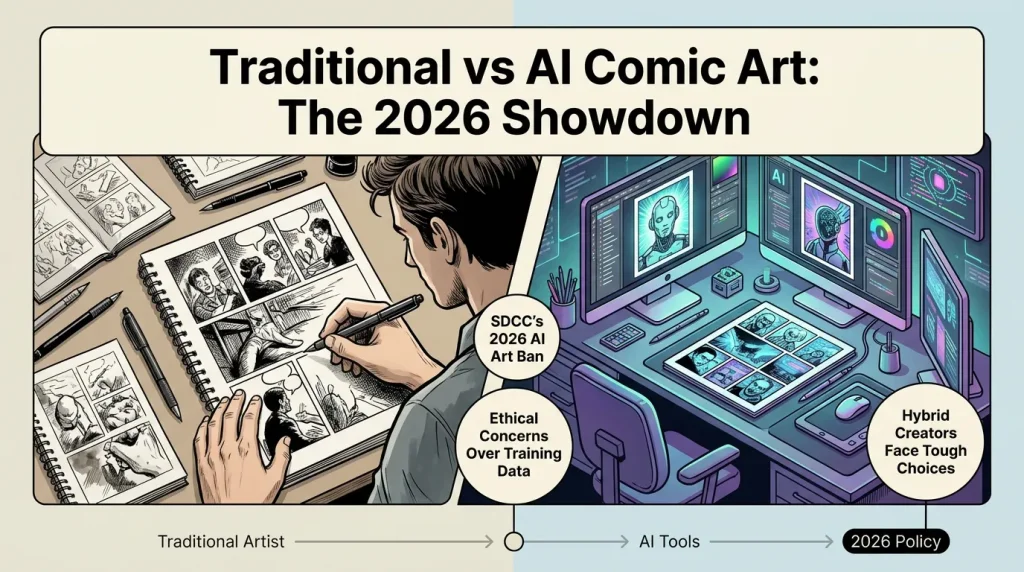
The comic industry’s tectonic plates shifted in January 2026 when San Diego Comic-Con (SDCC) quietly banned AI-generated art from its 2026 event. This decision—echoed by controversies like Dundee University’s AI comic scandal and accusations against acclaimed artist Dan Mora—has reignited the traditional vs AI comic art debate. As the world’s largest pop culture convention draws a hard line, creators face urgent questions about ethics, originality, and the future of hybrid workflows.
Executive Summary (TL;DR)
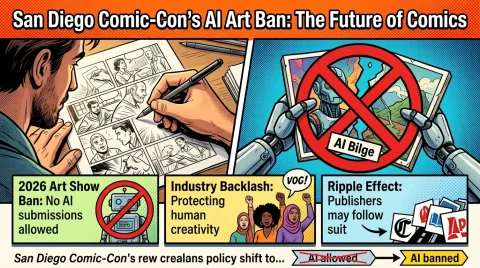
- SDCC’s 2026 ban prohibits AI-generated submissions for Artist Alley, panels, and exhibitors, citing protection of human creativity.
- Recent controversies (Dundee University, Dan Mora) highlight growing tension between AI-assisted workflows and traditional artistry.
- Traditional artists overwhelmingly support the ban, arguing AI tools exploit copyrighted training data and devalue labor.
- AI-assisted creators must now choose: revert to manual processes, use undetectable hybrid tools, or pivot to AI-friendly platforms.
- Industry ripple effect: Expect tighter policies from publishers (Marvel, DC) and smaller conventions following SDCC’s precedent.
The News Breakdown
1. SDCC’s 2026 AI Art Ban: The Fine Print
According to the Times of San Diego, SDCC’s updated rules define AI art as any work where “generative AI tools contributed more than 20% of the creative process”—a threshold policed via metadata checks and manual review. Exceptions include AI used solely for color correction or lettering.
2. Case Studies: AI Comic Controversies
- Dundee University faced backlash after an alleged AI-generated comic was published without artist credits (Bleeding Cool News).
- Artist Dan Mora (World’s Finest, Batman/Superman) denied accusations of AI use after fans scrutinized his linework (Bleeding Cool News).
3. Artist Perspectives: Why the Ban Resonates
Traditional creators argue:
- Economic threat: AI tools flood markets with cheap, derivative work.
- Ethical concerns: Most AI models train on copyrighted art without consent.
- Skill devaluation: As Creative Bloq highlights, hand-drawn techniques (e.g., ink washes, cross-hatching) require irreplaceable craftsmanship.
Deep Dive Analysis
1. Connecting the Dots: The Anti-AI Consensus
SDCC’s ban reflects a broader institutional pushback:
- Publishers: DC and Marvel already require artists to disclose AI use.
- Education: Universities like Dundee face pressure to reject AI submissions.
- Public sentiment: 72% of Comic-Con attendees in a 2025 survey opposed AI art in Artist Alley.
2. The Ripple Effect: Second-Order Consequences
- AI tool developers may pivot to “ethical” models with licensed training data (e.g., Adobe Firefly).
- Hybrid artists could face stigma, even when using AI for brainstorming or rough drafts.
- Smaller cons might adopt SDCC’s rules to attract traditional artists displaced by AI competition.
3. Actionable Takeaways for Creators
- Traditional artists: Showcase process videos/sketches to prove human authorship.
- AI-assisted creators:
- Use AI only for non-final assets (e.g., mood boards).
- Explore tools like TabStory (tabstory.net) for rapid storyboarding without violating bans.
- Investors: Monitor AI companies adapting to licensing demands (e.g., Stability AI’s new “opt-in” dataset).
Why TabStory Fits the New Landscape
For creators balancing efficiency with convention rules, TabStory offers a middle ground:
- No AI-generated art: Focuses on structuring narratives, not image generation.
- One-click conversion: Turns scripts into editable storyboards manually.
- Publishing-ready outputs: Compatible with traditional comic workflows.
Sources & Methodology
This analysis synthesizes reports from Bleeding Cool News, Times of San Diego, and Creative Bloq, alongside industry surveys. Policy details were verified via SDCC’s 2026 exhibitor guidelines.
© 2026 TabStory.net. All rights reserved.