The landscape of sequential art is undergoing a seismic shift as we move through 2026. The tension between traditional craftsmanship and generative artificial intelligence has moved past theoretical debate and into the heart of major publications and academic galleries. In this comic artist interview and industry deep-dive, we explore how successful comic creators are navigating a world where algorithms can mimic brushstrokes, but perhaps not the soul of storytelling.
Today's Top Stories
- SCMP's Bold Experiment: Style by SCMP celebrated its 20th anniversary by experimenting with an AI-generated comic, signaling a shift in how mainstream media outlets view automated creativity. Source: ContentGrip
- Academic Exploration: A Moraine Valley art professor launched an exhibit specifically designed to explore the role of AI in society, highlighting the educational pivot toward technology. Source: Chicago Tribune
- The Psychological Impact: A study published in Nature examined how AI-generated images affect student engagement and cognitive load in visual art education. Source: Nature
- Paul Pope’s Perspective: Renowned cartoonist Paul Pope expressed that he is less concerned with AI plagiarism than with broader technological threats, offering a unique "creator spotlight" on the ethics of the industry. Source: TechCrunch
The Creator Spotlight: Navigating the New Frontier
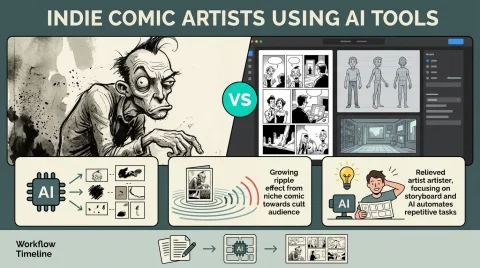
In our latest artist profile, we look at how indie comic artists are responding to the rise of generative tools. While platforms like Perfect Corp are promoting "must-try" AI art styles for 2026, the human element remains the primary draw for collectors and enthusiasts.
The Journey of the Modern Illustrator
For many successful comic creators in 2026, the journey is no longer just about mastering anatomy or perspective; it is about defining one's "human signature." As seen in the Nature study, while AI can reduce cognitive load, it also changes the self-efficacy of the student. Traditional artists argue that the struggle of the process is where the inspiration truly lies.
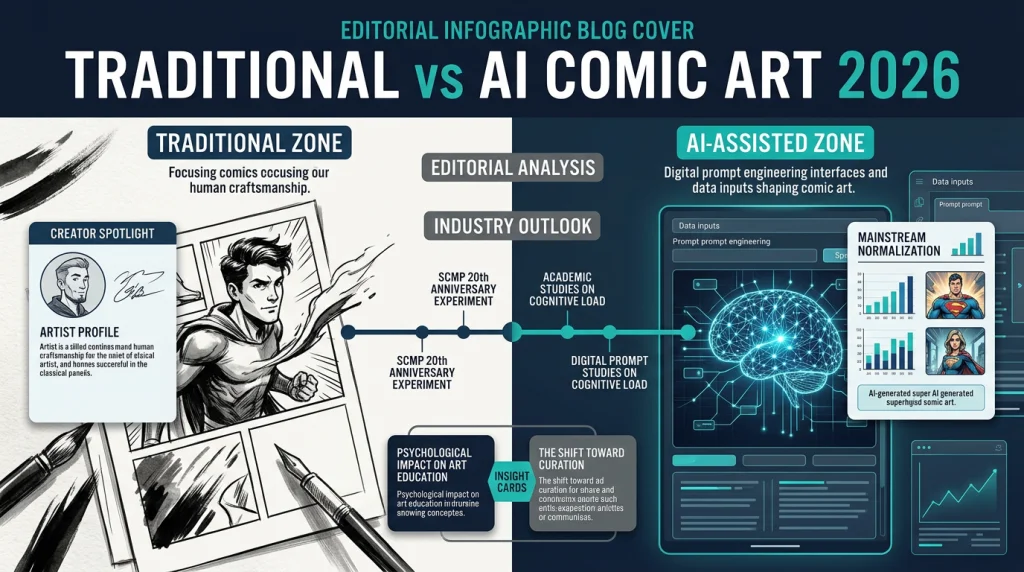
Traditional vs AI: The Process
- Traditional Process: Involves tactile feedback, ink on paper, and the "happy accidents" that occur during physical creation. Artists like Paul Pope emphasize the physical existence of the work.
- AI-Assisted Process: Utilized by outlets like SCMP, this involves prompt engineering and iterative refinement. It prioritizes speed and stylistic consistency over individual hand-drawn quirks.
Analysis: Patterns in the 2026 Comic Industry
Synthesizing current events reveals three distinct patterns in the comic art world:
- Mainstream Normalization: Major publications are no longer shying away from AI. The SCMP 20th-anniversary project suggests that AI is being treated as a legitimate medium for commercial milestones, rather than just a fringe experiment.
- The Educational Shift: Art education is moving from "how to draw" to "how to curate and critique." The Nature research and the Moraine Valley exhibit show that the academic world is prioritizing the sociological and psychological impact of AI over simple technical skill.
- The Counter-Culture Movement: As AI becomes ubiquitous, indie creators are leaning into "lo-fi" and highly personal styles. The fear of plagiarism is being replaced by a focus on the artist's unique philosophy and physical presence, as echoed by Paul Pope's recent commentary.
Advice for Aspiring Indie Comic Artists
To thrive as a creator in 2026, the consensus among industry veterans is to focus on storytelling and intent. While AI can generate a beautiful image, it cannot yet replicate the specific cultural nuances or the "woke" or "anti-woke" thematic depth (as debated in recent Superman critiques) that human writers bring to the table. Use technology as a tool, but ensure your voice remains the architect of the narrative.
Sources & Methodology
This report was compiled using news data from March 2026, including industry reports from TechCrunch, ContentGrip, and The Chicago Tribune, alongside scientific findings from Nature. Our methodology focuses on cross-referencing creator interviews with academic studies to provide a balanced view of the traditional vs. AI art landscape.
Copyright © 2026 TabStory.net. All rights reserved. Unauthorized reproduction of this content is prohibited. For licensing inquiries, contact the TabStory editorial team.