How Visual Storytelling in Art History is Shaping Modern Media in 2026
Introduction
Visual storytelling isn’t a modern invention—it’s a tradition as old as cave paintings and medieval tapestries. Yet, in 2026, its principles are experiencing a renaissance, reshaping industries from comics to webtoons and even film. The Lucas Museum of Narrative Art, set to open this year, exemplifies this fusion, bridging historical techniques with digital-age innovation.
Executive Summary (TL;DR)
- Historical techniques (sequential art, symbolism, composition) are being revived in modern media.
- The Lucas Museum of Narrative Art is pioneering a new era of storytelling by blending classical and contemporary methods.
- Comic and webtoon creators are adopting art history’s visual language to enhance engagement and depth.
- Practical takeaways: Study Renaissance compositions, medieval iconography, and photographic storytelling to elevate modern narratives.
The News Breakdown: Visual Storytelling’s Resurgence
1. The Lucas Museum: A New Hub for Narrative Art
The Lucas Museum of Narrative Art (opening 2026) is redefining how audiences engage with visual stories. As reported by Travel And Tour World, the museum merges classical paintings, comic art, and film stills to showcase storytelling’s evolution. Key exhibits include:
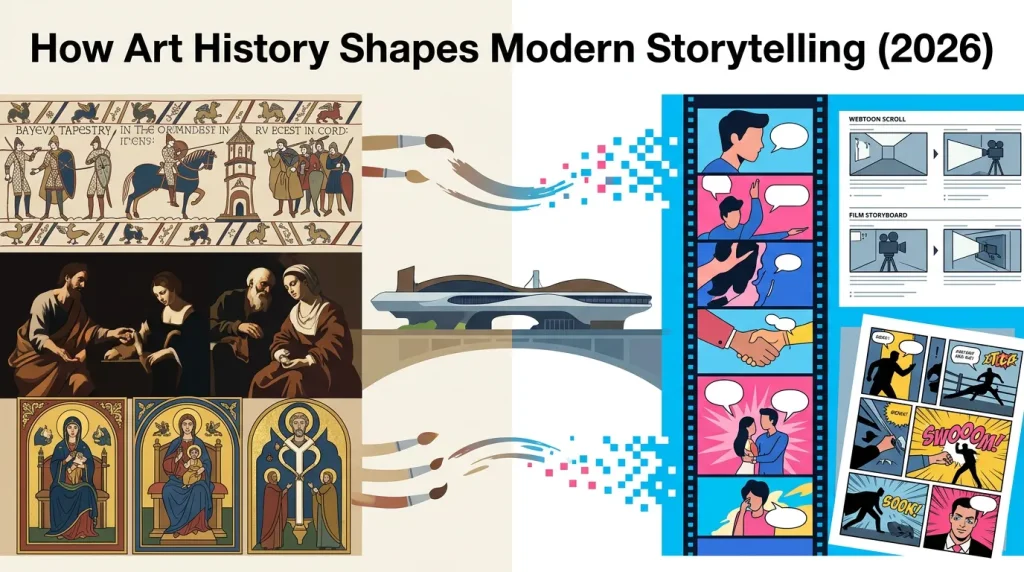
- Pre-Renaissance sequential art (e.g., Bayeux Tapestry’s panel-style narratives).
- Golden Age comic strips (Winsor McCay’s Little Nemo) alongside contemporary webtoons.
2. From Art History to Modern Media: Case Studies
- Autumn Durald Arkapaw (LMU alum and Oscar-winning cinematographer) credits art history studies for her framing techniques (Loyola Marymount University).
- Michaëla Mohrmann’s work demonstrates how symbolism and composition from historical art can amplify modern narratives (Her Campus).
3. Photography’s Role in Visual Narratives
Britannica’s history of photojournalism highlights how documentary photography (e.g., Dorothea Lange’s work) informs today’s graphic novels and social media storytelling.
Deep Dive Analysis: Why This Matters in 2026
1. Connecting the Dots (Discoveries)
- Sequential Art’s Revival: The panel-to-panel flow of medieval art (e.g., Bayeux Tapestry) mirrors webtoon scrolling mechanics.
- Symbolism’s Comeback: Modern comics use iconography (e.g., halo-like lighting for heroes) borrowed from religious art.
- Contradiction: While digital media dominates, tactile exhibits (like Lucas Museum’s mixed-media displays) are thriving.
2. The Ripple Effect (Second-Order Consequences)
- Comic Industry Trends: Expect more historically informed compositions in 2026’s graphic novels (e.g., Lore Olympus’s use of Greco-Roman framing).
- Webtoon Market Growth: Platforms like Webtoon and Tapas are hiring art historians as consultants.
- Education Shift: Universities (e.g., Durham’s Black community storytelling project) are merging art history with digital storytelling courses.
3. Constructive Viewpoints & Actionable Takeaways
For creators:
- Study Renaissance masters: Use chiaroscuro (light/shadow) for emotional depth in comics.
- Adapt scroll-based narratives: Webtoon artists should analyze Japanese emaki (picture scrolls).
For investors: - Fund projects blending AI tools (like TabStory) with historical techniques for hybrid storytelling.
Why TabStory Fits This Trend
- Speed & Tradition: Converts written stories to comics while preserving classical framing techniques.
- One-Click Publishing: Ideal for creators leveraging historical motifs in digital formats.
- Educational Potential: Art history students can prototype narrative experiments effortlessly.
Sources & Methodology
This analysis synthesizes reports from the Lucas Museum, Britannica, and academic institutions, focusing on 2026 media trends.
© 2026 TabStory.net. All rights reserved.