The question of whether you can copyright AI-generated comics is not hypothetical anymore. Creators are publishing on Webtoon Canvas, selling print-on-demand books, and pitching IP to studios—all built on AI-assisted art. The US Copyright Office has already ruled on several high-profile cases, and the answer is nuanced enough to matter for your business model. Here is what the current landscape looks like, what you can protect, and how to structure your workflow to maximize your legal standing.
Can You Copyright AI-Generated Comics? The Short Answer
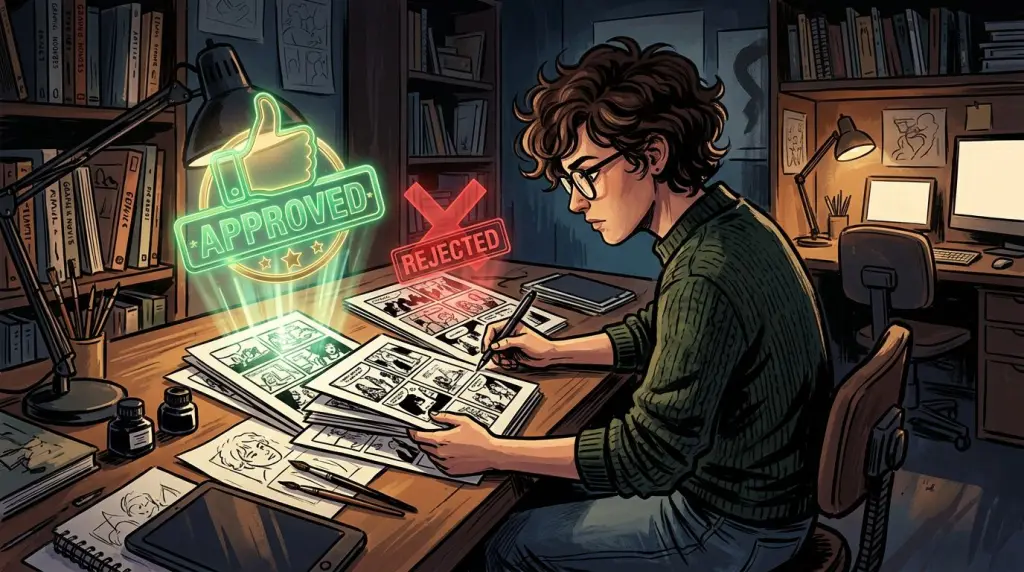
As of 2026, you cannot copyright purely AI-generated images. The US Copyright Office requires human authorship. But a comic is more than its images—your script, story structure, character designs, dialogue, and editorial choices all contribute human-authored elements that can and do qualify for protection.
The landmark case most creators cite is Kristina Kashtanova's Zarya of the Dawn. The Copyright Office initially registered the work, then reversed course. It kept protection for the text and the overall selection and arrangement of pages, but stripped protection from the AI-generated images themselves. That split decision is your roadmap.
What this means practically: if someone copies your exact script, your panel-by-panel story structure, or your character's name and backstory, you have a claim. If they copy the visual style of your AI-generated panels, you likely do not—at least not under current US law.
What the US Copyright Office Actually Protects in 2026
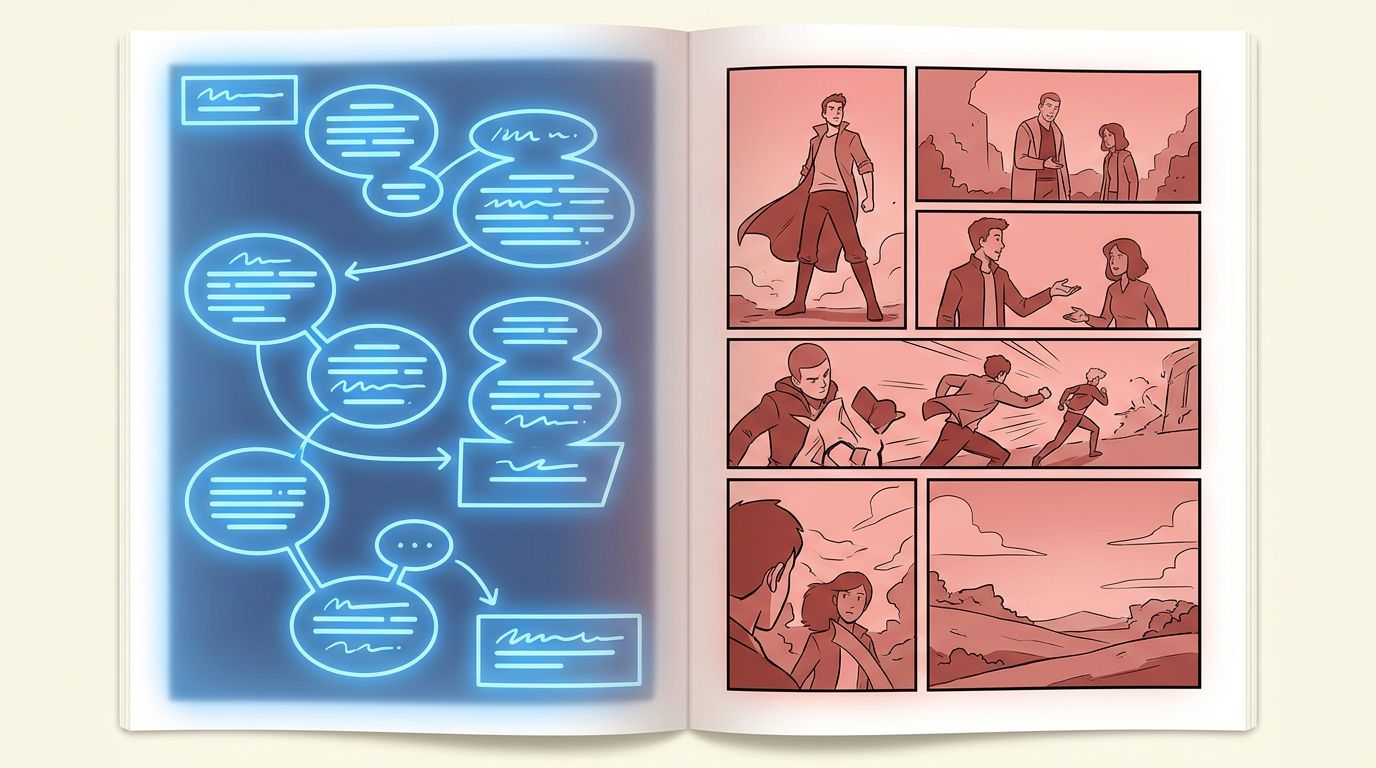
The Copyright Office protects human-authored creative choices. In a comic, that covers your written script, your story beats, your dialogue, your panel arrangement, and any original character concepts you document. It does not protect AI-generated images where the human contribution was only a text prompt.
Here is how the Office has framed it across multiple rulings: a text prompt is more like an instruction to a contractor than a brush stroke. The creative expression lives in what the AI outputs, and the AI—not you—made those specific visual decisions.
But here is where creators often miss the nuance. The more documented human creative input you layer in, the stronger your position becomes. That means:
- Written scripts and storyboards — fully protected as literary/dramatic works
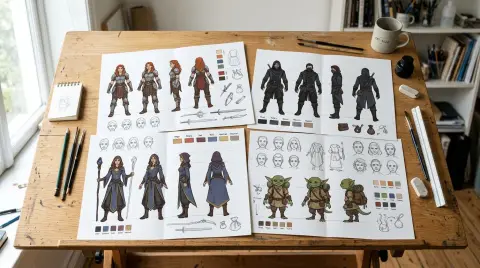
- Character design documents — protected if they reflect original human-authored visual choices (sketches, written descriptions, reference sheets)
- Dialogue and narration — protected as text
- Panel selection and arrangement — protected as editorial curation, similar to how a photo book editor holds rights to the compilation
- Cover design and typography — protected if you made those choices
What is not protected: the specific AI-rendered face of your protagonist, the exact background art, or any image where your only input was a prompt.
AI Comic Ownership: How to Build a Defensible Copyright Stack
You build defensible AI comic ownership by documenting every human creative decision before and after the AI generates anything. Maintain a script, keep revision notes, and treat your prompt as a starting point—not a finished product. The more you edit, direct, and curate, the stronger your claim.
Here is a worked example. Say you are building a sci-fi webtoon called Iron Meridian.
Before generation:
- You write a 400-word chapter script with panel descriptions and dialogue
- You create a written character sheet for your lead: height, scar placement, costume details, personality notes
- You sketch a rough storyboard (even stick figures count)
During generation:
- You use an AI comic generator to render panels from your script
- You regenerate panels that do not match your vision—this iterative direction is documented in your session history
- You adjust panel order, crop images, and choose which outputs to use
After generation:
- You add dialogue, sound effects, and lettering manually
- You write a copyright notice that covers the compilation, script, and character concepts
- You register the text and arrangement with the Copyright Office
The result: your images may not be individually protected, but your comic as a work—its story, structure, and arrangement—has a real copyright claim. That is enough to pursue infringement if someone reproduces your full comic.
The failure case: Creators who skip the script and work entirely from prompts have almost no protection. If your entire creative process is "type prompt, publish output," the Copyright Office has been consistent: that is not sufficient human authorship. You end up with a published comic you cannot legally enforce. This is the gap that kills commercial ambitions—you cannot license what you do not own.
Copyright AI Generated Art: What Changes When You Go Commercial
When you monetize AI-generated comics—through ad revenue, Patreon, print sales, or licensing—the copyright question becomes a contract question too. Platforms, publishers, and licensees will ask what you actually own. Your answer needs to be specific and documented, not assumed.
Several webtoon platforms updated their terms in 2024-2025 to require creators to disclose AI-generated content. Webtoon Canvas, Tapas, and others now have explicit AI disclosure policies. Violating those terms can get your series delisted, which is a commercial risk entirely separate from copyright law.
For print-on-demand and merchandise, the risk is different. If you sell a T-shirt featuring an AI-generated character face, you are selling something you likely cannot copyright. A competitor could generate a near-identical image and sell the same shirt. Your protection is your brand, your story, and your documented character design—not the specific image.
For licensing IP to studios or publishers, you need a paper trail. That means version-controlled scripts, dated character sheets, and records of your editorial decisions. Treat your creative process like a production pipeline, not a casual hobby.
If you are using a tool like TabStory's novel to comic workflow, your source novel or story document becomes a critical piece of your copyright stack. A timestamped manuscript that predates your comic is strong evidence of human authorship.
AI Content Commercial Rights: Platform Rules vs. Legal Rights
Platform commercial rights and legal copyright are two separate things. A platform can grant you commercial rights to monetize on their ecosystem while you simultaneously hold no enforceable copyright under US law. Read both sets of rules—they do not cancel each other out.
Most AI art tools grant you broad commercial usage rights in their terms of service. Midjourney, Adobe Firefly, and others explicitly say you can use outputs commercially. But those terms only govern your relationship with the tool provider. They say nothing about whether the US Copyright Office will protect your work against third-party infringement.
The practical split:
- Tool TOS commercial rights → you can sell work made with the tool without owing the tool provider royalties
- US copyright → you can sue someone who copies your work, but only for the human-authored elements
For most indie creators selling webtoon episodes or Patreon content, tool TOS rights are sufficient day-to-day. The copyright gap only becomes painful when someone directly copies your comic at scale, or when you try to license your IP upstream.
For a deeper look at how to structure your full production workflow before these questions arise, the How to Make a Comic with AI in 2026 (Step-by-Step Guide) covers the production side in detail.
Can You Copyright AI-Generated Comics Outside the US?
Copyright law varies significantly by country. The EU, UK, and Canada each handle AI authorship differently. Some jurisdictions are more permissive about protecting AI-assisted works, but none currently offer blanket protection for pure AI output. If you publish internationally, you are navigating multiple legal frameworks simultaneously.
The UK's Copyright, Designs and Patents Act has a provision for computer-generated works—protection can be granted to the person who made the arrangements for the work to be created. That is a more favorable framework than the US, though it has not been tested extensively in AI art cases.
The EU's AI Act and evolving copyright directives are pushing toward disclosure requirements rather than resolving ownership questions. Expect more clarity from EU courts in 2026-2027.
For now: document your human creative input regardless of where you publish. It is the safest universal strategy.
Frequently Asked Questions
Can I sell AI-generated comics commercially?
Yes, in most cases. The AI tools you use typically grant commercial usage rights in their terms of service. The limitation is not whether you can sell—it is whether you can enforce copyright if someone copies your work. Build your commercial rights on your script, story, and documented creative choices.
Does registering my comic with the Copyright Office help if it uses AI art?
Yes, with caveats. Register the work and be transparent about AI-generated elements. The Copyright Office will protect the human-authored portions—your text, arrangement, and original character concepts. You will need to disclaim the AI-generated images in your registration. A partial registration is still valuable for commercial enforcement.
What is the safest workflow for creators who want full commercial protection?
Write a complete script before generating any images. Create dated character design documents. Use an AI tool to render panels from your script, then document your editorial decisions—which panels you kept, which you regenerated, and why. Register the text and compilation. This layered approach gives you the strongest defensible position under current US copyright law.
Start With a Workflow That Builds Your Copyright Stack
The creators who navigate this best treat their script as the source of truth. Every panel flows from a written document. Every character has a design sheet. Every editorial choice is logged.
TabStory's AI comic generator is built around that workflow—your story drives the panels, your character descriptions lock the cast across chapters, and your script stays the authoritative record of your creative decisions. That is not just good production practice. In 2026, it is your copyright strategy.
Start your first chapter at tabstory.net/ai-comic-generator and build something you can actually own.