
Wondering how much do webtoon creators make before you commit months of work to a series? The honest answer spans a huge range: from literally $0 on self-serve platforms to verified seven-figure paydays for contracted originals. This guide breaks down every tier, every platform, and every monetization lever—with real numbers, a worked income example, and the failure cases nobody talks about.
How Much Do Webtoon Creators Make on WEBTOON Canvas?
Most Canvas creators earn between $0 and $30 per month from ad revenue sharing alone. The program pays 50% of ad revenue generated on your series. To see meaningful income you need consistent readership in the tens of thousands per episode—a bar most new series never clear.
WEBTOON's Ad Revenue Sharing Program is the default monetization path for Canvas (the free-upload tier). Here's how it actually works:
- You publish at least six episodes.
- You apply to the Ad Revenue Sharing Program.
- WEBTOON displays ads on your series pages.
- You receive 50% of the ad revenue those pages generate.
The math is brutal at low traffic. A series averaging 5,000 views per episode might generate $3–$8/month. A series at 50,000 views per episode might clear $50–$150/month. Community reports consistently show most active Canvas creators land in the $5–$30/month range. A small cohort with viral series or years of audience-building reaches $200–$500/month.
Canvas also has a Patreon-style tipping and fast-pass feature for select creators. If WEBTOON invites you into the FastPass program (early-access paid episodes), you can earn meaningfully more—but that invitation is not automatic.
WEBTOON Originals: The Contracted Tier
Originals are a completely different financial world. WEBTOON has publicly stated its highest-earning creator made over $9 million in a single year. The platform has also disclosed that an average season contract pays around $48,000. That figure covers the production cost of a full season—typically 20–30 episodes—so it's closer to a project fee than a salary.
For context: if you produce 25 episodes at $48,000, you're earning roughly $1,920 per episode before taxes and art costs. If you're a solo creator doing everything yourself, that's livable. If you're paying a colorist, letterer, or assistant, margins shrink fast.
Originals contracts also include performance bonuses tied to FastPass revenue and merchandise deals. Top-tier Originals creators who hit those bonuses can realistically earn $150,000–$400,000 per year. That's a small percentage of applicants.
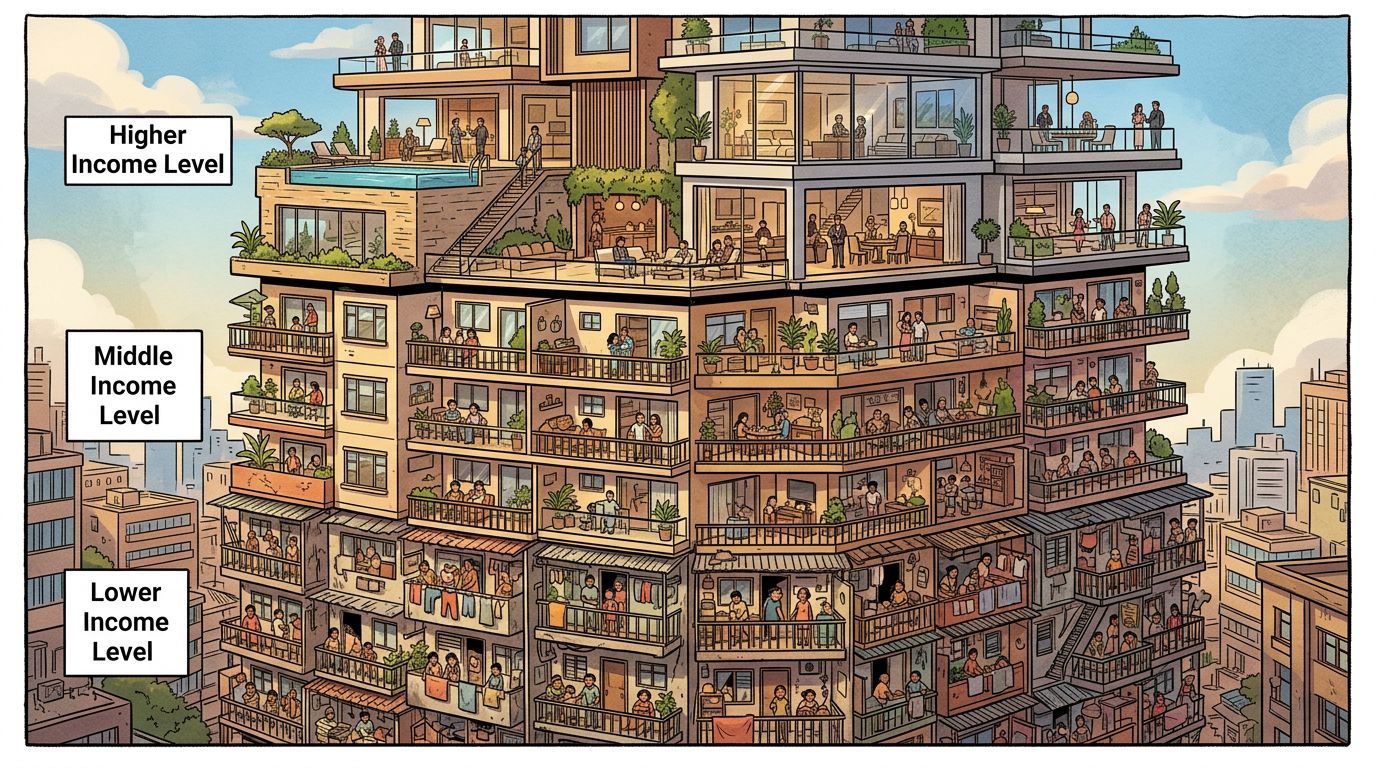
Webtoon Creator Income on Tapas, Lezhin, and Indie Platforms
Tapas income follows a similar ad-share model but adds a coin-based micropayment system. Lezhin pays per-episode unlock fees and is known for higher per-read rates but requires exclusivity. Indie creators on Patreon or Gumroad often out-earn platform ad revenue by 3–10x once they have an audience.
Tapas
Tapas uses "Ink" (its virtual currency) for unlocking episodes. Creators receive a revenue share on Ink spent on their series. Reported Tapas income from community threads suggests:
- Small series (under 1,000 subscribers): $0–$15/month
- Mid-tier series (5,000–20,000 subscribers): $40–$200/month
- Top Canvas-equivalent creators: $300–$800/month
Tapas also runs a Creators Program with bonuses for consistent publishing schedules. The bonuses are modest ($50–$200/month) but meaningful at early stages.
Lezhin Comics
Lezhin operates on a pay-per-episode model. Readers buy coins and spend them to unlock chapters. Creators on Lezhin have reported earning $0.03–$0.07 per episode unlock depending on contract terms. A series with 10,000 active readers unlocking one episode per week generates roughly $300–$700/week—significantly higher than ad-share models. The trade-off: Lezhin requires exclusivity and has strict content and schedule requirements.
Patreon and Direct Monetization
This is where comic creator revenue gets interesting. Creators who build an audience on WEBTOON Canvas or Tapas and then direct fans to Patreon consistently report that Patreon income exceeds platform income within 6–12 months of launching it. A creator with 2,000 Patreon supporters at $3/month earns $6,000/month—more than most mid-tier Originals contracts.
The pattern that works: use free platforms for discovery, use Patreon or Gumroad for monetization.
Worked Example: A Realistic Year-One Income Projection
Let's build a concrete scenario. You launch a romance webtoon on WEBTOON Canvas. Here's a realistic year-one breakdown:
Month 1–3: Publishing weekly, building to 500 subscribers. Ad revenue: $0 (haven't qualified yet). Income: $0.
Month 4–6: You qualify for ad revenue sharing. Average 2,000 views per episode, weekly schedule. Ad revenue: $4–$8/month. You launch a Patreon with 15 supporters at $5/month. Patreon income: $75/month. Total: ~$83/month.
Month 7–9: Series gets featured in a WEBTOON genre list. Subscribers jump to 8,000. Ad revenue: $25–$40/month. Patreon grows to 60 supporters. Patreon income: $300/month. Total: ~$335/month.
Month 10–12: Stable at 15,000 subscribers. Ad revenue: $60–$90/month. Patreon at 120 supporters. Patreon income: $600/month. Total: ~$675/month.
Year-one total: roughly $3,000–$4,500. Not a living wage. But the asset you've built—a series with 15,000 subscribers—is the foundation for an Originals pitch, a Kickstarter, or a print collection.
The Failure Cases Nobody Talks About
Income projections look clean on paper. Here's what actually breaks:
Burnout before monetization kicks in. Ad revenue sharing requires consistent publishing. Most creators who quit do so between months 3–6—right before the numbers start moving. The production cost of a weekly webtoon episode (4–8 hours of drawing, coloring, lettering) is unsustainable for solo creators with day jobs.
Algorithm dependency. WEBTOON Canvas discovery is heavily algorithm-driven. A series that doesn't get featured in the first 30 days often stalls permanently below 500 subscribers regardless of quality. Tapas income has the same cold-start problem.
Patreon without an audience funnel. Launching Patreon before you have 5,000+ engaged followers rarely works. Most creators who launch Patreon at 500 subscribers get 3–5 supporters. The math doesn't justify the overhead.
Originals rejection rates. WEBTOON does not publish acceptance rates, but creator community estimates suggest fewer than 2% of Canvas series receive an Originals offer. Betting your income plan on an Originals contract is high-risk.
Art production costs eating revenue. Hiring a freelance artist for a webtoon episode costs $150–$500 depending on complexity and artist location. At Canvas ad revenue rates, you will not recoup that cost for years.
How AI Tools Change the Production Cost Equation
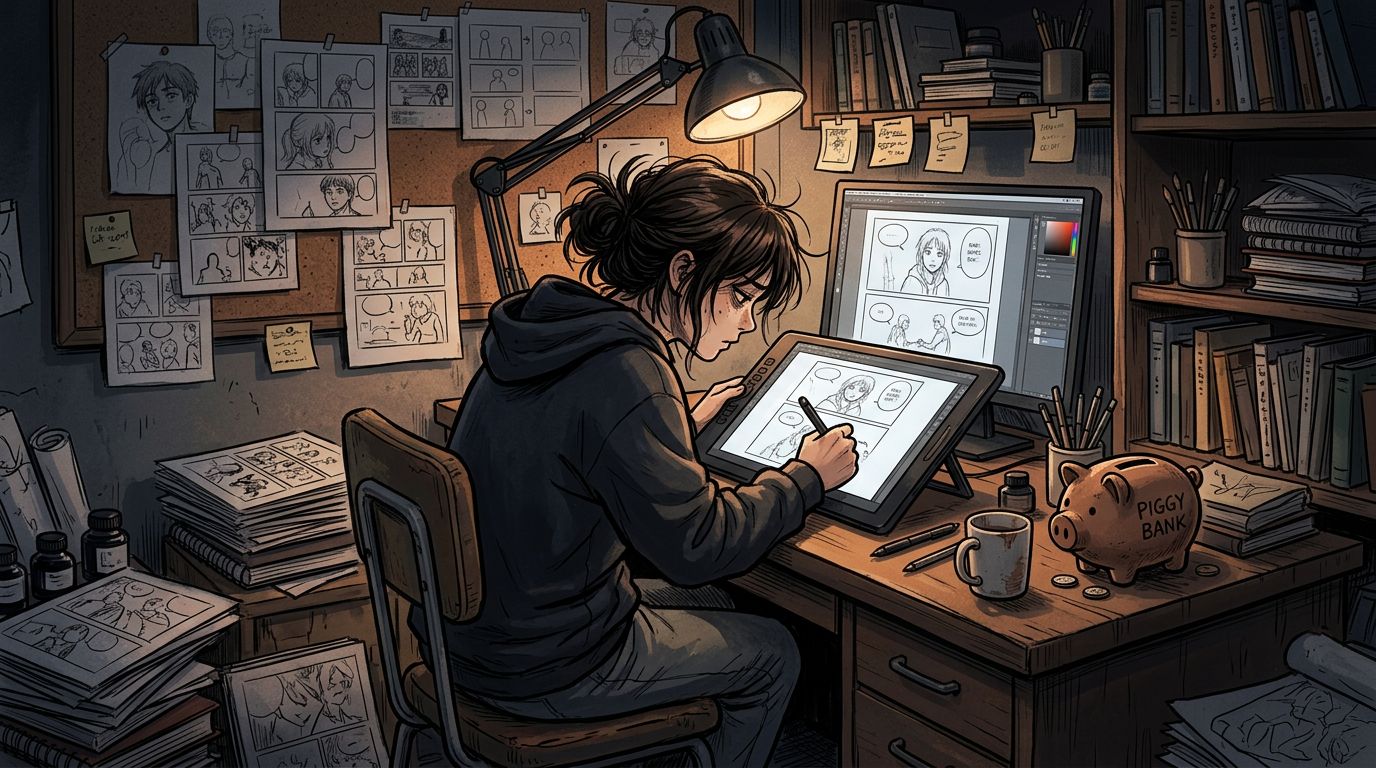
The biggest variable in comic creator revenue isn't platform rates—it's production cost. Reduce the hours per episode and the math changes entirely.
AI comic tools let solo creators produce episodes faster. The key workflow difference between tools:
- Character consistency is the hardest problem. A tool that locks your cast across every panel means you're not redrawing your protagonist from scratch each episode.
- Chapter as source of truth means you paste your script and the tool generates a storyboard, rather than building panel by panel manually.
- One-panel regeneration lets you fix a single bad panel without restarting the whole episode.
TabStory is built around all three of those workflows. You paste a chapter of prose, the novel to webtoon converter breaks it into panels with consistent characters, and you regenerate individual panels that miss the mark. That's a meaningfully different workflow from tools like Midjourney (no native character locking, no story-to-panel pipeline) or Canva (template-based, not story-aware).
If you're adapting existing prose—a Wattpad story, a fanfic, a novel draft—the pipeline gets even faster. Check out How to Turn Your Wattpad Story Into a Comic (Without Hiring an Artist) for a step-by-step breakdown of that specific workflow.
For the full adaptation strategy, the How to Turn a Novel Into a Webtoon: The Complete Adaptation Guide covers pacing, panel scripting, and chapter structure in detail.
Reduced production time doesn't automatically mean more income. But it does mean you can sustain a weekly publishing schedule without burning out—and consistency is the single biggest predictor of audience growth on every platform.
What It Actually Takes to Earn a Living as a Webtoon Creator
Based on community data and platform disclosures, here's the realistic income ladder:
| Tier | Monthly Income | What It Requires |
|---|---|---|
| Hobbyist Canvas | $0–$30 | Under 10K views/episode |
| Serious Canvas + Patreon | $300–$1,500 | 10K–50K subscribers, active Patreon |
| FastPass / Tapas mid-tier | $500–$2,000 | Platform invitation, consistent schedule |
| Lezhin exclusive | $1,000–$5,000 | Exclusivity contract, strong reader retention |
| WEBTOON Originals (base) | $2,000–$4,000 | Originals contract, ~$48K/season |
| WEBTOON Originals (top) | $10,000–$50,000+ | Bonus tiers, merchandise, FastPass revenue |
The gap between hobbyist and living wage is real. Most creators who reach a living wage do it through stacking: platform ad revenue + Patreon + print sales + merchandise. No single revenue stream gets you there at mid-tier subscriber counts.
FAQ
How much do WEBTOON Canvas creators actually earn per month?
Most Canvas creators with an active series earn $0–$30/month from ad revenue sharing. Creators with 50,000+ views per episode can reach $100–$300/month. Patreon stacking is the most reliable way to push past $500/month without an Originals contract.
What is the average income for a WEBTOON Originals creator?
WEBTOON has disclosed an average season payment of around $48,000. Spread across 25 episodes, that's roughly $1,920 per episode. Performance bonuses and FastPass revenue can significantly increase that figure for high-traffic series.
Can AI tools increase webtoon creator income?
AI tools don't directly increase platform ad rates. They reduce production time, which lets you publish more consistently and potentially run multiple series. Lower production cost also means a higher margin on Patreon and direct sales revenue.
If you're ready to cut production time and test whether your story has an audience, start with TabStory's novel to webtoon converter. Paste a chapter, lock your characters, and have a publishable episode draft in under an hour.