If you want to grow an audience in 2026, AI comics for social media are one of the most efficient content formats available. They combine visual storytelling with repeatable production — two things algorithms reward. This article breaks down exactly how to use AI-generated comic strips on Instagram, TikTok, and X to build followers, drive engagement, and eventually monetize your work.
Why AI Comics for Social Media Outperform Static Images
AI comics outperform static images on social platforms because they create narrative tension across multiple panels. Readers swipe, tap, or scroll to find out what happens next. That interaction signal — time-on-post, carousel swipes, replays — tells every major algorithm your content is worth distributing.
A single illustrated quote post gets one glance. A three-panel comic strip with a punchline gets a save, a share, and a comment. Those three actions compound over time.
Here's what makes the format sticky:
- Recurring characters. Readers come back for characters they recognize, not just jokes.
- Serialized arcs. Even a two-panel gag can tease a next episode.
- Vertical format. Webtoon-style vertical strips are native to mobile feeds on all three platforms.
The bottleneck used to be art. You needed to draw, hire, or wait. AI removes that bottleneck. You can script Monday, generate Tuesday, and post Wednesday — every week.
Building a Consistent Cast: The Foundation of Viral Comic Strips
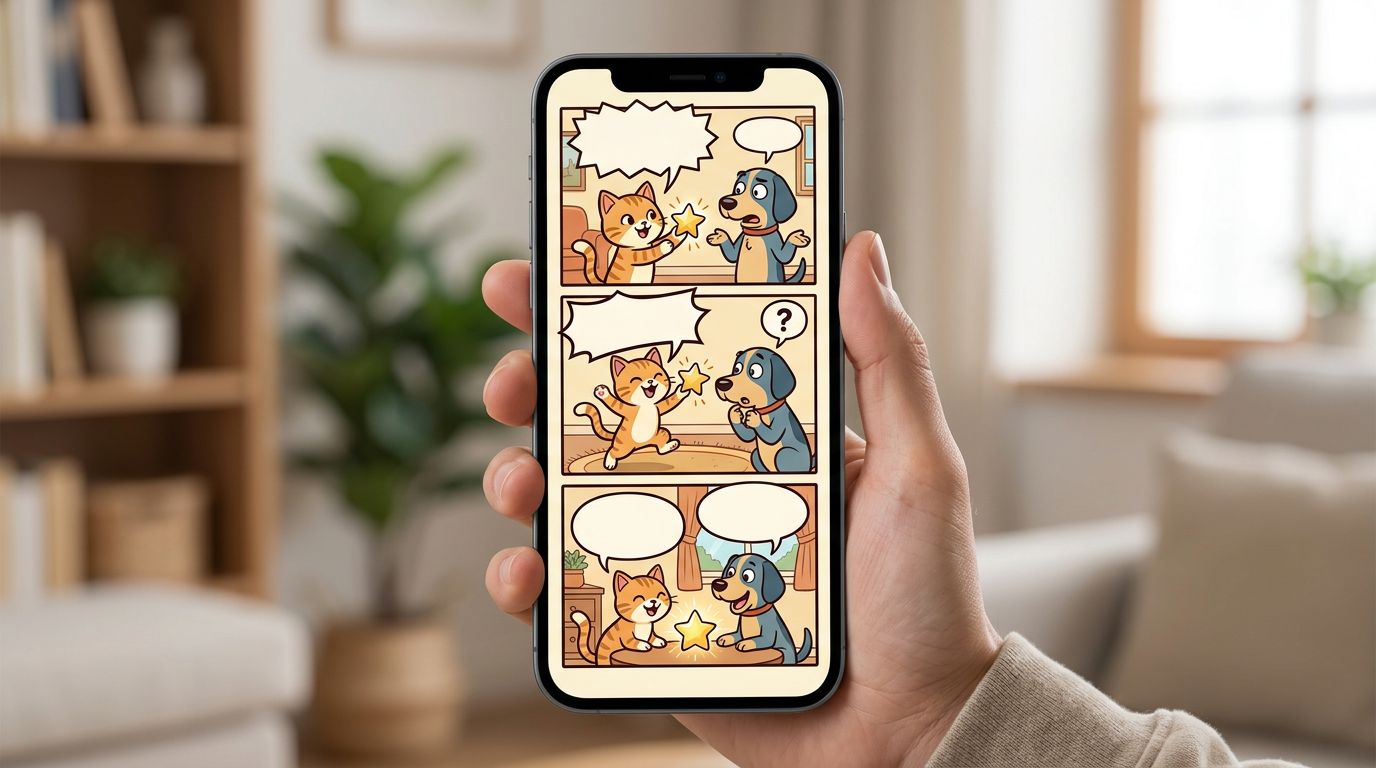
Viral comic strips almost always feature a locked, recurring cast. Readers need to recognize your characters instantly — same face, same outfit, same energy — across every post. Character inconsistency is the single biggest reason AI comic accounts stall out before they gain traction.
This is where most creators hit a wall with general image generators. You prompt Midjourney for your protagonist on Monday. By Friday, she looks like a different person. Your audience never bonds with her.
The fix is to treat your character sheet as a source of truth before you post a single panel. Define:
- Visual anchors — hair color, signature clothing item, facial structure
- Personality tells — posture, expression defaults, props they carry
- Art style — flat color, manga screentone, webtoon line art
TabStory's AI comic generator locks your cast at the project level. Every panel you generate references the same character model. You can regenerate one bad panel without drifting the character's appearance across the rest of the chapter. That's a workflow difference, not a marketing claim — it matters when you're posting three times a week.
For a deeper look at the full production process, read How to Make a Comic with AI in 2026 (Step-by-Step Guide).
Platform-by-Platform Strategy for Instagram Comics, TikTok, and X
Each platform rewards a different comic format. Instagram favors carousel posts and Reels with panel-by-panel reveals. TikTok rewards motion and voiceover. X rewards short, punchy strips that fit in a single screenshot. Posting the same asset everywhere without adapting it is the fastest way to underperform on all three.
Instagram Comics
Instagram is the strongest long-term home for comic content marketing. Here's why:
- Carousels get reshared to Stories. Every reshare is free distribution.
- Saves signal quality. Saved posts get pushed to Explore.
- Alt-text is indexed. Write real alt-text for every panel — it helps both accessibility and search.
Post format: 4–10 panel vertical strip as a carousel. First panel is the hook. Last panel is the punchline or cliffhanger. Caption asks a question to drive comments.
Posting cadence: 3x per week minimum to stay in the algorithm's favor. AI production makes this achievable without burnout.
TikTok
TikTok rewards motion. A static comic strip will underperform unless you add:
- Panel-by-panel reveal with a timed transition (1–2 seconds per panel)
- Voiceover or text-to-speech reading the dialogue
- Sound design — even a single ambient track lifts retention
Short-form webtoon content performs especially well here. If your story has a vertical scroll format, export it as a video with a slow pan. Readers who discover you on TikTok will follow you to Instagram or your own platform for the full archive.
X (formerly Twitter)
X rewards brevity and shareability. The sweet spot is a 2–4 panel strip that fits in one screenshot. The punchline has to land without any setup outside the panels — assume the reader has zero context.
X also has an active comics community. Hashtags like #webcomic and #AIart still drive discovery. Engage with that community directly. Reply to other comic creators. Repost fan reactions.
Worked Example: Turning a Scene Into a Social-Ready Comic Strip
Here's a real workflow from script to post.
Source scene (from a slice-of-life story):
Maya checks her phone at 2 a.m. and sees a text from her ex. She types three different replies, deletes all of them, and puts her phone face-down.
Panel breakdown for Instagram carousel:
| Panel | Shot | Action | Dialogue |
|---|---|---|---|
| 1 | Close-up | Phone screen glowing in dark room | Text bubble: "Hey, you up?" |
| 2 | Medium | Maya's face, half-lit, conflicted expression | Thought bubble: "Don't reply. Don't reply." |
| 3 | Over-shoulder | Keyboard with three typed drafts visible | Caption: "Draft 1. Delete. Draft 2. Delete. Draft 3. Delete." |
| 4 | Wide | Phone placed face-down on nightstand | Silence. |
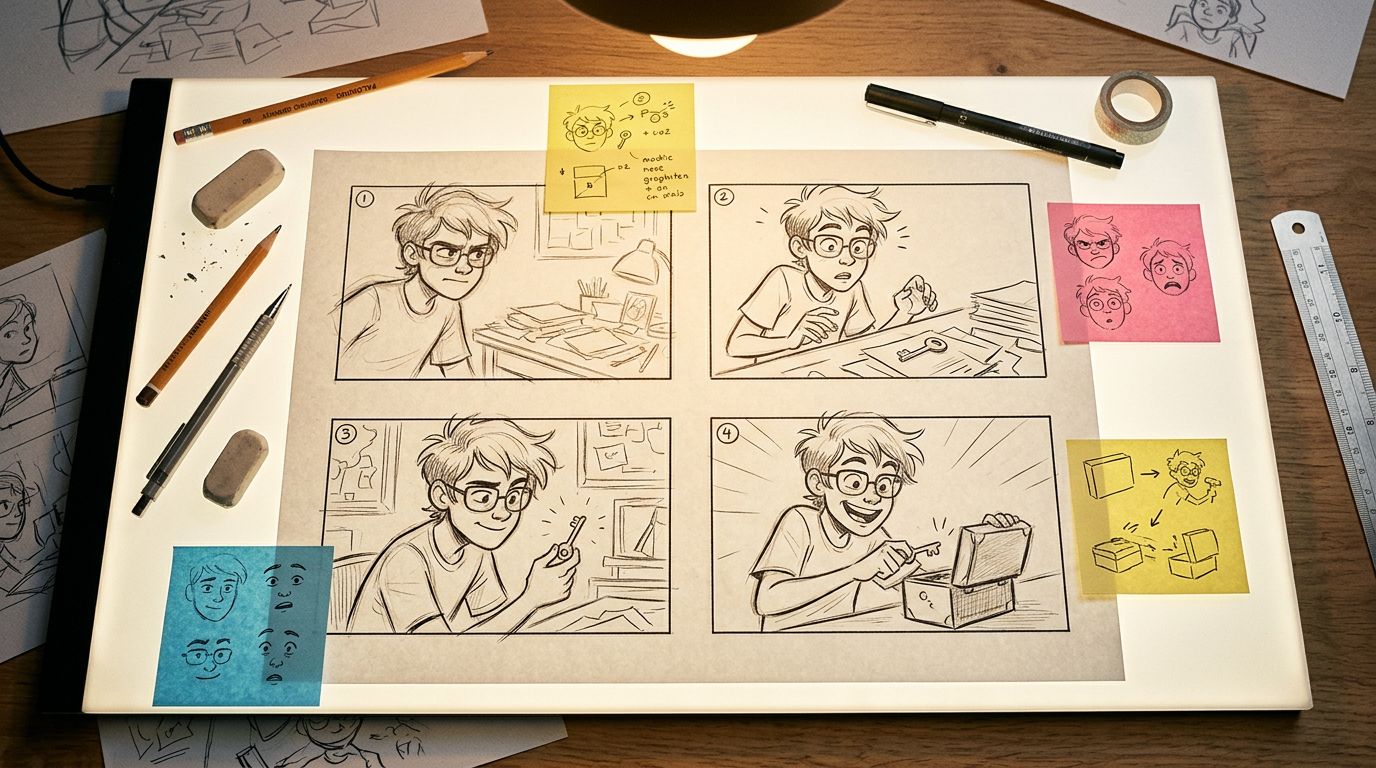
This four-panel strip works as a carousel. Panel 1 is the hook — readers recognize the situation immediately. Panel 4 is the emotional payoff. No dialogue needed. The silence does the work.
You can script this in plain text, paste it into TabStory, and generate all four panels with Maya's character locked. If panel 3 renders her hand wrong, regenerate that panel only. The rest of the strip stays intact.
If your source material is a longer story or novel, the novel to comic workflow lets you feed full chapters and extract panel-ready scenes automatically.
Comic Content Marketing: Monetizing Your Audience
Comic content marketing converts because it builds emotional attachment before it asks for anything. Readers who follow a character through ten episodes will buy a print, a Patreon tier, or a product placement post in a way that followers of a static brand account simply won't.
Here are the monetization paths that work for AI comic creators in 2026:
Direct Monetization
- Patreon / Ko-fi — Offer early access to new episodes or behind-the-scenes panel drafts
- Print-on-demand — Export finished chapters as PDFs or print files; sell through Gumroad
- Webtoon Canvas / Tapas — Publish your archive there and earn ad revenue once you hit minimum thresholds
Brand Partnerships
Brands pay for comic integrations because the format feels native, not like an ad. A sponsored episode where your character uses a product reads as storytelling. Rates for micro-creators (10K–50K followers) on Instagram range from $200–$800 per post in 2025. Comics command a premium over static posts because production signals effort.
Digital Products
- Character design sheets
- Panel layout templates (see Comic Panel Layout: A Practical Guide for New Creators for layout fundamentals)
- Prompt packs for other AI comic creators
What Still Breaks: The Real Failure Cases
AI comics for social media are not a solved problem. Here's what still goes wrong:
Hands and complex props. AI image models still struggle with hands holding objects — phones, cups, weapons. A panel where your character holds a guitar can look correct in isolation and wrong next to the previous panel. Always review prop continuity before posting.
Dialogue-heavy panels. More than two speech bubbles per panel makes a mobile panel unreadable. If your script is dialogue-heavy, split the scene across more panels. Readers on mobile will not zoom in.
Style drift over time. Even with locked character models, art style can shift subtly between chapters if you update your generation settings. Keep a reference panel from your first chapter and compare it to new output before publishing.
Platform compression. Instagram and TikTok compress images aggressively. Export at 2x resolution and test how your line art looks after compression before committing to a style.
Frequently Asked Questions
How many panels should an Instagram comic strip have?
For Instagram carousels, 4–8 panels is the sweet spot. Four panels fit a single joke or emotional beat. Eight panels can carry a short scene. Go beyond ten and you risk drop-off before the punchline. Always make panel 1 strong enough to stop the scroll.
Do AI comics perform well on TikTok without animation?
Yes, but you need motion. Use a slow vertical pan or a panel-by-panel reveal with transitions. Add voiceover or text-to-speech for dialogue. Pure static image posts underperform on TikTok compared to Instagram. Even a simple zoom-in on the final panel adds enough motion to improve retention.
How do I keep my AI comic characters consistent across weeks of posts?
Lock your character at the project level before you post anything. Save a reference panel from your first episode. Every time you generate new panels, compare against that reference. Tools that let you regenerate individual panels without resetting the whole project — like TabStory — make this significantly easier to maintain at a weekly posting cadence.
Ready to build your social comic series? Start with your cast, lock your style, and script your first five episodes before you post anything. Consistency in the first 30 days matters more than perfection in any single panel. Use the AI comic generator at TabStory to generate your first chapter, keep your characters locked, and get your first post live this week.